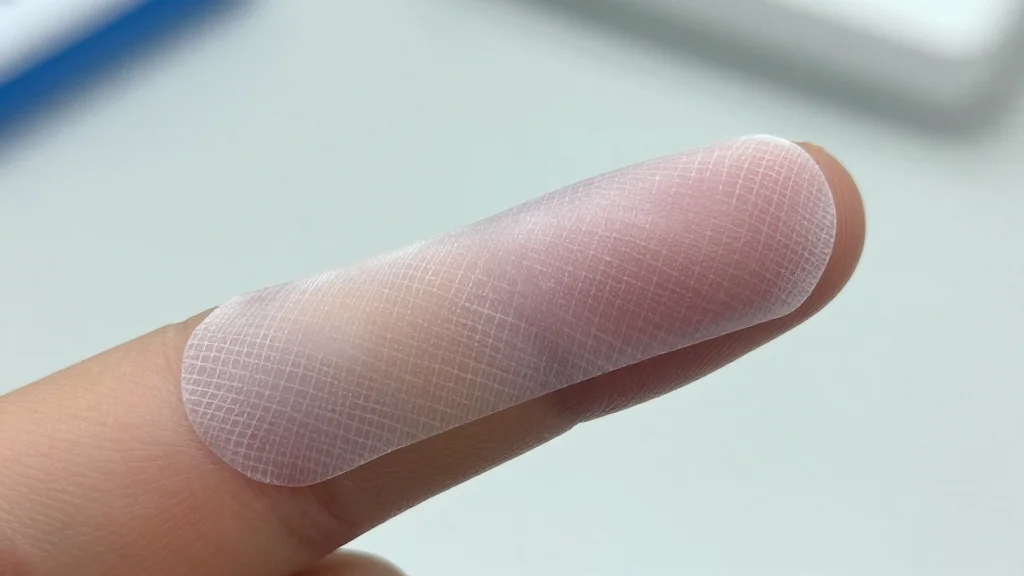
Layered Graphene/Hydrogel‐Based Multi‐Modal Sensors Enabled by Ion‐Electron Synergistic Conduction
Why It Matters
Self‑healing, high‑sensitivity stretchable sensors can accelerate continuous health‑monitoring wearables while cutting device failure costs in medical and consumer markets.
Key Takeaways
- •Low skin impedance: 28.7 kΩ at 100 Hz
- •Self‑healing efficiency reaches 95.24 % after damage
- •Sensing range spans ~500 % strain, 1,000 cycles durability
- •Enables real‑time bladder activity monitoring and force mapping
Pulse Analysis
Wearable bioelectronics have long struggled with the trade‑off between extreme stretchability and reliable signal fidelity. Traditional rigid circuits crack under motion, while soft polymer sensors often suffer from high interfacial impedance and drift. The new layered graphene/hydrogel architecture sidesteps these limits by integrating atomically thin CVD graphene—renowned for its electron mobility and biocompatibility—with a hydrogel matrix that provides ion‑based conduction and dynamic cross‑linking. This ion‑electron synergistic conduction creates a low‑impedance pathway that remains stable across large strains, a critical advantage for continuous physiological monitoring where skin‑contact quality directly impacts data accuracy.
From a performance standpoint, the composite’s metrics are striking: a skin impedance of roughly 28.7 kΩ at 100 Hz rivals commercial Ag/AgCl electrodes, while the self‑healing efficiency of 95 % restores functionality after mechanical cuts. The sensor tolerates up to 500 % elongation and survives more than 1,000 cycles at 150 % strain, positioning it for long‑term deployment in dynamic environments such as sports wear or implantable devices. The wrinkle‑crack interface engineered during graphene transfer further reduces stress concentration, enhancing durability without sacrificing sensitivity. These attributes address key pain points for manufacturers seeking to scale flexible health‑tech products without costly redesigns.
The practical demonstrations—spatial force mapping, information transmission, and urinary bladder activity tracking—highlight the platform’s versatility. Real‑time bladder monitoring, for instance, could replace invasive catheters, reducing infection risk and improving patient comfort. As the market for continuous health monitoring is projected to exceed $70 billion by 2030, technologies that combine stretchability, self‑healing, and low‑impedance signal acquisition are poised to attract significant venture capital and corporate R&D investment. Early adopters in medical device firms and consumer wearables can leverage this graphene‑hydrogel sensor to differentiate product lines, accelerate time‑to‑market, and meet stringent regulatory standards for biocompatibility and reliability.
Layered Graphene/Hydrogel‐Based Multi‐Modal Sensors Enabled by Ion‐Electron Synergistic Conduction
Comments
Want to join the conversation?
Loading comments...