Light-Driven Bismuth Nanomaterials Show Promise Against Tumors and Bacteria
Why It Matters
Integrating diagnosis and treatment in a single nanoplatform could streamline patient care and reduce procedural costs, while advancing bismuth‑based agents may open new revenue streams in imaging‑guided therapies.
Key Takeaways
- •Bismuth nanomaterials enable combined CT imaging and phototherapy.
- •Defect engineering boosts ROS generation for antibacterial and anticancer effects.
- •Heterojunctions improve charge separation, enhancing light‑driven therapeutic efficiency.
- •Scalable synthesis methods still face purity and safety trade‑offs.
- •Long‑term biosafety data remain a barrier to clinical translation.
Pulse Analysis
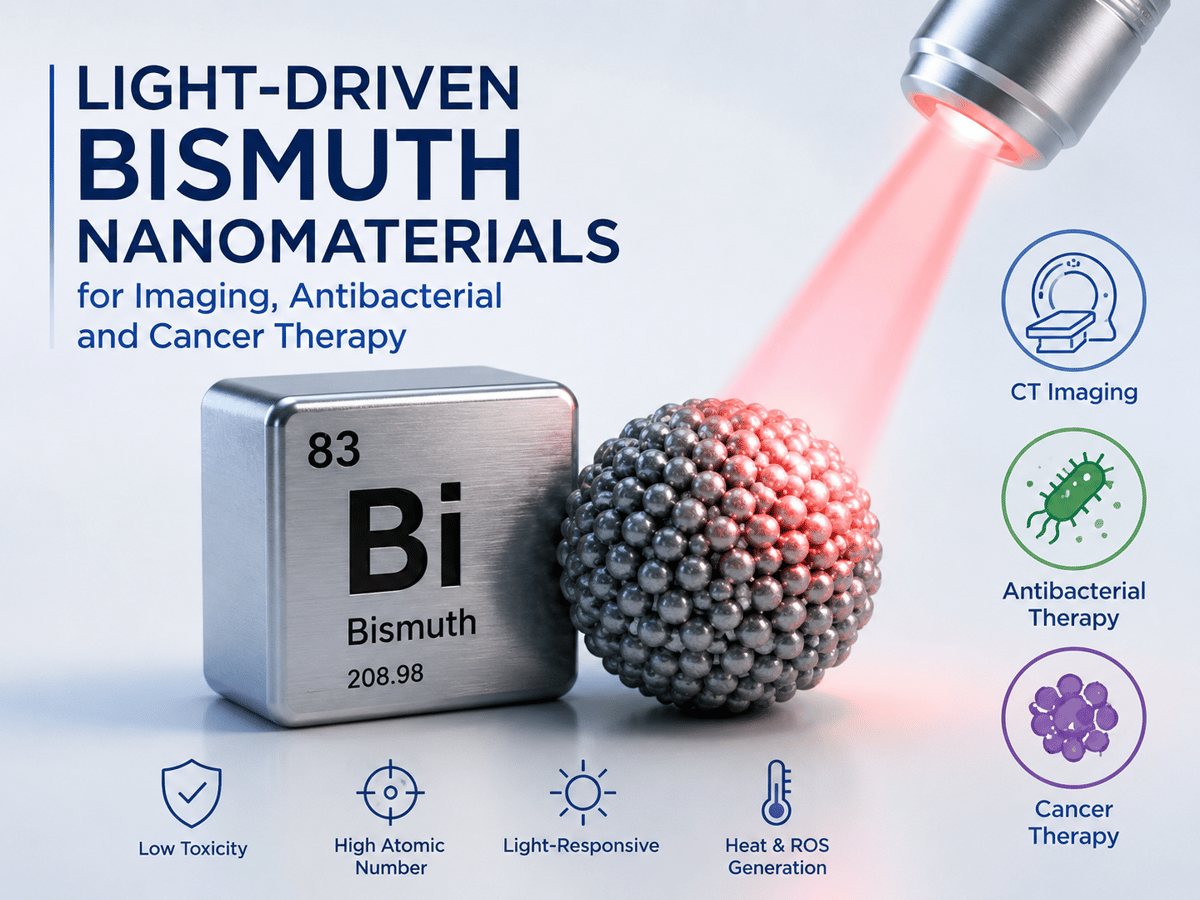
Bismuth‑based nanomaterials have surged to the forefront of biomedical research because they marry high X‑ray attenuation with unique light‑responsive behavior. The element’s large atomic number makes it an excellent contrast enhancer for computed tomography, while its electronic structure can be tuned to absorb near‑infrared light, converting photons into heat or reactive oxygen species. These dual capabilities position bismuth nanoplatforms as natural candidates for theranostics—simultaneously visualizing disease and delivering therapy—addressing a long‑standing split between diagnostic imaging and treatment modalities.
Recent studies showcased in the review illustrate how precise nanoscale engineering translates into therapeutic potency. Introducing oxygen or iodine vacancies reshapes band gaps, fostering charge separation that amplifies ROS output for bacterial eradication and tumor cell death. Constructing heterojunctions with complementary semiconductors—such as Bi₂S₃‑Au or Bi₂S₃‑Ti₃C₂Tx—further suppresses electron‑hole recombination, sharpening photothermal conversion and photodynamic efficacy. Morphological control, from hollow spheres to ultrathin bismuthene sheets, expands surface area and tailors plasmonic resonances, enabling deeper tissue penetration and stronger photoacoustic signals for image‑guided interventions.
Nevertheless, moving from bench to bedside remains fraught with hurdles. Many synthesis routes, while versatile, struggle with batch‑to‑batch consistency, impurity removal, and scalable manufacturing—all critical for regulatory approval. Moreover, comprehensive toxicology data—including long‑term biodistribution, metabolism, and immunogenicity—are still scarce, prompting caution among clinicians and investors. Addressing these gaps through standardized production protocols and rigorous preclinical safety programs could unlock sizable market opportunities in precision oncology and antimicrobial therapies, positioning bismuth nanomedicines as next‑generation solutions in the rapidly evolving health‑tech landscape.
Light-Driven Bismuth Nanomaterials Show Promise Against Tumors and Bacteria
Comments
Want to join the conversation?
Loading comments...