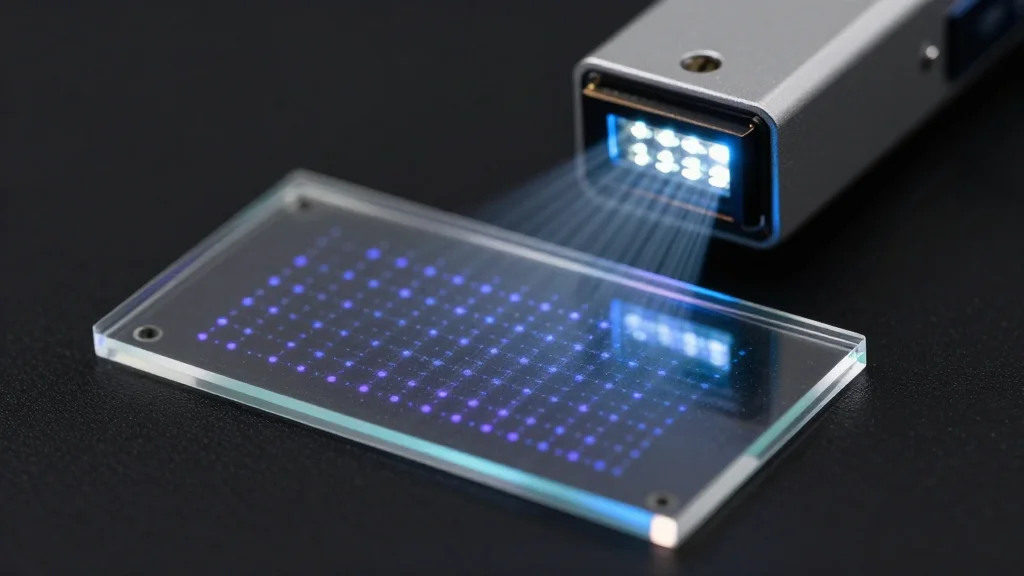
Light‐Guided Molecular Patterning for High‐Throughput Single‐Molecule Mechanical Characterization (Small 21/2026)
Why It Matters
By automating spatial patterning, the technique cuts experiment time and boosts data density, accelerating research in biophysics, drug discovery, and nanomaterials where single‑molecule mechanics are critical.
Key Takeaways
- •Digital micromirror device projects UV patterns without photomasks
- •Light‑guided oligonucleotide arrays enable high‑throughput single‑molecule force measurements
- •Spatial control improves data density and reduces experiment time
- •Platform is compatible with existing force spectroscopy instruments
Pulse Analysis
Single‑molecule force spectroscopy (SMFS) has become a cornerstone for probing the mechanical properties of proteins, nucleic acids, and synthetic polymers. Yet traditional SMFS suffers from low throughput because each measurement typically requires manual positioning of a single molecule between a cantilever and a surface. Researchers have long sought ways to multiplex experiments without sacrificing the nanometer precision that defines the field. The new light‑guided molecular patterning platform directly addresses this bottleneck by allowing hundreds of molecules to be interrogated simultaneously, turning a serial process into a parallel one.
The core of the technology is a digital micromirror device that projects UV light onto a substrate coated with photoswitchable oligonucleotides. Unlike conventional photolithography, the DMD can generate arbitrary patterns on the fly, eliminating the need for costly photomasks and enabling rapid reconfiguration of experiments. UV exposure activates specific regions, anchoring DNA strands in predefined geometries that serve as tether points for SMFS probes. This high degree of programmability translates into customizable assay layouts, from dense grids for statistical sampling to sparse patterns for targeted studies, all while maintaining the sub‑micron resolution required for reliable force measurements.
The broader impact extends beyond academic labs. In pharmaceutical development, high‑throughput mechanical profiling can reveal how candidate molecules affect protein stability or ligand‑induced unfolding, informing lead optimization. Materials scientists can similarly leverage the platform to screen polymer networks for toughness or elasticity at scale. Because the system integrates with existing AFM or optical tweezers setups, adoption costs are modest, positioning the technology as a practical upgrade for any lab focused on molecular mechanics. Future iterations may combine the DMD with machine‑learning‑driven analysis pipelines, further accelerating discovery cycles across biotech and nanotechnology sectors.
Light‐Guided Molecular Patterning for High‐Throughput Single‐Molecule Mechanical Characterization (Small 21/2026)
Comments
Want to join the conversation?
Loading comments...