Liquid Biopsy Method Uses Nanoparticle Raman Signals to Separate Two Lookalike Enzymes
Why It Matters
Precise, non‑invasive enzyme profiling can sharpen diagnosis and stratification of neurodegenerative diseases, expanding liquid biopsy utility beyond infectious‑disease screening.
Key Takeaways
- •Nanoparticle SERS amplifies Raman signals million‑fold.
- •New microchip ensures reproducible, quantitative Raman measurements.
- •Distinguishes acetylcholinesterase from butyrylcholinesterase reliably.
- •Detects enzyme level differences in Alzheimer’s versus vascular dementia.
- •Potential to broaden liquid biopsy applications beyond infectious diseases.
Pulse Analysis
Liquid biopsies have become a cornerstone of modern diagnostics, offering a minimally invasive window into disease‑related biomarkers found in blood, saliva, or urine. Traditional fluorescence‑based assays excel at sensitivity but falter when faced with enzymes that share structural motifs, because their broad emission spectra blur distinctions. Raman spectroscopy, by contrast, generates narrow spectral peaks that act as molecular fingerprints, yet its inherently weak signal has limited clinical adoption. The convergence of these two worlds—high sensitivity and high specificity—has long been a research priority.
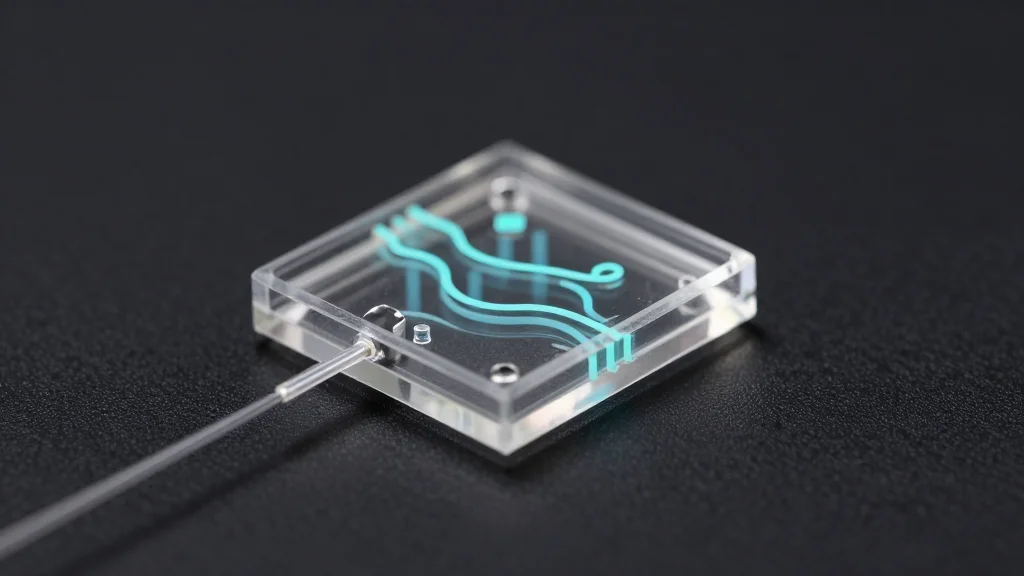
The RIKEN team addressed Raman’s signal weakness by leveraging surface‑enhanced Raman scattering (SERS) with silver nanoparticles, which can boost the Raman response by up to a million times. Crucially, they integrated these nanoparticles into a purpose‑built microchip that standardizes the enhancement, delivering consistent, quantitative readouts across samples. This engineering breakthrough resolves the reproducibility challenges that have hampered prior SERS‑based liquid biopsy attempts, making the technology viable for routine clinical workflows and high‑throughput screening.
Beyond the technical triumph, the method’s ability to differentiate acetylcholinesterase from its close counterpart butyrylcholinesterase opens new diagnostic avenues, especially in neurodegenerative research. Detecting elevated acetylcholinesterase in Alzheimer’s versus vascular cognitive disorders could enable earlier, more precise disease sub‑typing and inform therapeutic decisions. As the platform matures, its applicability may extend to oncology, infectious disease, and metabolic monitoring, positioning SERS‑enhanced liquid biopsies as a versatile tool in precision medicine. The commercial potential is significant, promising a new generation of diagnostic kits that combine the speed of fluorescence with the discriminative power of Raman spectroscopy.
Liquid biopsy method uses nanoparticle Raman signals to separate two lookalike enzymes
Comments
Want to join the conversation?
Loading comments...