Local Electronic Environment Regulation of Crystalline/Amorphous NiSe/NiFe(OH)x Heterostructure Enhancing Catalytic Activity of Alkaline Oxygen Evolution Reaction
Why It Matters
Lowering OER overpotential and extending catalyst durability directly reduce the energy cost of water electrolysis, accelerating the commercial rollout of green hydrogen. The demonstrated crystalline‑amorphous interface strategy offers a scalable pathway for next‑generation electrolyzer materials.
Key Takeaways
- •Crystalline NiSe/amorphous NiFe(OH)x reduces OER overpotential to 233 mV at 100 mA cm⁻².
- •Two-step hydrothermal/solvent‑thermal synthesis creates dynamic crystalline‑amorphous interfaces.
- •DFT shows ΔG*O → *OOH drops from 0.78 V to 0.26 V.
- •Catalyst retains 93.7% activity after 250 h at 500 mA cm⁻².
- •Interfacial charge redistribution optimizes *O adsorption energy, accelerating OER kinetics.
Pulse Analysis
The oxygen evolution reaction is the bottleneck in alkaline water electrolysis, demanding catalysts that can drive the reaction at low voltage while withstanding harsh operating conditions. Conventional metal oxides often suffer from high overpotentials and rapid degradation, inflating the cost of green hydrogen production. Researchers therefore focus on engineering the electronic structure at the atomic level to accelerate the rate‑determining steps and improve durability.
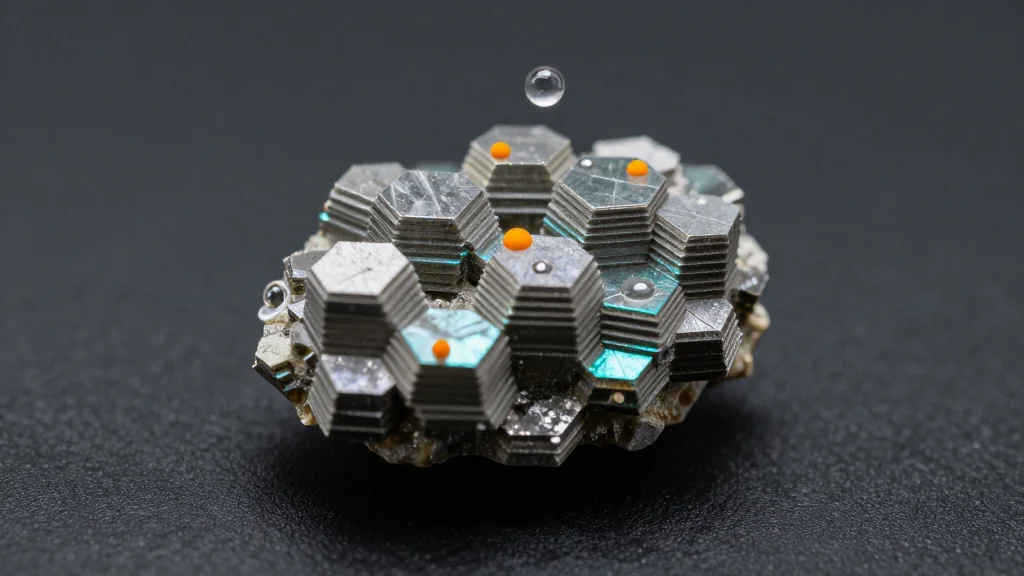
In this study, a crystalline NiSe core was combined with an amorphous NiFe(OH)x shell through a two‑step hydrothermal‑solvent‑thermal process, creating a seamless crystalline‑amorphous interface. This architecture reshapes the local electronic environment, enabling charge redistribution that weakens the *O intermediate binding. Density functional theory calculations quantify the effect, showing a reduction of the *O → *OOH free‑energy barrier from 0.78 V to 0.26 V. Experimentally, the heterostructure delivers 233 mV overpotential at 100 mA cm⁻² and maintains 93.7% of its activity after 250 hours at 500 mA cm⁻², outperforming many state‑of‑the‑art OER catalysts.
The implications extend beyond academic interest. By delivering both high activity and long‑term stability, this catalyst design can lower the electricity consumption per kilogram of hydrogen, making electrolyzers more competitive against fossil‑based production. The scalable hydrothermal synthesis also aligns with existing manufacturing pipelines, facilitating rapid adoption in commercial electrolyzer stacks. Future work will likely explore alloying, substrate integration, and reactor‑level testing to translate these laboratory gains into tangible cost reductions for the burgeoning hydrogen economy.
Local Electronic Environment Regulation of Crystalline/Amorphous NiSe/NiFe(OH)x Heterostructure Enhancing Catalytic Activity of Alkaline Oxygen Evolution Reaction
Comments
Want to join the conversation?
Loading comments...