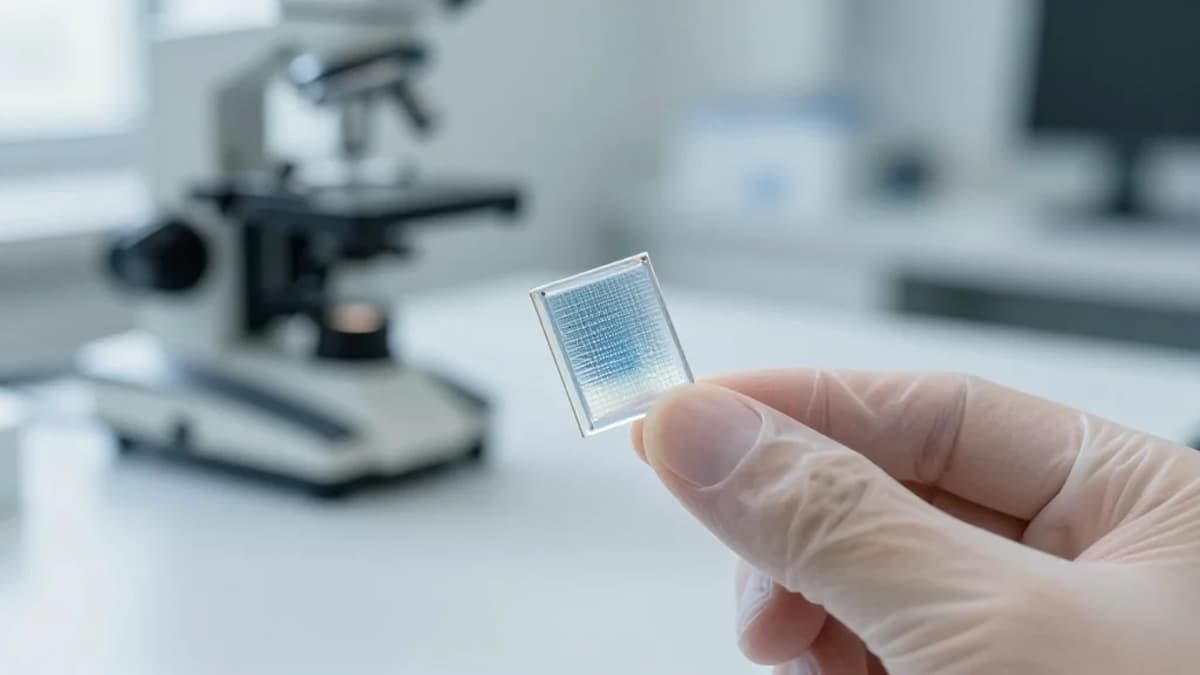
Low Temperature Site‐Specific Pulsed Laser Annealing of MoS2
•January 25, 2026
0
Why It Matters
It offers a low‑damage, site‑specific annealing solution that can boost performance and manufacturability of 2D semiconductor devices, accelerating their adoption in commercial electronics.
Key Takeaways
- •Fluence <12 mJ cm⁻² prevents surface damage
- •Resistance drops up to fourfold after annealing
- •Raman confirms amorphous‑to‑crystalline conversion
- •AFM shows grain enlargement with higher fluence
- •Compatible with ambient‑air, back‑end wafer steps
Pulse Analysis
Traditional thermal annealing of two‑dimensional transition‑metal dichalcogenides (TMDs) often requires high temperatures that can degrade delicate crystal structures and limit patterning precision. The emergence of site‑specific pulsed laser annealing (SSPLA) addresses these constraints by delivering ultrashort energy bursts that locally heat the material without raising the bulk substrate temperature. This non‑thermal approach enables engineers to target individual device regions, preserving surrounding circuitry while achieving the crystallinity needed for reliable electronic behavior.
In the reported experiments, overlapping laser pulses were raster‑scanned across MoS2 films on SiO₂‑Si wafers at fluences below 12 mJ cm⁻², a regime safely beneath the ablation threshold. Raman spectroscopy revealed a clear shift from amorphous signatures to the characteristic Eʹ and A₁ʹ modes of crystalline MoS2, while cross‑sectional STEM images documented thinning and enhanced lattice ordering. Atomic‑force microscopy measured grain expansion, supporting a solid‑state diffusion mechanism that proceeds at relatively low temperatures. Electrical testing demonstrated up to a four‑fold reduction in sheet resistance, confirming that the structural improvements translate directly into performance gains.
The broader implication for the semiconductor industry lies in the technique’s compatibility with existing back‑end‑of‑line (BEOL) workflows. Because SSPLA operates in ambient air and requires no exotic vacuum chambers, it can be integrated into standard wafer‑scale production lines, offering a cost‑effective path to incorporate TMDs alongside silicon. This scalability, combined with the ability to anneal only the necessary device sections, positions pulsed laser annealing as a pivotal enabler for heterogeneous integration, flexible electronics, and next‑generation low‑power transistors. Continued refinement may further lower energy budgets and expand the material palette beyond MoS2, accelerating the commercial rollout of 2D‑based technologies.
Low Temperature Site‐Specific Pulsed Laser Annealing of MoS2
0
Comments
Want to join the conversation?
Loading comments...