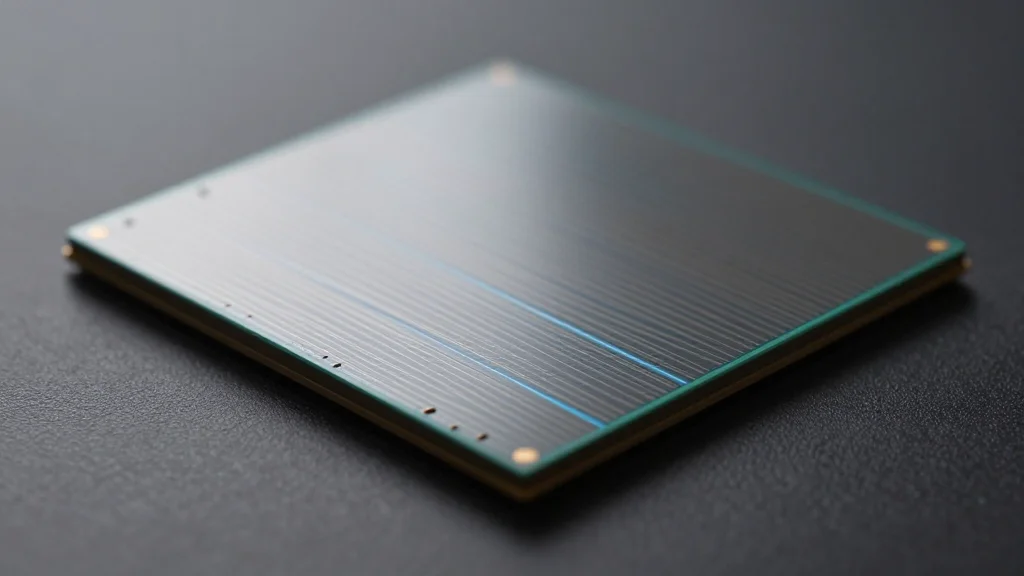
LSTC Breakthrough Clarifies Sub‑2 Nm Process Variations, Bolstering Rapidus’s 1.4 Nm Chip Plan

Why It Matters
The LSTC breakthrough tackles a fundamental barrier to sub‑2 nm scaling: the reliability of interconnects as line widths shrink below copper’s practical limits. By providing a predictive framework for dielectric lifetime, the research de‑risks the adoption of ruthenium/air‑gap structures, which promise lower resistance and better thermal performance. For Rapidus, the data underpins its ambitious roadmap to 1.4 nm chips, a milestone that could reposition Japan as a leader in next‑generation logic manufacturing. The partnership also illustrates how coordinated national strategies—combining government policy, university research and private fab capacity—can accelerate technology readiness in a field where every nanometer counts. Beyond Japan, the findings have global relevance. As the semiconductor industry confronts the physical ceiling of copper, the Ru/AG approach, validated by LSTC’s statistical model, offers a viable path for other foundries seeking to extend Moore’s Law. The ability to predict reliability variations across a wafer could become a standard design practice, influencing equipment specifications, material sourcing and yield optimization worldwide.
Key Takeaways
- •LSTC’s analysis links interconnect spacing to dielectric lifetime, confirming wider spacing extends reliability.
- •Within‑wafer variation identified: lifetime longest at wafer center, shortest at edges, driven by nanometer‑scale geometry.
- •Statistical framework enables reliability‑aware design for sub‑2 nm and sub‑1 nm nodes without exhaustive testing.
- •Rapidus aims for 2 nm mass production in 2027 and 1.4 nm chips in 2029, leveraging LSTC’s findings.
- •Collaboration involves Yokohama National University, University of Electro‑Communications and imec, backed by METI’s national semiconductor strategy.
Pulse Analysis
The LSTC breakthrough arrives at a pivotal moment when the semiconductor industry is scrambling for a post‑copper interconnect solution. Historically, each node shrink has been underpinned by incremental material upgrades—first aluminum, then copper. Now, as copper’s resistivity and electromigration penalties become untenable below 2 nm, ruthenium paired with air‑gap dielectrics offers a compelling alternative, but its adoption has been hampered by a lack of reliable lifetime data. LSTC’s statistical model fills that gap, turning a theoretical material advantage into a manufacturable reality.
From a competitive standpoint, Rapidus’s ability to integrate these insights could give Japan a rare first‑mover advantage. While South Korean and Taiwanese foundries are investing heavily in extreme ultraviolet (EUV) lithography and new transistor architectures, they have not publicly disclosed comparable reliability frameworks for Ru/AG interconnects. If Rapidus can demonstrate wafer‑level yields that meet or exceed industry expectations, it may attract design wins from leading fabless companies seeking to diversify their supply chain away from the dominant players.
Looking forward, the real test will be scaling the model from test structures to full‑scale production. The statistical approach must accommodate process drift, equipment variability and supply‑chain fluctuations in ruthenium and dielectric materials. Success will hinge on close feedback loops between LSTC’s academic researchers and Rapidus’s fab engineers. Should those loops prove effective, the partnership could become a blueprint for how governments can marshal university expertise to accelerate high‑risk, high‑reward semiconductor technologies, reshaping the global competitive landscape for the next decade.
LSTC breakthrough clarifies sub‑2 nm process variations, bolstering Rapidus’s 1.4 nm chip plan
Comments
Want to join the conversation?
Loading comments...