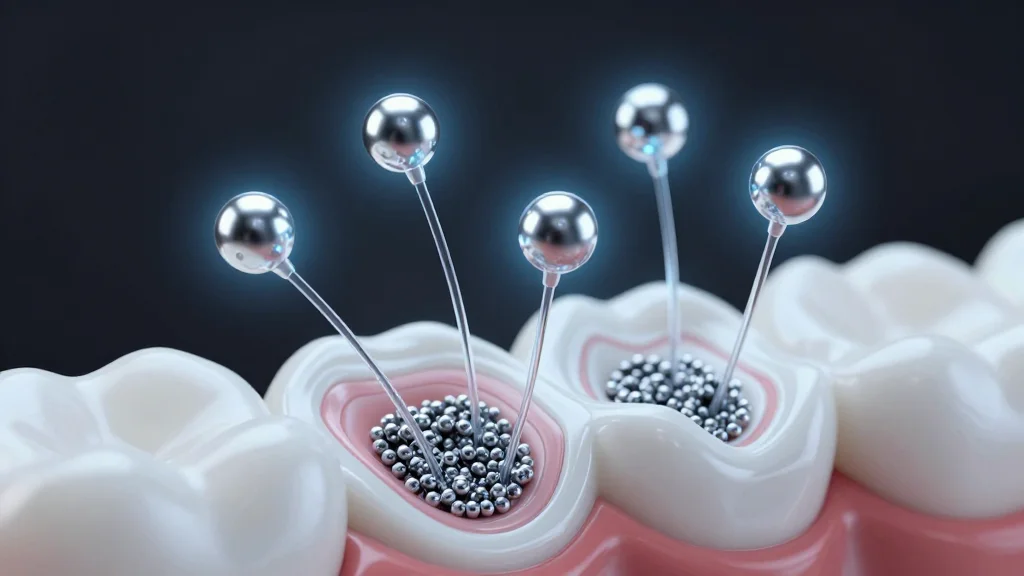
Magnetic Janus Nanomotor for Dentin Hypersensitivity Treatment
Why It Matters
The technology provides a deeper, faster method to seal exposed dentinal tubules, potentially replacing conventional filling agents and improving patient comfort in the multi‑billion‑dollar dental care market.
Key Takeaways
- •Magnetic Janus nanomotors (≈200 nm head) navigate dentinal tubules.
- •Tail length tunable from 200 nm to 4 µm for shape control.
- •Magnetic fields drive nanomotor clusters, achieving 36 µm penetration depth.
- •Polycatechol coating triggers in situ hydroxyapatite formation.
- •Tubule occlusion achieved within 3 days, offering rapid DH relief.
Pulse Analysis
Dentin hypersensitivity affects an estimated 10‑30 % of adults, causing sharp pain when teeth encounter temperature changes or acidic foods. Conventional treatments—such as fluoride varnishes, resin‑based sealants, or glass‑ionomer cements—rely on passive diffusion and often fail to reach the deep, negatively charged dentinal tubules, leading to inconsistent relief and frequent retreatments. The market for DH solutions is projected to exceed $1 billion annually in the United States, underscoring the need for more effective, durable interventions.
Enter magnetic Janus nanomotors, a hybrid of iron‑oxide cores and silica shells engineered with a Janus architecture that imparts directional motion under an external magnetic field. By adjusting field strength and orientation, researchers can orchestrate the nanomotors into vortex or ribbon clusters, enabling them to snake through the sub‑micron tubules and deposit mineralizing polycatechol groups directly at the site of exposure. The in situ formation of hydroxyapatite mimics natural tooth enamel, creating a robust, biocompatible seal that forms within three days—far faster than traditional remineralization agents.
If scaled for clinical use, this approach could reshape the dental materials landscape. Its magnetic controllability reduces the need for aggressive chemical adhesives, potentially lowering procedural time and patient discomfort. Moreover, the technology aligns with regulatory trends favoring minimally invasive, bio‑integrative solutions, opening pathways for fast‑track approvals. Ongoing studies will need to address long‑term stability, manufacturing scalability, and cost‑effectiveness, but the early results suggest a promising avenue for both practitioners and patients seeking lasting relief from dentin hypersensitivity.
Magnetic Janus Nanomotor for Dentin Hypersensitivity Treatment
Comments
Want to join the conversation?
Loading comments...