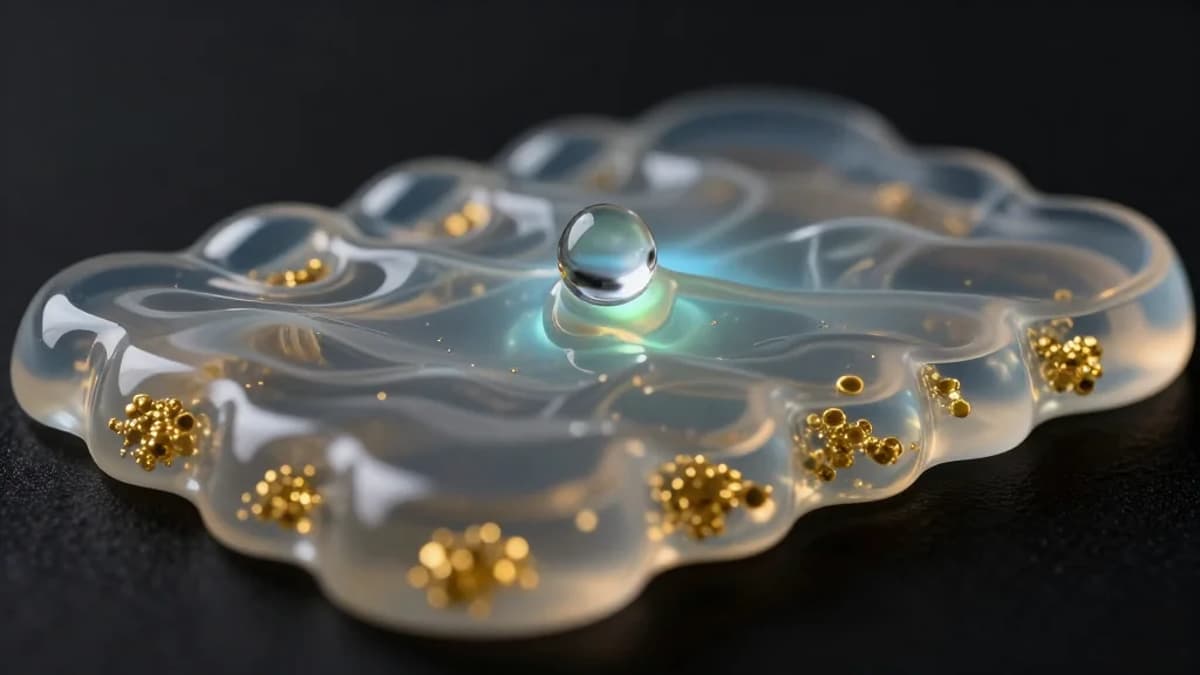
Micro‐Corrugated Hydrogel Electrodes for High‐Performance Biofuel Cells via Capillary Force and Ligand Exchange‐Induced Metal Nanoparticle Assembly (Small 14/2026)
•March 6, 2026
0
Why It Matters
Mediator‑free, high‑power biofuel cells could replace batteries in wearables and implantable devices, accelerating the shift toward sustainable, on‑board energy sources.
Key Takeaways
- •Capillary force creates micro-corrugated hydrogel architecture.
- •Ligand exchange assembles TOA‑Au nanoparticles on electrode.
- •Enables mediator‑free electron transfer in enzymatic biofuel cells.
- •Achieves power density exceeding 1 mW cm⁻².
- •Maintains stable output for over 1000 hours.
Pulse Analysis
The rapid growth of wearable electronics and implantable medical sensors has intensified demand for compact, reliable power sources. Traditional lithium‑ion batteries pose safety and lifespan concerns, prompting researchers to explore enzymatic biofuel cells that harvest biochemical energy directly from the body. However, conventional biofuel cell designs suffer from low power density and reliance on redox mediators, which add complexity and degrade over time. Integrating conductive nanomaterials within a hydrogel matrix offers a promising route to overcome these barriers, leveraging the hydrogel’s biocompatibility and the metal nanoparticles’ electrical conductivity.
In the Small 2026 paper, the team introduced a micro‑corrugated hydrogel electrode fabricated via capillary‑force patterning, which spontaneously molds the hydrogel into a high‑surface‑area topology. Simultaneously, a ligand‑exchange process deposits tetra‑octyl‑ammonium (TOA)‑capped gold nanoparticles throughout the corrugations, forming a percolating conductive network. This dual‑strategy eliminates the need for soluble mediators, allowing direct electron tunneling from immobilized enzymes to the gold scaffold. The result is a dramatic boost in power output—exceeding 1 mW cm⁻²—while preserving enzyme activity through gentle confinement within the hydrogel’s porous matrix.
The implications extend beyond laboratory performance metrics. A stable, mediator‑free biofuel cell that operates for thousands of hours positions itself as a viable alternative for powering next‑generation health monitors, smart textiles, and low‑power IoT nodes. Commercialization will hinge on scalable manufacturing of the patterned hydrogel and ensuring consistent nanoparticle assembly at industrial volumes. Nonetheless, this breakthrough underscores a clear pathway toward greener, longer‑lasting energy solutions that could reshape the portable power market in the coming decade.
Micro‐Corrugated Hydrogel Electrodes for High‐Performance Biofuel Cells via Capillary Force and Ligand Exchange‐Induced Metal Nanoparticle Assembly (Small 14/2026)
0
Comments
Want to join the conversation?
Loading comments...