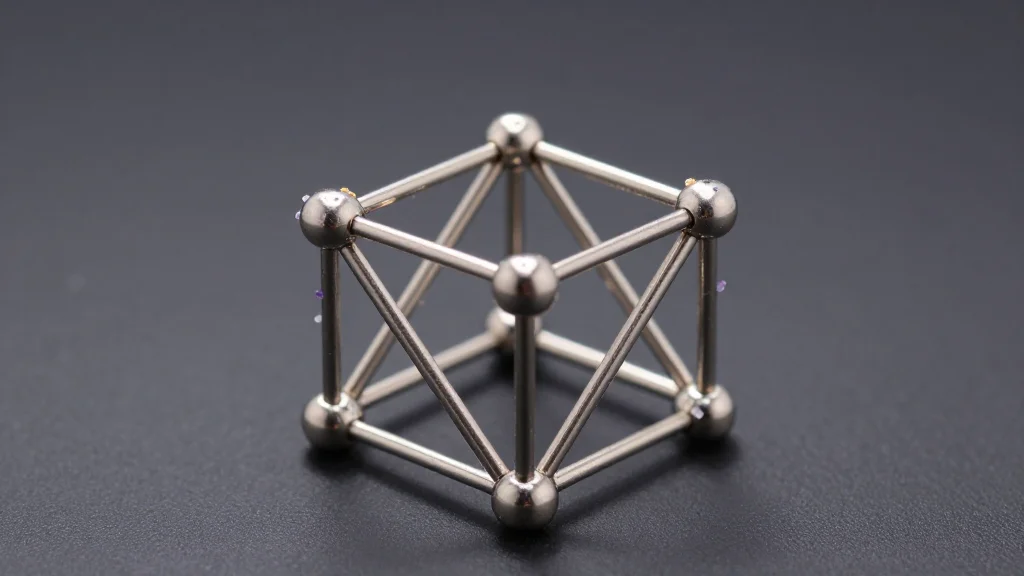
Microporous Self‐Assembled Pd(II) Tetrahedral Cages for Rapid and Reversible Multi‐Phase Sequestration of Iodine and Methyl Iodide
Why It Matters
Efficient iodine sequestration mitigates nuclear and medical leak hazards, offering a faster, higher‑capacity alternative to existing adsorbents and strengthening environmental safety protocols.
Key Takeaways
- •C1‑C4 cages achieve up to 3.78 g g⁻¹ iodine uptake.
- •Capture works in vapor, water, and organic solvents.
- •C4 records 9.2 L g⁻¹ elution volume for I₃⁻.
- •Methyl iodide uptake reaches 1.44 g g⁻¹.
- •Recyclable, scalable synthesis sets new iodine capture benchmark.
Pulse Analysis
Industrial and medical incidents that release radioactive iodine pose acute health and environmental threats, prompting a search for adsorbents that can swiftly remove iodine from air and water. Conventional solutions—activated carbon, metal‑organic frameworks (MOFs), and covalent organic frameworks (COFs)—often struggle with limited uptake, slow kinetics, or poor selectivity, especially when dealing with vapor‑phase contaminants. As regulatory pressure mounts for more reliable remediation technologies, the market has been eager for materials that combine high capacity with rapid response.
The newly reported palladium(II) tetrahedral cages, designated C1 through C4, address these gaps through a unique self‑assembly process that creates microporous interiors without permanent channels. Despite lacking permanent porosity, the cages achieve unprecedented iodine sorption, reaching 3.78 g g⁻¹ in vapor at 75 °C and 3.52 g g⁻¹ in aqueous solutions, surpassing the best MOF and COF benchmarks. Dynamic flow‑through experiments reveal a record elution volume of 9.2 L g⁻¹ for I₃⁻, and the cages also capture methyl iodide vapor at 1.44 g g⁻¹. Density‑functional theory attributes this performance to cooperative π‑iodine interactions and nucleophilic binding at heteroatoms, while the robust palladium framework ensures recyclability and facile regeneration.
From a commercial perspective, these cages could transform iodine mitigation strategies in nuclear power plants, medical isotope facilities, and waste‑water treatment plants. Their scalable synthesis and structural durability lower deployment costs compared with bespoke MOF production, while the rapid kinetics enable compact filter designs that meet stringent regulatory limits. Future work may focus on ligand‑tuning to target other halogenated pollutants or integrating the cages into composite membranes, positioning them as a versatile platform for next‑generation environmental remediation.
Microporous Self‐Assembled Pd(II) Tetrahedral Cages for Rapid and Reversible Multi‐Phase Sequestration of Iodine and Methyl Iodide
Comments
Want to join the conversation?
Loading comments...