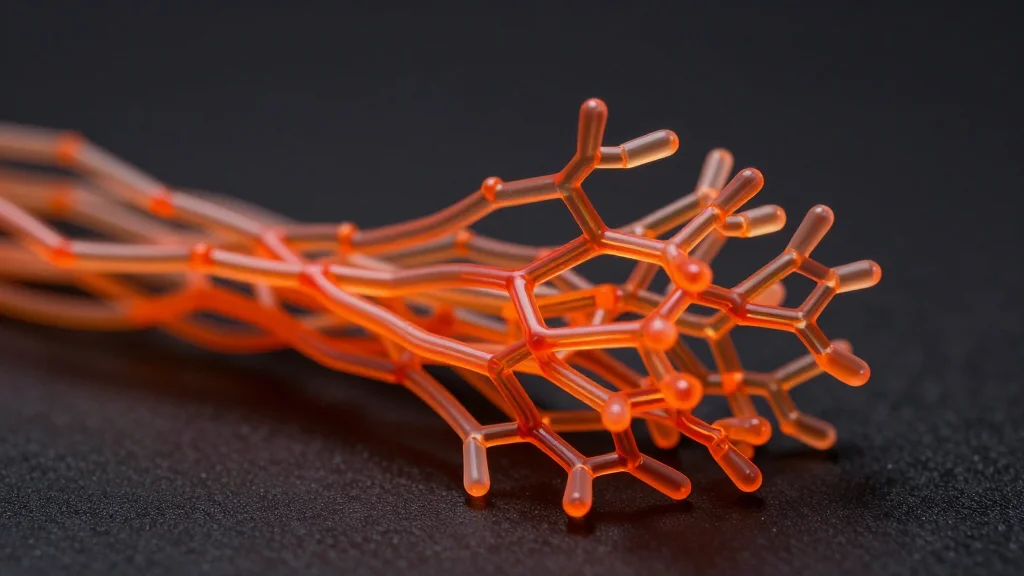
Molecular Engineering‐Regulated Donor‐Acceptor 1D Covalent Organic Frameworks with Bipolar Redox‐Active Centers for High‐Performance Organic Li‐Ion Battery Cathodes
Why It Matters
The breakthrough shows that molecularly engineered 1D COFs can deliver high energy density and fast‑charging performance, addressing key limitations of conventional inorganic cathodes. This could accelerate the adoption of safer, more sustainable organic battery technologies.
Key Takeaways
- •1D COFs engineered with donor-acceptor design improve conductivity
- •In situ growth on CNT creates dendritic core‑shell structure
- •BF‑4C composite delivers 329 mAh g⁻¹ at 100 mA g⁻¹
- •Retains ~100 mAh g⁻¹ at 5000 mA g⁻¹ rate
- •Each BF unit stores two PF6⁻ and eight Li⁺ ions
Pulse Analysis
Covalent organic frameworks have long been touted for their tunable porosity and lightweight chemistry, yet most research has focused on two‑dimensional sheets or three‑dimensional networks that suffer from limited electron transport. By shifting to a one‑dimensional architecture and embedding donor‑acceptor motifs, scientists can deliberately narrow the band gap, turning COFs into conductive scaffolds rather than merely insulating hosts. This molecular‑level control over electronic structure is a decisive step toward making organic materials viable for high‑power electrochemical applications.
The study’s second innovation lies in the in‑situ growth of these 1D COFs on carbon nanotubes, producing a dendritic core‑shell composite that maximizes exposure of redox‑active sites while leveraging the intrinsic conductivity of CNTs. The resulting BF‑4C material not only reaches a theoretical capacity of 329 mAh g⁻¹ at modest rates but also sustains roughly 100 mAh g⁻¹ at a staggering 5 A g⁻¹, a performance envelope typically reserved for advanced inorganic cathodes. Detailed X‑ray photoelectron spectroscopy and density‑functional theory calculations reveal that each bipolar BF unit can reversibly host two PF₆⁻ anions and eight Li⁺ ions, explaining the high capacity and excellent rate capability.
From a market perspective, these findings could reshape the battery supply chain by introducing organic cathodes that are lighter, potentially cheaper, and more environmentally benign than metal‑oxide counterparts. The ability to charge rapidly without sacrificing cycle life aligns with the demands of electric‑vehicle fleets and grid‑scale storage, where turnaround time and longevity are paramount. As manufacturers seek to diversify beyond cobalt‑rich chemistries, the scalable synthesis of engineered 1D COFs and their seamless integration with conductive nanostructures may become a cornerstone of next‑generation lithium‑ion battery design.
Molecular Engineering‐Regulated Donor‐Acceptor 1D Covalent Organic Frameworks with Bipolar Redox‐Active Centers for High‐Performance Organic Li‐Ion Battery Cathodes
Comments
Want to join the conversation?
Loading comments...