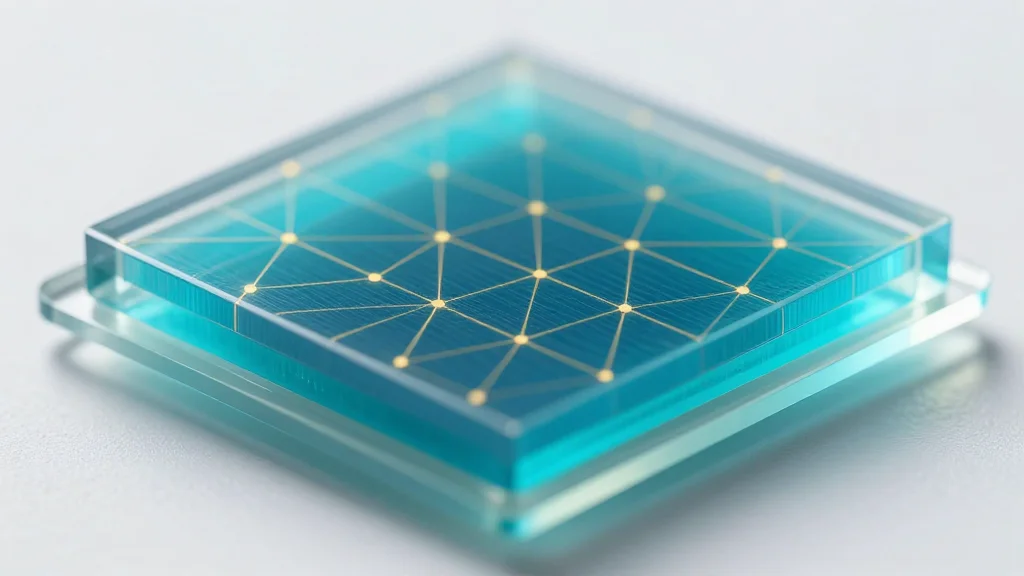
Molecular Interface Tweak Boosts Perovskite Solar Cell Reliability

Why It Matters
The reliability of perovskite solar cells has been the primary barrier to their commercial adoption. By proving that molecular interface engineering can improve stability without compromising efficiency, the new research removes a critical technical obstacle. This could unlock a new generation of lightweight, flexible, and inexpensive solar panels, expanding solar deployment into sectors such as building‑integrated photovoltaics and portable power. Beyond photovoltaics, the study showcases how precise nanoscale chemistry can be leveraged to tailor material interfaces across a range of technologies, from LEDs to batteries. The broader nanotech community may apply similar strategies to enhance durability in other emerging devices, accelerating the transition to a more sustainable, nanotech‑enabled economy.
Key Takeaways
- •Researchers introduced a molecular bridge that stabilizes perovskite solar cell interfaces.
- •The modification challenges the assumption that interface tweaks degrade performance.
- •Reliability improvements were observed across temperature and humidity stress tests.
- •No quantitative efficiency loss was reported, preserving high power conversion rates.
- •Field‑scale pilot installations are planned for later 2026 to validate real‑world durability.
Pulse Analysis
The perovskite sector has been a classic case of a technology outpacing its own reliability roadmap. Early breakthroughs in efficiency sparked a funding frenzy, yet investors remained wary because degradation under outdoor conditions could erode returns. This new molecular interface approach effectively decouples the efficiency‑stability trade‑off, offering a clear path to commercial viability. Historically, similar interface breakthroughs—such as the introduction of passivation layers in silicon photovoltaics—have unlocked massive market expansion. If the upcoming field trials confirm laboratory results, we can expect a rapid re‑allocation of capital from traditional silicon to hybrid perovskite‑silicon tandem lines, where the latter can push efficiencies beyond 30%.
From a competitive standpoint, incumbents with existing pilot production lines will likely scramble to license the chemistry, while pure‑play nanotech firms may leverage the discovery to differentiate their IP portfolios. The race will shift from pure efficiency gains to reliability engineering, reshaping R&D budgets and partnership strategies across the solar value chain. Moreover, the broader nanotech implication is profound: it demonstrates that molecular‑scale design can be a decisive lever for performance, encouraging cross‑industry adoption of similar tactics in energy storage and optoelectronics.
Looking ahead, the key risk remains the translation from controlled lab environments to the harsh realities of outdoor deployment. Even with promising stress‑test data, long‑term field performance will dictate whether the technology can achieve the economies of scale needed to disrupt the $150 billion global solar market. Stakeholders should monitor the upcoming pilot results closely, as they will likely set the valuation benchmarks for the next wave of nanotech‑enabled renewable investments.
Molecular Interface Tweak Boosts Perovskite Solar Cell Reliability
Comments
Want to join the conversation?
Loading comments...