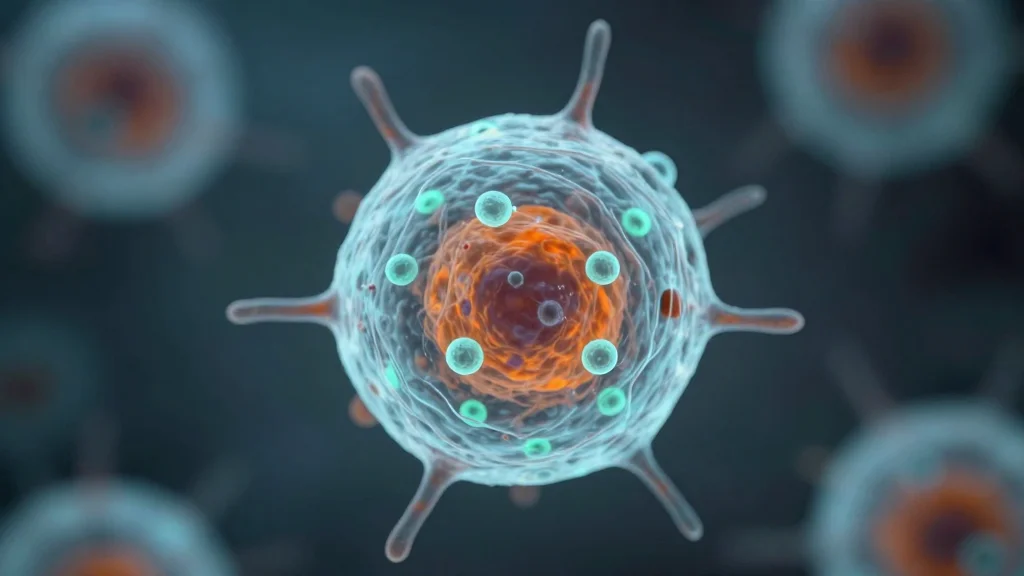
Molecular Quantum Nanosensors Map Temperature Inside Living Cancer Cells

Why It Matters
Accurate thermal mapping at the nanoscale has been a persistent gap in cancer biology. By delivering a sensor that can operate inside living cells without compromising viability, the MoQN platform equips researchers with a direct window into the metabolic microenvironment that fuels tumor growth. This capability could accelerate the discovery of temperature‑sensitive drug targets and improve the design of therapies that exploit cellular heat signatures. Beyond oncology, the technology’s ability to detect paramagnetic radicals offers a broader chemical imaging tool for studying oxidative stress in neurodegeneration, cardiovascular disease, and immune responses. The modular nature of the nanocrystal coating suggests that the platform could be adapted for a range of biomedical applications, potentially reshaping how nanotechnology interfaces with live‑cell diagnostics.
Key Takeaways
- •MoQNs achieve 0.3 °C temperature precision, three times better than nanodiamond probes
- •Sensors are built from pentacene‑doped para‑terphenyl nanocrystals coated with Pluronic F‑127
- •Particle sizes produced by wet ball milling are ~200 nm and ~500 nm
- •Biocompatibility confirmed in Hepa1‑6, HEK 293H and HepG2 cells with no membrane damage after 72 h
- •Future work targets organelle‑specific delivery and high‑throughput cancer‑cell screening
Pulse Analysis
The MoQN breakthrough addresses a long‑standing limitation in intracellular thermometry: the trade‑off between spatial resolution and measurement fidelity. Nanodiamond sensors, while popular, suffer from defect‑induced spectral drift that hampers quantitative analysis. By leveraging molecular uniformity and deuterated pentacene, the Japanese team sidesteps this issue, delivering a sensor that can reliably report absolute temperature changes at the sub‑cellular level. This technical edge is likely to shift research funding toward molecular‑based quantum sensors, especially as the field moves toward organelle‑specific diagnostics.
From a market perspective, the nanomedicine sector has seen a surge in investment for precision‑delivery platforms, yet few solutions offer real‑time feedback on the biochemical environment they encounter. MoQNs could fill that niche, enabling closed‑loop therapeutic systems that adjust dosing based on instantaneous thermal or radical readouts. Companies developing smart drug carriers may seek licensing deals or collaborations to embed MoQN technology into their pipelines, potentially creating a new revenue stream for quantum‑sensor manufacturers.
Looking ahead, the path to clinical adoption will hinge on scaling production while maintaining the uniformity that underpins the sensor’s performance. The wet ball‑milling process described is compatible with existing pharmaceutical manufacturing equipment, suggesting a feasible scale‑up. However, regulatory scrutiny will focus on long‑term biodistribution and clearance of the nanocrystals. If the researchers can demonstrate safe, repeatable delivery in animal models, the MoQN platform could become a cornerstone of next‑generation cancer diagnostics and therapy monitoring.
Molecular Quantum Nanosensors Map Temperature Inside Living Cancer Cells
Comments
Want to join the conversation?
Loading comments...