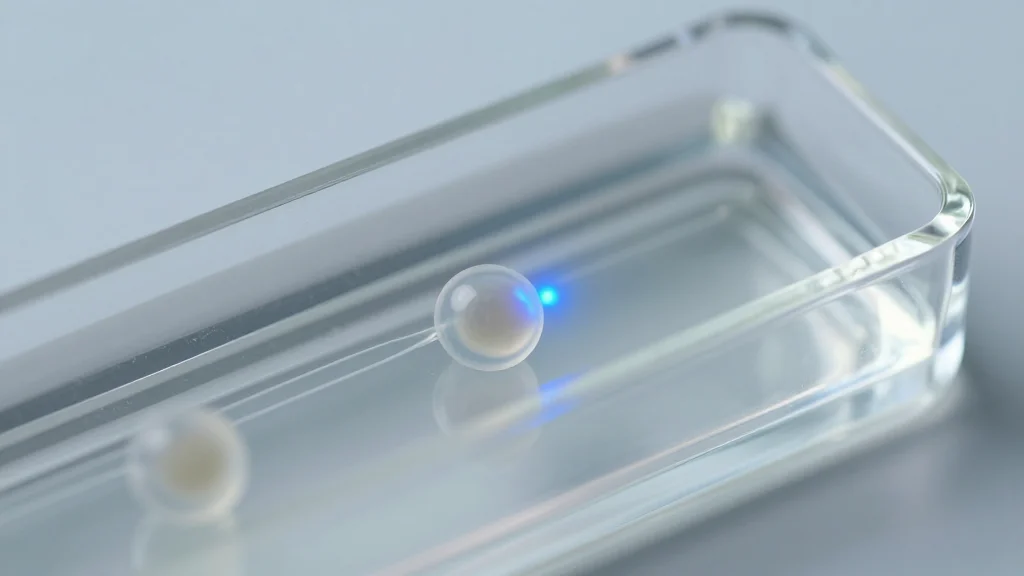
Molecular Quantum Nanosensors Reveal Temperature and Radical Signals Inside Living Cells
Why It Matters
MoQNs bring quantitative, real‑time thermometry and redox monitoring to live‑cell studies, opening new pathways for precision biology, drug screening, and quantum‑based diagnostics.
Key Takeaways
- •MoQNs provide absolute temperature readings at subcellular level
- •Sensors detect radical‑induced spin changes in cytoplasm and nucleus
- •Biocompatible design preserves cell viability and quantum coherence
- •Deuterated pentacene enhances thermometric precision of MoQNs
- •Platform enables organelle‑specific temperature and redox measurements
Pulse Analysis
Quantum sensing has long promised unprecedented insight into cellular processes, yet conventional tools—nanodiamonds, quantum dots, fluorescent proteins—suffer from material heterogeneity and limited biocompatibility. The newly reported molecular quantum nanosensors (MoQNs) sidestep these constraints by embedding uniform pentacene spin qubits within para‑terphenyl nanocrystals, then cloaking them with the FDA‑approved surfactant Pluronic F127. This architecture preserves quantum coherence under physiological conditions, allowing continuous‑wave optically detected magnetic resonance (ODMR) to function inside living cells without compromising viability.
The research team refined the sensor chemistry by substituting regular pentacene with fully deuterated variants, creating dMoQNs that sharpen the ODMR spectrum and boost temperature‑sensing accuracy. In live cancer cells, dMoQNs recorded absolute temperatures that varied by organelle, revealing hotter nuclei and localized thermal gradients. Simultaneously, the sensors captured radical‑induced spin relaxation changes after hydrogen peroxide exposure, demonstrating dual capability for thermometry and redox monitoring. These results prove that quantum spin readout can be reliably performed at the molecular level inside complex biological environments.
Beyond the laboratory, MoQNs could transform drug discovery and disease diagnostics. Precise intracellular temperature maps can identify metabolic hotspots in tumor cells, while real‑time radical detection offers a window into oxidative stress pathways relevant to neurodegeneration and inflammation. The platform’s scalability and biocompatibility position it for integration into high‑throughput screening platforms and potentially for in vivo imaging probes. As quantum bio‑engineering matures, MoQNs may become a cornerstone technology linking quantum physics with next‑generation biomedical applications.
Molecular quantum nanosensors reveal temperature and radical signals inside living cells
Comments
Want to join the conversation?
Loading comments...