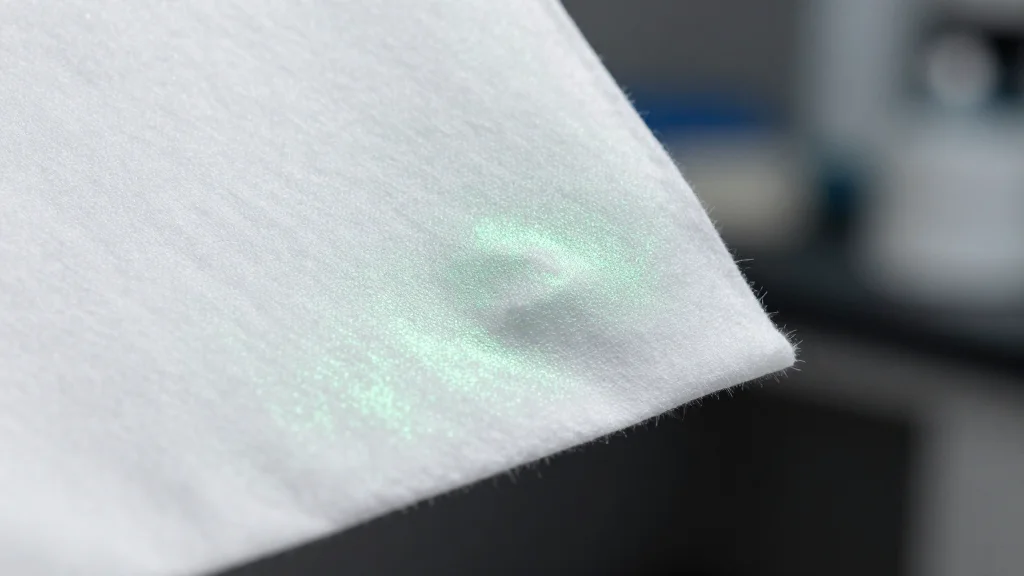
MoS2 Nanocoating Turns Fabric Into Washable Smart Pressure Sensor

Why It Matters
The MoS₂ nanocoating bridges a gap between laboratory‑scale nanomaterial synthesis and mass‑manufacturable smart textiles. Its green chemistry eliminates hazardous solvents, aligning with increasing regulatory and consumer pressure for sustainable manufacturing. By delivering a sensor that survives repeated washing, the technology removes a key barrier to everyday wearable adoption, potentially expanding the market for continuous health monitoring beyond niche medical devices. Beyond health, the approach could be adapted for pressure‑sensitive interfaces in robotics, prosthetics, and human‑machine interaction, where durable, conformal sensors are essential. The ability to coat large fabric rolls with a uniform nanolayer also opens opportunities for low‑cost production of large‑area sensor arrays, a capability that could reshape supply chains for the broader Internet‑of‑Things ecosystem.
Key Takeaways
- •Coating thickness averages 1.42 µm with a loading of 7.2 mg/cm² of few‑layer MoS₂
- •Sensor detects pressures from 600 Pa to 6,000 Pa with repeatable resistance changes
- •Liquid‑phase exfoliation uses a 1:1 ethanol‑water mix and 0.1 M citric acid, avoiding toxic solvents
- •Device retains functionality after multiple machine‑wash cycles and shows in‑vitro biocompatibility
- •Sandwich architecture combines two coated fabric layers with a conductive polyethylene‑carbon film
Pulse Analysis
The introduction of a scalable, environmentally benign MoS₂ coating could redefine the economics of smart textile production. Traditional electronic textiles depend on sputtered metals or conductive polymers that require expensive vacuum deposition or involve polymers that degrade under mechanical stress. By leveraging a solution‑based process compatible with roll‑to‑roll manufacturing, the cost per square metre of sensor‑enabled fabric could drop dramatically, making it attractive for high‑volume apparel brands seeking to embed health‑monitoring features.
From a competitive standpoint, the technology arrives as major wearable manufacturers—such as Apple, Fitbit, and Garmin—are exploring textile‑integrated sensors to complement wrist‑worn devices. While these incumbents have the advantage of brand recognition, they face engineering challenges in integrating rigid components into flexible garments. The MoS₂ approach sidesteps this by turning the fabric itself into the active sensing element, potentially accelerating time‑to‑market for new product categories.
Looking ahead, the key risk lies in translating laboratory performance to large‑scale production without compromising nanosheet uniformity. Variations in coating thickness could affect sensor calibration, requiring robust quality‑control protocols. Moreover, regulatory clearance for medical‑grade wearables will demand extensive long‑term biocompatibility data. If the research team can demonstrate consistent manufacturing yields and navigate the approval process, the MoS₂ nanocoating could become a cornerstone of the next generation of wearable health platforms, driving both revenue growth for nanomaterial suppliers and broader adoption of continuous monitoring in everyday life.
MoS2 Nanocoating Turns Fabric Into Washable Smart Pressure Sensor
Comments
Want to join the conversation?
Loading comments...