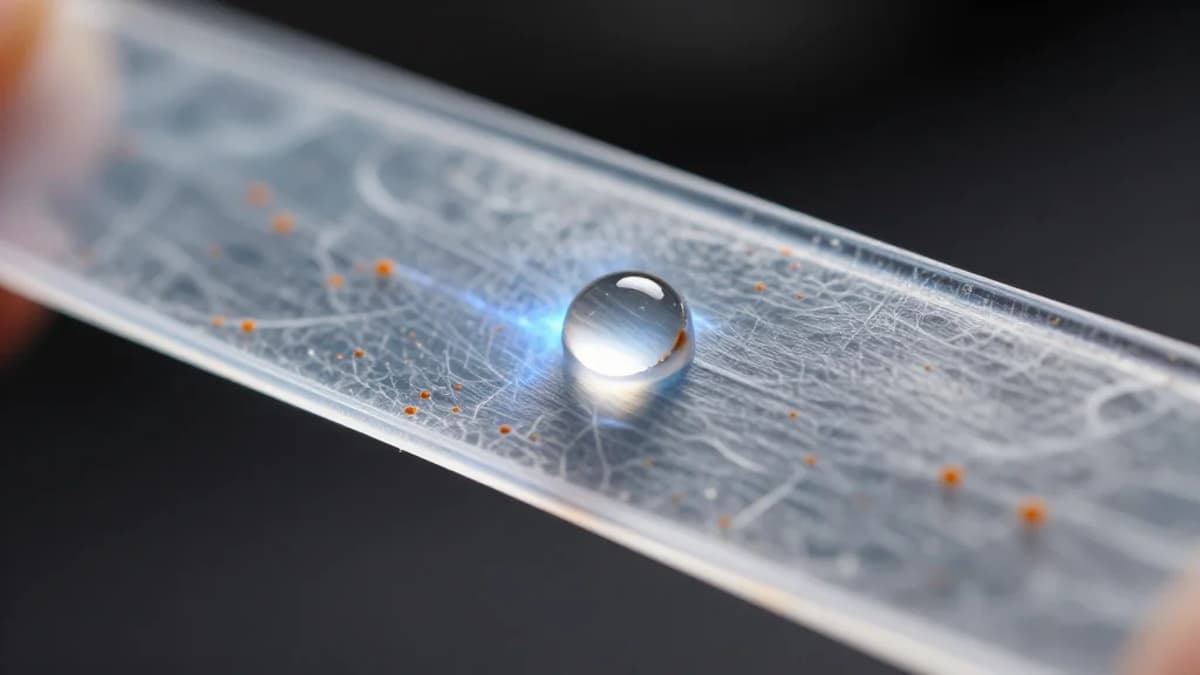
Nanocomposite Cellulose Membranes for High‐Performance Water Evaporation Electricity Generation
•January 25, 2026
0
Why It Matters
The breakthrough raises the power density of low‑grade thermal energy harvesting, moving hydrovoltaic technology closer to real‑world applications. It also highlights a scalable, renewable‑materials approach that could diversify sustainable energy portfolios.
Key Takeaways
- •Nanocomposite membrane yields 3.7 V output
- •BiOI nanoparticles boost evaporating potential
- •Voltage three times higher than pristine cellulose
- •Device powers LEDs, demonstrates commercial viability
Pulse Analysis
Hydrovoltaic energy, which converts ambient water‑evaporation heat into electricity, has attracted attention as a low‑cost, environmentally benign power source. Traditional cellulose‑based devices, prized for their abundance and surface chemistry, have been limited by modest voltages—typically under 1 V—restricting practical use. Recent advances in nanostructuring and material hybridization aim to overcome these constraints, positioning hydrovoltaic systems as complementary contributors to the broader renewable‑energy mix.
The Nanjing team’s innovation lies in integrating semiconductive bismuth oxyiodide (BiOI) nanoparticles onto a cellulose nanofiber matrix through a precise liquid‑vapor deposition sequence. The BiOI particles introduce localized evaporating potentials that amplify charge separation during water loss, propelling the open‑circuit voltage to approximately 3.7 V. This three‑fold increase over pristine cellulose not only sets a new benchmark for cellulose‑based generators but also places the device among the highest‑performing hydrovoltaic platforms reported to date, rivaling metal‑oxide and graphene‑based counterparts.
Beyond the laboratory, the elevated voltage enables direct powering of off‑the‑shelf electronics such as LEDs, eliminating the need for complex voltage‑boosting circuits. This functional demonstration underscores the commercial viability of scalable, bio‑derived energy harvesters for remote sensing, IoT nodes, and low‑power wearables. Future research will likely focus on optimizing nanoparticle loading, membrane durability, and integration with flexible substrates, paving the way for cost‑effective, self‑sustaining power solutions in decentralized energy markets.
Nanocomposite Cellulose Membranes for High‐Performance Water Evaporation Electricity Generation
0
Comments
Want to join the conversation?
Loading comments...