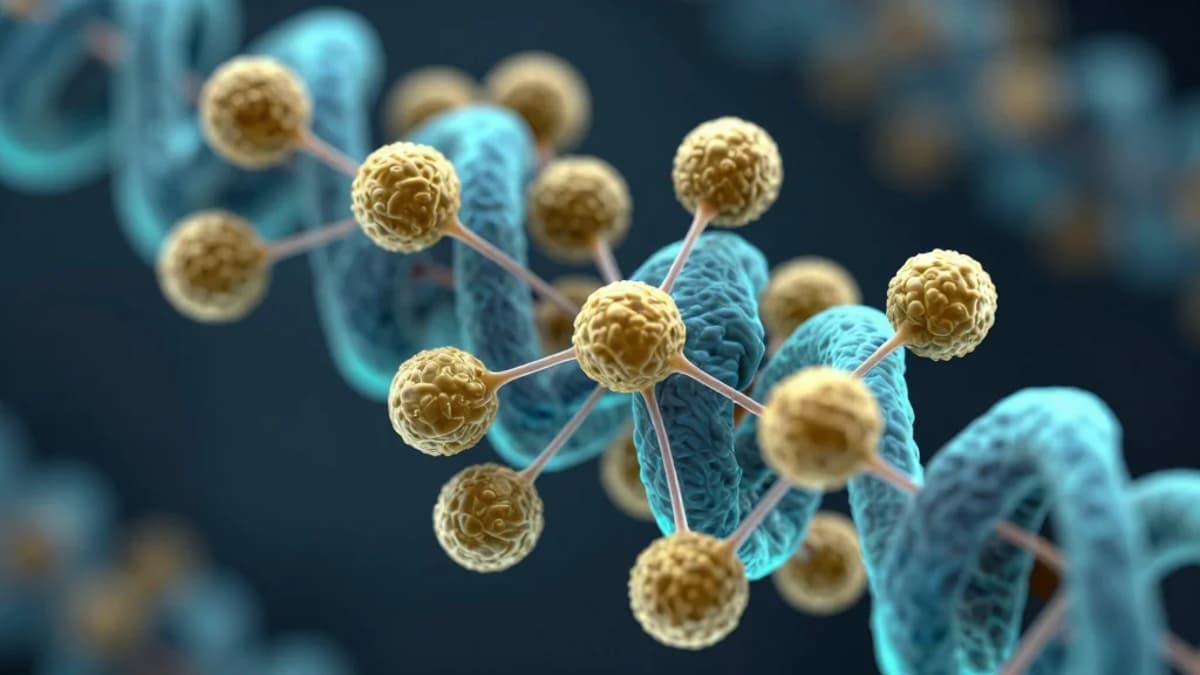
Nanoparticle-Mediated Targeting Chimeras Transform Targeted Protein Degradation
•January 20, 2026
0
Why It Matters
By coupling precise ligand recognition with nanocarrier delivery, these chimeras overcome cellular uptake barriers and broaden the druggable proteome, paving the way for precision therapies in oncology and neurodegeneration.
Key Takeaways
- •Ligand‑installed nanoparticles degrade membrane proteins broadly.
- •Positive surface charge boosts intracellular mutant p53 degradation.
- •Nanoparticle chimeras merge PROTAC specificity with nanocarrier delivery.
- •Enables extracellular protein clearance via lysosomal pathways.
- •Supports tissue‑specific targeting using SORT nanoparticle designs.
Pulse Analysis
The targeted protein degradation (TPD) landscape has been reshaped over the past decade by PROTACs, molecular glues, and lysosome‑targeting chimeras (LYTACs). While these modalities have unlocked new druggable targets, they often struggle with cellular uptake, tissue distribution, and the degradation of extracellular proteins. Traditional small‑molecule degraders rely on intracellular E3 ligase recruitment, limiting their reach to membrane‑bound or secreted proteins and requiring extensive medicinal chemistry to balance potency and pharmacokinetics.
Nanoparticle‑mediated targeting chimeras merge the specificity of ligand‑based recognition with the delivery advantages of nanocarriers. By decorating nanoparticles with high‑affinity ligands, researchers have enabled receptor‑mediated endocytosis that routes bound proteins to lysosomes or autophagy‑like pathways. Landmark reports—Liu et al. (2025) demonstrating universal membrane protein degradation across polymeric, lipid, and inorganic particles, and Huang et al. (2024) showing that positively charged nanoreceptors accelerate mutant p53 clearance—highlight how multivalency, surface charge, and engineered protein‑mimetic motifs enhance degradation efficiency. Moreover, selective organ‑targeting (SORT) nanoparticles provide tissue‑specific delivery, addressing a key limitation of systemic PROTACs.
The therapeutic implications are profound. Nanoparticle chimeras expand the druggable proteome to include extracellular cytokines, membrane receptors, and intracellular oncogenic mutants previously deemed inaccessible. Coupled with AI‑driven design of ligand‑nanoparticle interfaces and deep‑learning‑accelerated PROTAC optimization, these platforms promise faster, more precise drug development pipelines. Challenges remain—immune recognition, long‑term safety, and scalable manufacturing—but the convergence of nanotechnology, TPD chemistry, and computational design positions nanoparticle‑mediated degraders as a next‑generation modality poised for clinical translation.
Nanoparticle-mediated targeting chimeras transform targeted protein degradation
0
Comments
Want to join the conversation?
Loading comments...