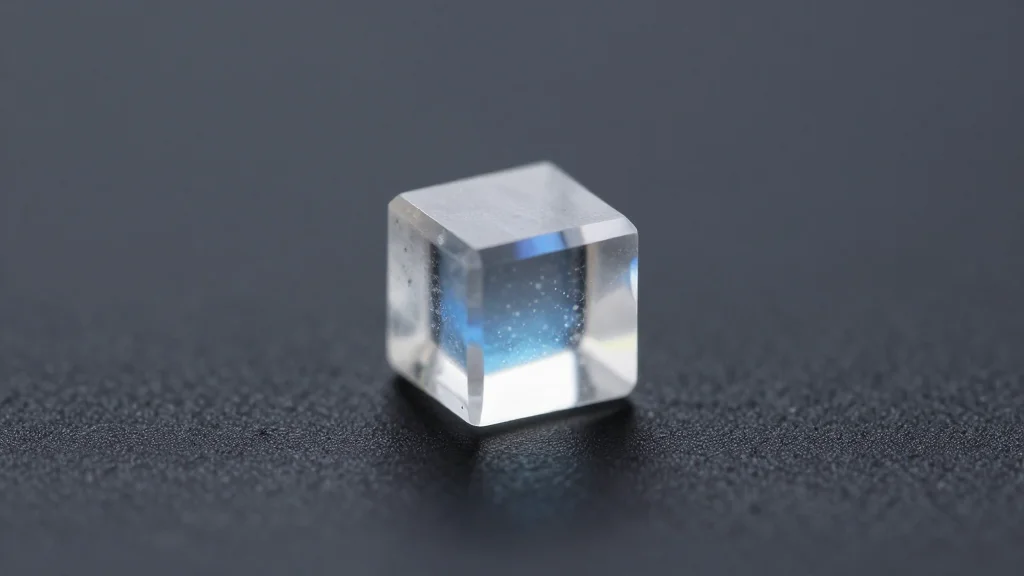
Nanophotonic Platform Pushes Solid-State Nuclear Clock Accuracy Toward 10⁻¹⁹

Why It Matters
Achieving 10⁻¹⁹ timing precision in a solid‑state device would close the gap between laboratory‑grade nuclear clocks and deployable timing hardware. Such precision enables new tests of fundamental physics, including searches for variations in fundamental constants, and improves the accuracy of relativistic geodesy, where minute differences in gravitational potential are measured via clock frequency shifts. In the commercial arena, ultra‑stable clocks are a cornerstone for next‑generation quantum networks and for synchronising distributed sensor arrays, potentially unlocking higher‑resolution imaging and navigation capabilities. The nanophotonic approach also demonstrates how advances in materials science—specifically low‑loss fluoride resonators—can solve long‑standing quantum‑technology bottlenecks. By embedding the nuclear transition directly into a photonic cavity, the platform sidesteps the need for bulky vacuum chambers and complex laser cooling, paving the way for mass‑manufacturable timing chips that could be integrated into smartphones, autonomous vehicles, and satellite constellations.
Key Takeaways
- •Sandro Kraemer's team embeds thorium‑229 at 1 × 10¹³ cm⁻² fluence in fluoride whisper‑gallery resonators.
- •Projected clock accuracy approaches 10⁻¹⁹, surpassing current gas‑cell nuclear clocks.
- •High‑Q fluoride resonators trap light, amplifying nuclear excitation rates for practical optical interrogation.
- •Roadmap includes resonator fabrication, thorium implantation, laser integration, and on‑chip detection.
- •Potential applications span quantum computing, satellite navigation, geophysical sensing, and fundamental‑physics experiments.
Pulse Analysis
The nanophotonic breakthrough marks a pivot point for the nuclear‑clock field, which has long been hampered by the weak coupling between photons and the 7.8 eV thorium‑229 transition. By leveraging whisper‑gallery‑mode resonators, the researchers have effectively turned a low‑signal problem into a high‑Q cavity‑enhanced interaction, a strategy that mirrors the success of cavity‑QED in atomic clocks. Historically, solid‑state approaches lagged behind trapped‑ion and optical lattice clocks because of material‑damage concerns and insufficient interrogation strength. This work demonstrates that those barriers are not insurmountable, especially as fluoride crystals can now be grown with sub‑ppm impurity levels and integrated with standard photonic foundry processes.
From a market perspective, the timing industry is poised for disruption. Current atomic clock modules cost thousands of dollars and occupy significant volume, limiting their use to high‑value platforms like GPS satellites and deep‑space probes. A chip‑scale nuclear clock that delivers comparable or superior stability could democratise ultra‑precise timing, creating a new class of products for telecom backhaul, high‑frequency trading, and distributed quantum sensors. Early adopters are likely to be defense contractors and space agencies, which have the budget and the need for rugged, low‑power timing solutions.
Looking ahead, the key risk lies in translating laboratory‑scale implantation and resonator‑fabrication techniques to high‑volume manufacturing. Yield losses from crystal damage or implantation non‑uniformity could erode the economic case. However, the involvement of multiple European and Asian research institutions suggests a broad talent pool and potential for cross‑border funding, which could accelerate the transition from prototype to production. If the next experimental cycle confirms the projected 10⁻¹⁹ stability, we can expect a wave of venture capital and strategic investments targeting the nascent solid‑state nuclear‑clock market.
Nanophotonic Platform Pushes Solid-State Nuclear Clock Accuracy Toward 10⁻¹⁹
Comments
Want to join the conversation?
Loading comments...