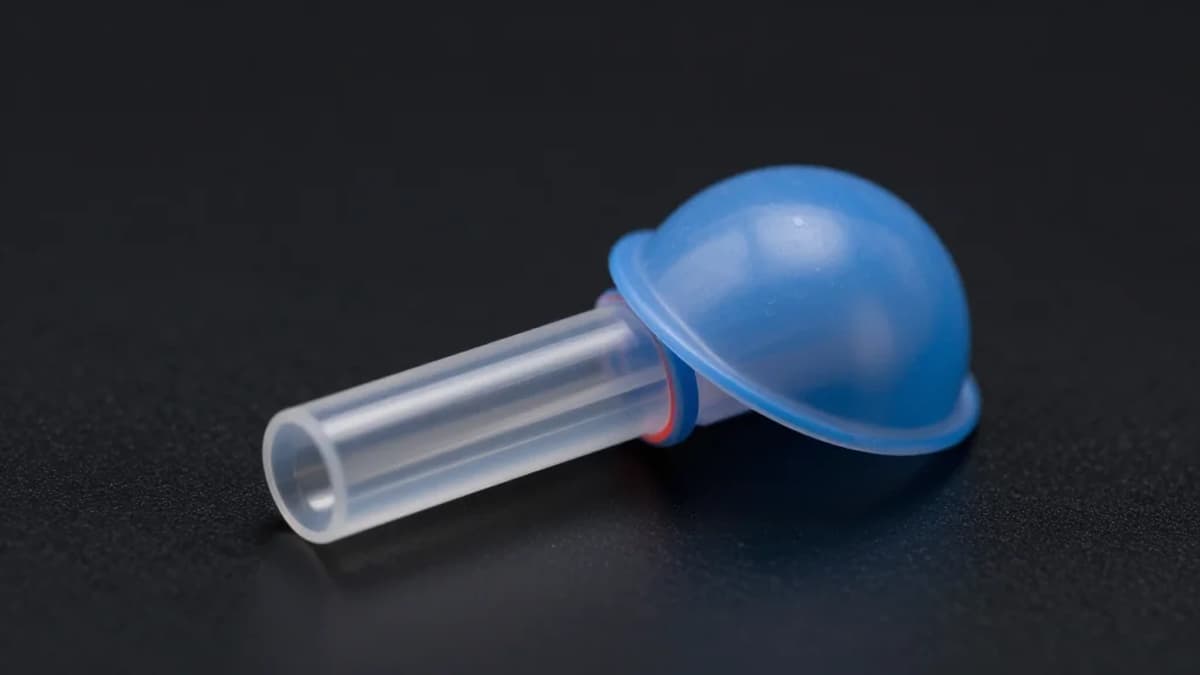
Nanotubes with Lids Mimic Real Biology
•February 2, 2026
0
Why It Matters
Dynamic nanofluidic gates enable membranes that adapt permeability on demand, opening new pathways for energy‑efficient water treatment and precision biomedical devices.
Key Takeaways
- •Lid closes at acidic pH, blocks ion flow
- •Neutral pH rotates lid open, permits water passage
- •Synthetic nanotube gates mimic biological porins
- •Potential applications: desalination, biosensing, drug delivery
- •Machine learning aided simulations confirm pH‑responsive behavior
Pulse Analysis
Nanofluidic research has long sought to replicate the exquisite selectivity of biological channels, which guide ions and water through sub‑nanometer pores. Carbon nanotubes provide a robust scaffold because their inner diameters naturally enforce single‑file water transport, a regime where ion dehydration governs conductance. By attaching a chemically responsive “lid” to the tube ends, researchers have introduced an active element that can toggle the pore’s openness, bridging the gap between static synthetic channels and the dynamic behavior of protein porins.
The LLNL‑Maryland team employed a pH‑sensitive functional group that undergoes conformational rotation, effectively sealing the nanotube at low pH and swinging open at neutral pH. Fluorescent labeling confirmed rapid, reversible gating, while machine‑learning‑enhanced first‑principles molecular dynamics revealed how the lid’s motion reshapes the energy barrier for ion entry. This hybrid experimental‑computational approach not only validates the design but also provides a predictive framework for tailoring gate chemistry to specific ion selectivity or flow rates.
Beyond the laboratory, pH‑switchable nanotube membranes could revolutionize desalination by allowing periodic closure to reject salt spikes, improve biosensors through on‑demand access to analytes, and enable targeted drug release triggered by the acidic microenvironment of tumors. As the technology scales, its low‑energy operation and modularity may attract investment from water‑tech firms and pharmaceutical manufacturers seeking smarter, greener solutions. Continued integration of AI‑driven simulation with nanofabrication promises faster iteration cycles, accelerating the transition from proof‑of‑concept to commercial deployment.
Nanotubes with lids mimic real biology
0
Comments
Want to join the conversation?
Loading comments...