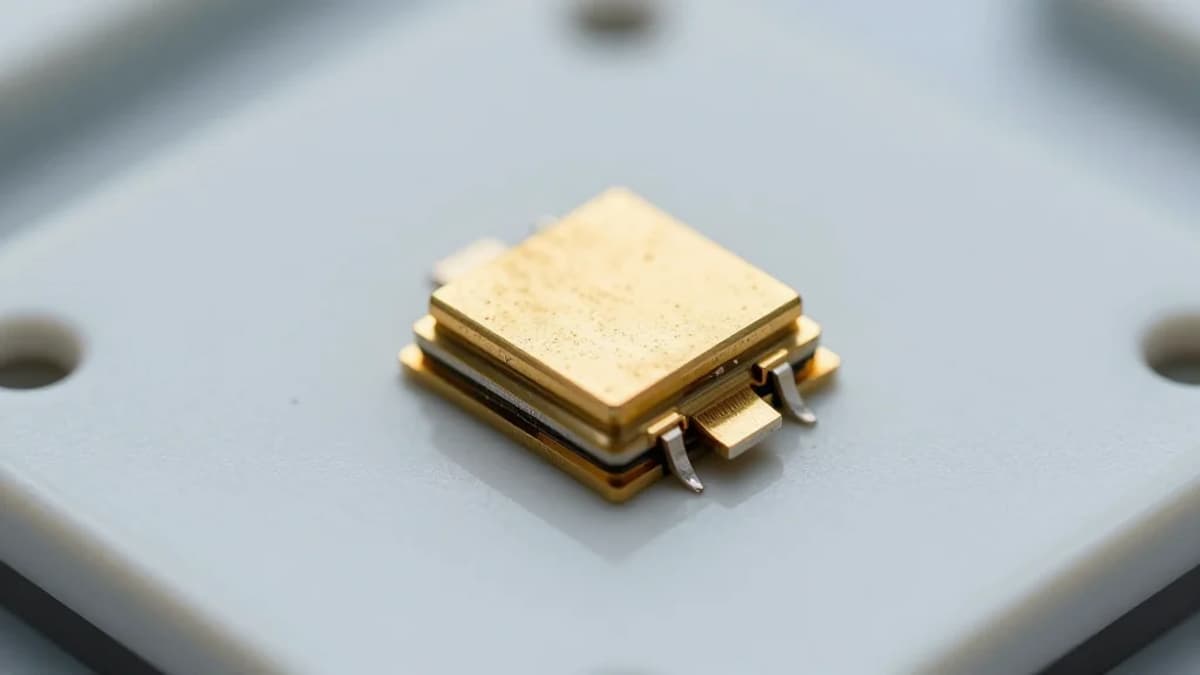
New Nanocrystalline Material Significantly Extends MEMS Switch Chip Lifespan
•January 20, 2026
0
Why It Matters
Extending MEMS switch longevity cuts replacement costs and boosts reliability for high‑frequency communications and critical aerospace systems. The advance also accelerates adoption of solid‑state RF relays across emerging markets.
Key Takeaways
- •Nanocrystalline Ni/Ni‑W composites extend MEMS fatigue life 60%
- •Self‑regulating grain rotation creates diffusion‑mediated composition gradients
- •Nanotwin formation reduces cyclic plastic strain accumulation
- •Testing system validates performance over one billion bending cycles
- •Industry partners aim to integrate material into standard MEMS processes
Pulse Analysis
Micro‑electromechanical system (MEMS) switches are the backbone of modern RF routing, enabling rapid signal modulation in smartphones, base stations, and satellite hardware. Historically, designers have relied on gold alloys for their low resistivity and ease of micro‑fabrication, but these metals falter under the extreme cyclic stresses of 5G and upcoming 6G networks, leading to premature failure and costly redesigns. The industry therefore seeks a material that can sustain billions of actuation cycles without compromising electrical performance, a gap that the new nanocrystalline Ni/Ni‑W laminate directly addresses.
The breakthrough originates from a dual‑mechanism design: nanograin rotation within the Ni‑W layer triggers atomic diffusion that establishes a graded chemical composition across the laminate, while concurrent nanotwin generation in W‑rich zones curtails plastic strain buildup. This synergy creates a self‑healing microstructure that distributes stress more evenly, delaying crack initiation. Using a bespoke ultra‑high‑cycle fatigue tester, the research team demonstrated a 60 % improvement over the conventional lifetime benchmark, confirming durability beyond one billion bending cycles. Such performance metrics not only meet but exceed the stringent reliability standards demanded by aerospace and medical implant manufacturers.
Commercially, the material’s compatibility with existing MEMS manufacturing pipelines promises a low‑barrier transition for chip producers. By collaborating with domestic firms, the researchers are poised to integrate the laminate into standard lithography and deposition steps, effectively delivering a "zero‑to‑one" upgrade in switch endurance. This could translate into longer device lifespans, reduced maintenance intervals, and lower total cost of ownership for telecom operators and defense contractors alike. Moreover, the underlying diffusion‑mediated design philosophy may inspire similar advances in other micro‑scale components, reinforcing the strategic importance of materials innovation in the next wave of high‑frequency technologies.
New nanocrystalline material significantly extends MEMS switch chip lifespan
0
Comments
Want to join the conversation?
Loading comments...