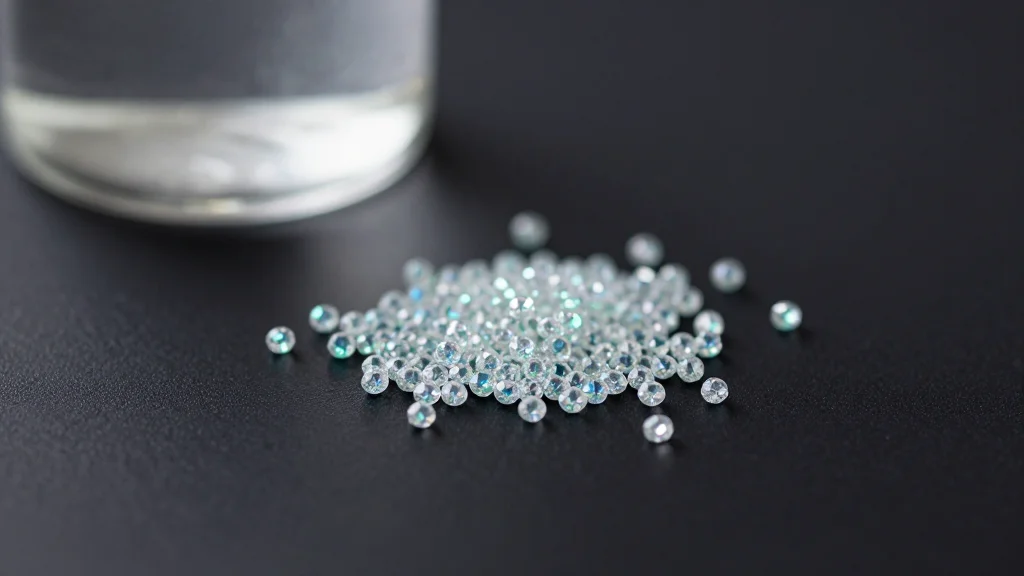
New Route to Tailor-Made Diamond Nanoparticles Holds Promise for Quantum Applications
Why It Matters
By delivering monodisperse, defect‑free nanodiamonds with built‑in color centers, the technique removes a key bottleneck in quantum hardware and bio‑nanotechnology, paving the way for commercial‑scale devices.
Key Takeaways
- •Bottom‑up synthesis uses nanographene precursors under high pressure, temperature.
- •Produces 3–4 nm nanodiamonds with uniform size and high purity.
- •Color centers (Si, Ge) integrated during growth, avoiding ion implantation.
- •Enables scalable quantum sensors, single‑photon emitters, and biomedical probes.
Pulse Analysis
Nanodiamonds—diamond crystals only a few nanometres across—have attracted attention for quantum information processing, high‑resolution sensing, and biomedical imaging because of their chemical inertness and ability to host optically active color centers. Traditional production relies on top‑down techniques such as high‑energy milling or detonation, which often yield particles with broad size distributions, surface contamination, and lattice defects that degrade optical performance. These inconsistencies have limited the scalability of nanodiamond‑based devices and raised concerns about reproducibility in commercial and research settings. Consequently, researchers have struggled to meet the stringent specifications required for next‑generation quantum devices.
The Max Planck team circumvented these hurdles by assembling nanodiamonds from molecular nanographene precursors in a high‑pressure, high‑temperature reactor. Because the starting molecules are pre‑defined, the resulting crystals inherit a narrowly controlled size—typically three to four nanometres—and a pristine lattice free of milling‑induced defects. Crucially, the synthesis embeds silicon or germanium dopants directly into the carbon framework, creating bright color centers without subsequent ion implantation or irradiation steps. This one‑step approach delivers uniform fluorescence and preserves the nanodiamond’s surface chemistry, simplifying downstream functionalisation for sensor or imaging applications. The method also demonstrates compatibility with existing chemical vapor deposition pipelines, facilitating integration into current manufacturing workflows.
The ability to produce monodisperse, defect‑free nanodiamonds at scale opens new avenues for quantum technologies. Single‑photon emitters derived from these particles can be integrated into photonic circuits, enhancing secure communication and quantum computing architectures. In the biomedical arena, the consistent optical signature and biocompatibility enable high‑contrast cellular labeling and real‑time tracking of molecular processes. Industry analysts anticipate that commercial adoption could accelerate within the next five years, driven by demand for reliable quantum sensors and the growing market for nanomaterial‑based diagnostics. As standards evolve, these tailor‑made nanodiamonds are poised to become a cornerstone material for both quantum and life‑science platforms.
New route to tailor-made diamond nanoparticles holds promise for quantum applications
Comments
Want to join the conversation?
Loading comments...