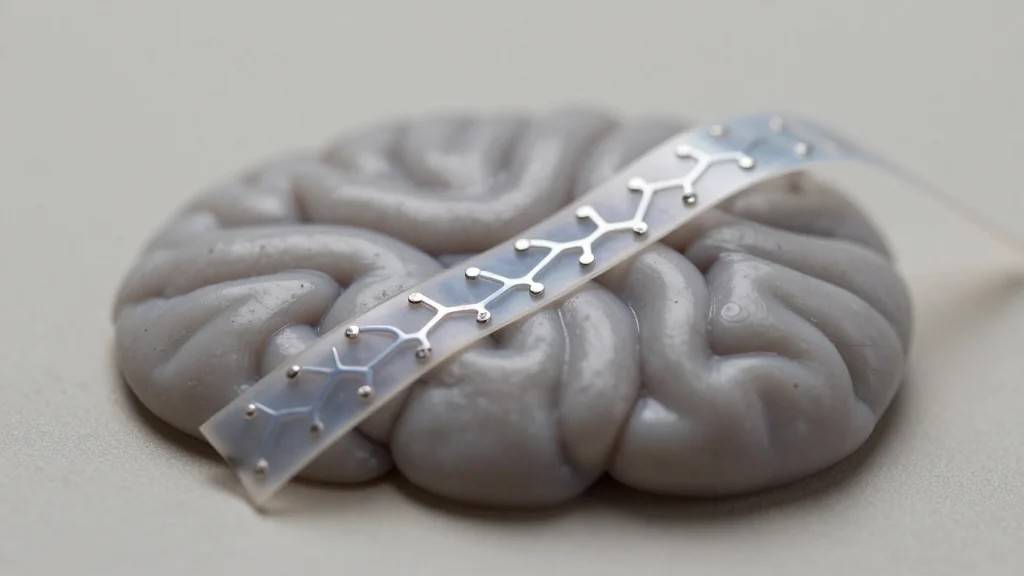
Northwestern Engineers 3D‑Print Artificial Neurons That Communicate With Living Brain Cells

Why It Matters
The ability to 3D‑print neurons that can reliably converse with living brain tissue bridges a long‑standing gap between electronics and biology. For neuroprosthetics, this means implants that can more naturally integrate with the nervous system, offering finer control for patients with sensory or motor deficits. In the computing arena, the approach points to hardware that mimics the brain’s energy‑saving strategies, potentially reducing the carbon footprint of AI training and inference workloads that currently dominate data‑center power use. Beyond immediate applications, the work signals a shift toward materials‑centric design in nanotechnology, where printable inks replace rigid silicon, enabling rapid prototyping and scalable manufacturing of bio‑compatible devices. This could democratize access to advanced neural interfaces and spur a new wave of interdisciplinary startups focused on neuromorphic hardware.
Key Takeaways
- •Northwestern engineers printed flexible artificial neurons using MoS₂ and graphene inks.
- •The devices generated realistic voltage spikes that activated living mouse brain cells in vitro.
- •Printed neurons can produce single spikes, continuous firing, and bursting patterns.
- •Researchers cite the brain’s five‑order‑of‑magnitude energy advantage over digital computers.
- •The technology could lower power consumption for AI hardware and enable advanced neuroprosthetics.
Pulse Analysis
The Northwestern breakthrough arrives at a moment when the AI industry is grappling with soaring energy costs. Data‑center electricity usage has surged past 200 terawatt‑hours annually, prompting a search for hardware that can deliver comparable performance with a fraction of the power draw. By emulating neuronal signaling with printable, low‑cost materials, the new artificial neurons offer a tangible route to neuromorphic chips that could run AI models more efficiently than conventional GPUs.
Historically, artificial neuron research has been hampered by timing mismatches and limited signal complexity, forcing engineers to assemble large arrays of simple devices to approximate brain behavior. Northwestern’s approach sidesteps this by embedding richer dynamics into each printed unit, potentially reducing the number of components required for a given computational task. This aligns with a broader industry trend toward heterogeneous integration, where diverse device types coexist on a single substrate to achieve higher functionality per watt.
From a medical perspective, the ability to mass‑print biocompatible neural interfaces could accelerate the translation of brain‑machine interfaces from experimental labs to commercial products. Current implantable devices rely on rigid silicon or metal electrodes that can cause tissue damage over time. Soft, printable neurons promise a gentler interface, improving longevity and patient outcomes. If the team can demonstrate chronic stability in animal models, we may see a new class of implantable prosthetics that restore vision, hearing, or motor control with unprecedented fidelity.
Overall, the work underscores a convergence of nanomaterials science, additive manufacturing, and neurobiology that could redefine both computing and therapeutic landscapes. Investors and corporations watching the neuromorphic sector should monitor follow‑on studies from Northwestern, as they may set the technical standards for the next generation of energy‑aware AI hardware and next‑level neuroprosthetic devices.
Northwestern Engineers 3D‑Print Artificial Neurons That Communicate With Living Brain Cells
Comments
Want to join the conversation?
Loading comments...