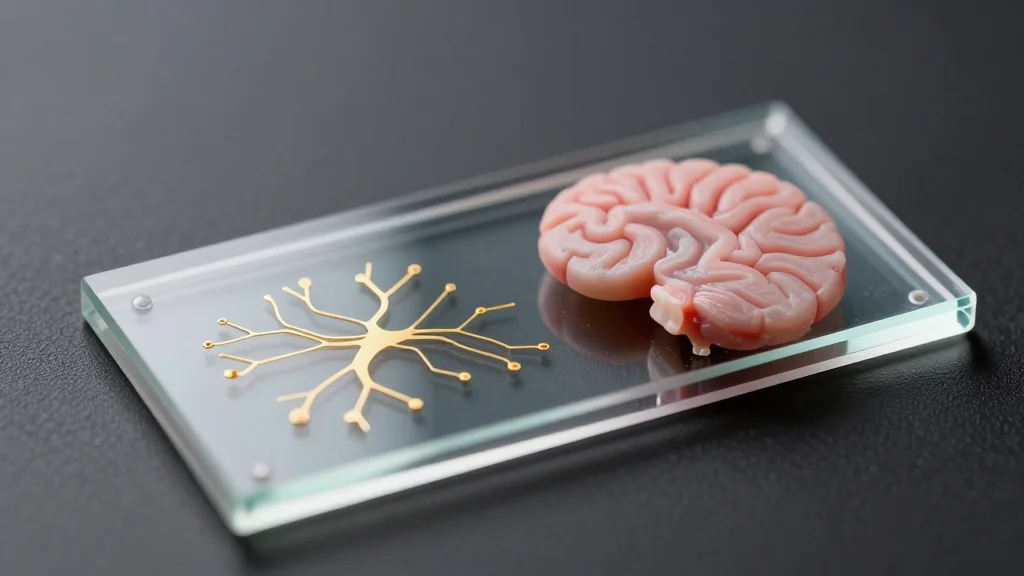
Northwestern Engineers Print Artificial Neurons That Talk to Living Brain Cells

Why It Matters
The ability to print functional artificial neurons that converse with living brain cells could accelerate the development of neuroprosthetics, offering hope for patients with sensory or motor deficits. By demonstrating a scalable, low‑cost manufacturing route, the research lowers the barrier to creating dense neural interfaces that were previously limited to expensive, lithography‑based processes. Equally important, the work provides a tangible pathway toward neuromorphic hardware that mirrors the brain’s energy efficiency. As AI models grow ever larger, the industry faces a looming energy crisis; hardware that leverages brain‑like spike communication could cut power consumption by orders of magnitude, making advanced AI more sustainable and accessible.
Key Takeaways
- •Northwestern engineers printed artificial neurons using an aerosol‑jet printer on a flexible polymer substrate
- •The printed devices generated electrical spikes that activated real mouse brain cells in vitro
- •Study published April 15, 2026 in *Nature Nanotechnology*
- •Researchers cite the brain’s five‑order‑of‑magnitude energy advantage over digital computers
- •Goal: scale to dense, three‑dimensional neural prosthetics and low‑power neuromorphic chips
Pulse Analysis
The Northwestern breakthrough arrives at a crossroads where nanofabrication, neurobiology, and AI hardware converge. Historically, neural interfaces have relied on rigid silicon probes or invasive microelectrode arrays, both of which suffer from mechanical mismatch and limited scalability. By shifting to printed, flexible electronics, Hersam’s team sidesteps these constraints, offering a platform that can conform to the brain’s soft tissue while supporting heterogeneous neuron designs. This mirrors a broader industry trend toward additive manufacturing for bioelectronics, exemplified by recent roll‑to‑roll printed sensors and stretchable circuits.
From a market perspective, the neurotechnology sector is poised for rapid growth, driven by aging populations and rising demand for brain‑machine interfaces. Companies like Neuralink and Blackrock Neurotech have attracted billions in venture funding, yet their approaches remain largely silicon‑centric. Northwestern’s polymer‑based method could undercut these incumbents by delivering comparable functionality at lower cost and with greater biocompatibility. Moreover, the energy‑efficiency argument resonates with AI chipmakers such as Graphcore and Cerebras, who are exploring neuromorphic architectures to curb data‑center power bills. If the printed neurons can be integrated into silicon‑based neuromorphic chips, they may become a cornerstone of the next generation of AI accelerators.
Looking ahead, the critical challenges will be reliability and long‑term stability in vivo. The brain’s immune response to foreign materials can degrade performance over weeks to months, so material science advances—perhaps leveraging self‑healing polymers—will be essential. Additionally, scaling from single‑neuron demonstrations to dense networks will require breakthroughs in printing resolution and interconnect architecture. Nonetheless, the study provides a compelling proof‑of‑concept that could catalyze a wave of investment and research, positioning nanotech‑enabled neural interfaces as a linchpin in both medical and computational futures.
Northwestern Engineers Print Artificial Neurons That Talk to Living Brain Cells
Comments
Want to join the conversation?
Loading comments...