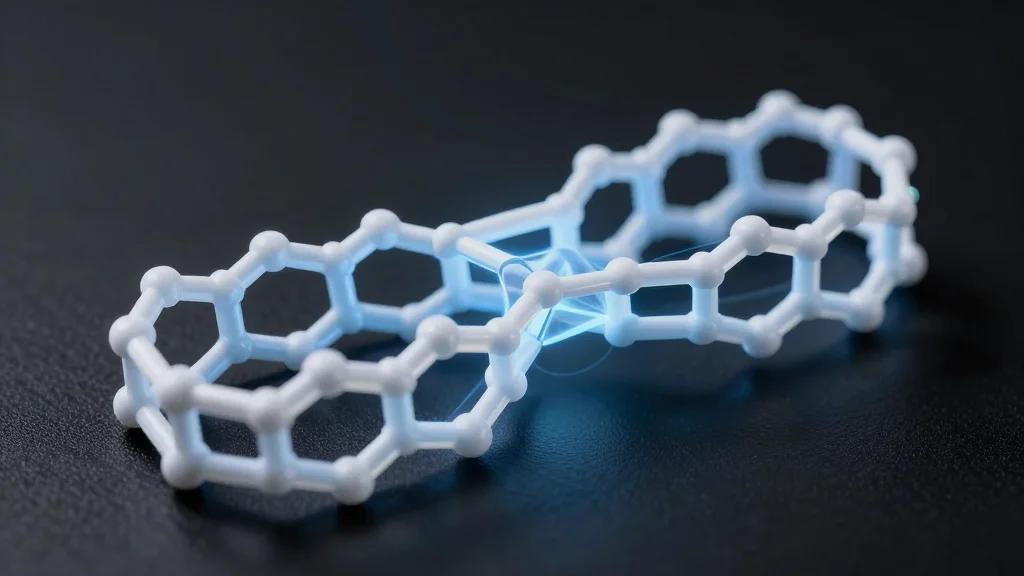
NUS Researchers Engineer Graphene‑Like Molecules and Hourglass Nanographenes

Why It Matters
The ability to engineer graphene‑like molecules with predictable magnetic behavior opens a new class of quantum materials that combine the mechanical strength of graphene with tunable spin properties. Such molecules could serve as the building blocks for molecular qubits, offering a route to densely packed quantum processors that operate at higher temperatures than conventional superconducting qubits. Beyond quantum computing, robust multi‑spin entanglement in carbon nanostructures could transform spintronic technologies, enabling ultra‑low‑power magnetic memory and sensors that leverage spin rather than charge. The NUS breakthrough demonstrates that precise molecular design can overcome the longstanding stability issues that have limited the practical deployment of spin‑based devices.
Key Takeaways
- •Predictive design strategy links molecular geometry to spin interactions in graphene‑like molecules
- •Two hourglass nanographenes (C₆₂H₂₂ and C₇₆H₂₆) synthesized with four unpaired spins each
- •Multi‑spin entanglement demonstrated via scanning probe microscopy
- •Carbon‑based spin systems offer longer coherence times than metal‑based magnets
- •Next steps include electrical gating and coupling of nanographenes for quantum networks
Pulse Analysis
The NUS breakthrough arrives at a moment when the quantum hardware landscape is diversifying beyond superconducting circuits and trapped ions. Carbon‑based nanographenes occupy a niche that blends the scalability of molecular chemistry with the quantum coherence needed for practical qubits. Historically, molecular spin qubits have struggled with decoherence caused by environmental magnetic noise; the reported resilience to magnetic perturbations directly addresses that bottleneck, suggesting that future devices could operate with less stringent cryogenic requirements.
From a market perspective, the ability to mass‑produce atomically precise nanographenes using on‑surface synthesis could lower the cost curve for quantum components. Companies focused on quantum‑ready materials, such as Q-CTRL and Pasqal, may find a new supply chain for carbon‑based spin platforms, potentially spurring partnerships or licensing deals with academic groups. Moreover, the demonstrated structure‑property relationship provides a template for rapid iteration, accelerating the transition from proof‑of‑concept to prototype devices.
Looking ahead, the key challenge will be integrating these molecules into electronic architectures without degrading their spin coherence. If NUS and collaborators can achieve electrical control of individual spins and coherent coupling between neighboring nanographenes, the field could witness a shift toward molecular quantum processors that complement, rather than replace, existing qubit technologies. The current work lays the scientific foundation; the next few years will determine whether the chemistry can keep pace with the engineering demands of a commercial quantum ecosystem.
NUS Researchers Engineer Graphene‑Like Molecules and Hourglass Nanographenes
Comments
Want to join the conversation?
Loading comments...