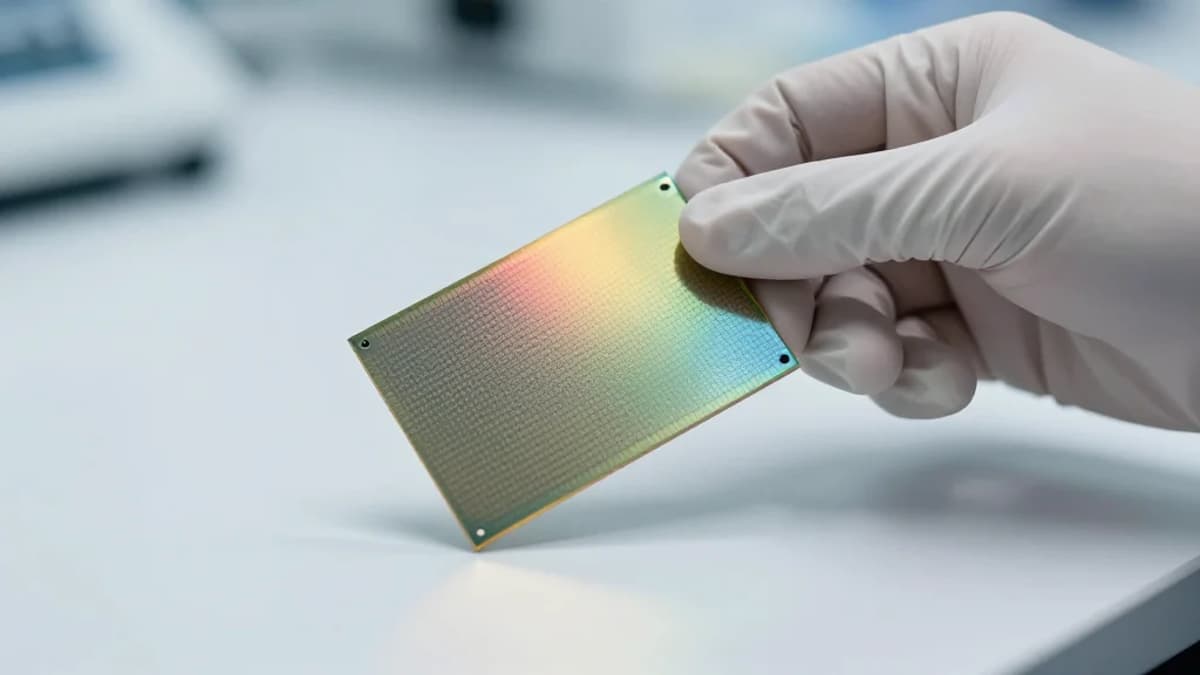
One‐Pot and Closed‐Loop Recycling of Biomass‐Derived Soft Electronics Toward Zero E‐waste (Small 13/2026)
•March 3, 2026
0
Why It Matters
By turning biodegradable soft electronics into a fully recyclable resource, the approach dramatically cuts e‑waste and creates a circular supply chain for a high‑growth sector. This could reshape manufacturing standards and regulatory expectations for sustainable electronics.
Key Takeaways
- •Biomass-derived polymers replace petroleum-based substrates
- •One-pot process recovers >99% material yield
- •Recycled components retain original device performance
- •Method compatible with roll-to-roll manufacturing
- •Enables circular economy for flexible electronics
Pulse Analysis
The global e‑waste problem is accelerating, with flexible and soft electronics contributing an increasingly large share as wearables, medical patches, and IoT skins proliferate. Traditional manufacturing relies on petrochemical substrates and complex multilayer stacks that are difficult to separate, leading to low recycling rates and mounting environmental burdens. Stakeholders—from regulators to investors—are demanding solutions that reconcile rapid product turnover with responsible resource stewardship, making sustainable material platforms a strategic priority.
In the recent Small article, Kim, Choi and co‑authors present a one‑pot, closed‑loop recycling protocol that begins with bio‑based polymers derived from renewable feedstocks. The process simultaneously depolymerizes, purifies, and reconstitutes the constituent polymers in a single reaction vessel, achieving material recovery efficiencies exceeding 99 percent. Crucially, the reclaimed polymers can be redeposited into new soft‑electronic architectures without degrading conductivity, stretchability, or sensor sensitivity, demonstrating that performance parity is attainable even after multiple recycling cycles. The method’s compatibility with roll‑to‑roll processing further underscores its potential for high‑volume manufacturing.
The implications extend beyond waste reduction. A recyclable soft‑electronics supply chain can lower raw‑material costs, mitigate supply‑chain volatility, and satisfy emerging circular‑economy regulations in Europe and Asia. Companies that adopt this technology may gain a competitive edge by marketing truly sustainable devices, while research labs can explore new bio‑derived chemistries without the penalty of end‑of‑life disposal. As the industry moves toward zero‑waste goals, closed‑loop recycling stands out as a cornerstone for responsible innovation, promising both environmental and economic dividends.
One‐Pot and Closed‐Loop Recycling of Biomass‐Derived Soft Electronics Toward Zero e‐waste (Small 13/2026)
0
Comments
Want to join the conversation?
Loading comments...