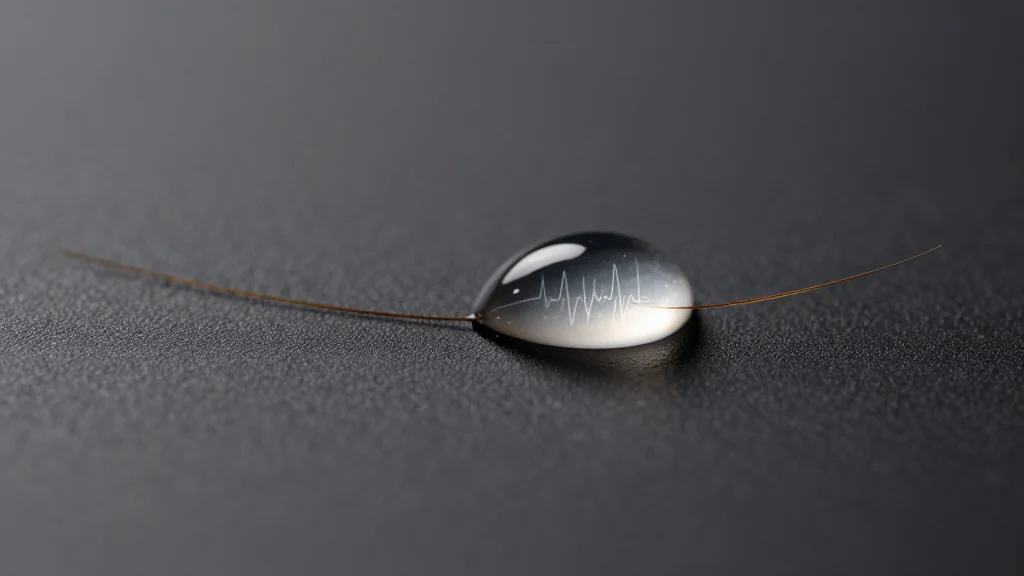
Penn State's Thermoreversible Biogel Eliminates Hair Barriers for Wearable EEG

Why It Matters
The biogel tackles two entrenched obstacles in wearable neurotechnology: hair‑induced signal loss and gel desiccation. By offering a reusable, thermally activated interface, it could dramatically lower the cost of long‑term EEG monitoring, making large‑scale brain‑health studies and at‑home diagnostics more accessible. Moreover, its semiconducting nature aligns with emerging neurohaptic research, where precise, objective measurement of touch perception is essential for realistic VR/AR experiences and advanced prosthetic control. If adopted broadly, the technology could catalyze a new class of brain‑computer interfaces that operate comfortably for days without re‑application, accelerating both clinical research and consumer‑grade neuro‑enhancement products. The ripple effect may also stimulate investment in related nanomaterials and flexible electronics, reinforcing the nanotech sector’s role in next‑generation health and immersive‑tech markets.
Key Takeaways
- •Penn State team creates thermoreversible semiconducting ionic biogel that liquefies with mild heat and re‑gels on cooling.
- •Biogel maintains stable EEG signals across multiple hair types for several days, outperforming conventional gels.
- •Lead author Ankan Dutta highlights dual goals: conductive, reversible hydrogel and a tool for neurohaptics research.
- •Potential applications span wearable brain‑monitoring, VR/AR neurofeedback, prosthetic limb control, and at‑home diagnostics.
- •Next steps include scaling production, long‑term biocompatibility testing, and partnerships with wearable device manufacturers.
Pulse Analysis
The introduction of a thermoreversible, semiconducting biogel marks a subtle but pivotal shift in the wearable neurotech market. Historically, EEG headsets have relied on either abrasive scalp preparation or disposable conductive gels, both of which limit user compliance and increase operational costs. By eliminating the need for hair removal and providing a reusable interface, the Penn State innovation directly addresses the friction points that have kept consumer‑grade brain‑monitoring devices niche.
From a competitive standpoint, the biogel could erode the advantage of companies that have built proprietary adhesive solutions into their hardware. Firms like Muse and NeuroSky have invested heavily in proprietary gel‑free dry electrodes, but those designs often sacrifice signal fidelity, especially over extended recordings. The biogel’s ability to retain conductivity while conforming to hair offers a hybrid solution that could force a re‑evaluation of dry‑electrode strategies. Moreover, the material’s semiconducting properties suggest it could be co‑engineered with flexible printed circuits, enabling integrated signal amplification directly within the gel matrix—a capability that could set a new benchmark for signal‑to‑noise ratios.
Looking ahead, the commercial viability of the biogel hinges on manufacturing scalability and regulatory clearance. The synthesis involves ionic components and nanostructured polymers that must be produced consistently at low cost. If the research team can partner with a nanomaterials manufacturer to achieve bulk production, the price point could undercut existing disposable gels, making it attractive to both clinical labs and consumer device makers. Regulatory pathways for medical‑grade skin‑contact materials are well‑established, but the dual‑function (conductive and semiconducting) nature may require additional safety data. Successful navigation of these hurdles could unlock a wave of long‑term, at‑home neurodiagnostic tools, positioning the biogel as a cornerstone of the next generation of brain‑computer interfaces.
Penn State's Thermoreversible Biogel Eliminates Hair Barriers for Wearable EEG
Comments
Want to join the conversation?
Loading comments...