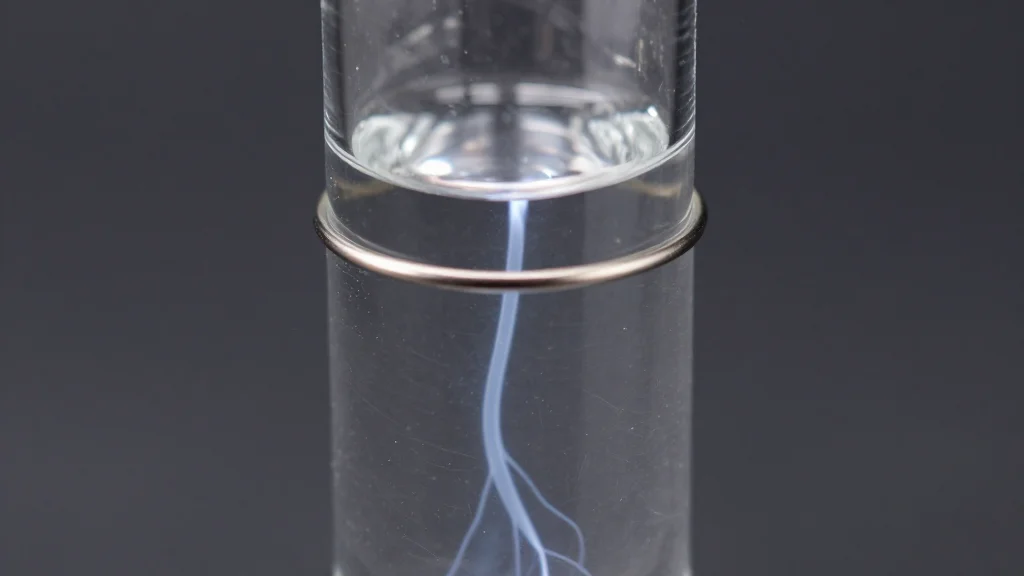
Performance Optimization of Liquid–Solid Nanogenerators With Fluorinated Alkyl Self‐Assembled Monolayers
Why It Matters
The breakthrough raises the practical efficiency of LS‑TENGs, enabling reliable power for self‑sustaining sensors and low‑power electronics in environments where conventional energy sources are unavailable.
Key Takeaways
- •Tubular LS‑TENG achieves 1.96 µC transferred charge.
- •Fluorinated SiO₂ layer boosts charge density to 2.16 mC m⁻².
- •Grounded water enhances charge acquisition by shielding dielectric.
- •Output scales with motion frequency, swing angle, and liquid viscosity.
- •Parallel‑connected units power a hygrothermometer demonstrator.
Pulse Analysis
Triboelectric nanogenerators have emerged as a promising class of devices that convert mechanical motion into electrical energy through contact electrification. Liquid‑solid configurations (LS‑TENGs) are especially attractive for harvesting ambient vibrations, but their adoption has been hampered by relatively low charge densities, limiting power output. Traditional designs often suffer from charge leakage and inefficient surface interactions, which restrict their suitability for real‑world, low‑frequency applications such as environmental monitoring or wearable electronics.
The new tubular LS‑TENG addresses these shortcomings with three synergistic innovations. First, a self‑assembled fluorinated alkyl monolayer is grafted onto silica particles, dramatically increasing surface electronegativity and thus the amount of charge transferred per contact event. Second, the device incorporates grounded water that acts as a dynamic charge reservoir, effectively shielding dielectric surface charges and allowing the system to draw additional electrons from the ground. Together, these modifications yield a transferred charge of 1.96 µC and a charge density of 2.16 mC m⁻²—metrics that outpace earlier LS‑TENG prototypes. Moreover, the output can be precisely modulated by varying the swing angle, motion frequency, and the viscosity of the liquid medium, offering designers fine‑grained control over performance.
From a commercial perspective, the ability to connect multiple tubular LS‑TENGs in parallel and reliably power a hygrothermometer demonstrates scalability and practical utility. Such self‑powered sensors could be deployed in remote agricultural fields, industrial pipelines, or smart‑building HVAC systems where low‑frequency vibrations are abundant but power infrastructure is sparse. The technology also aligns with the growing demand for sustainable, battery‑free IoT devices, positioning LS‑TENGs as a competitive alternative to conventional energy harvesters. Continued research into material durability and integration with existing electronics will be key to unlocking broader market adoption.
Performance Optimization of Liquid–Solid Nanogenerators With Fluorinated Alkyl Self‐Assembled Monolayers
Comments
Want to join the conversation?
Loading comments...