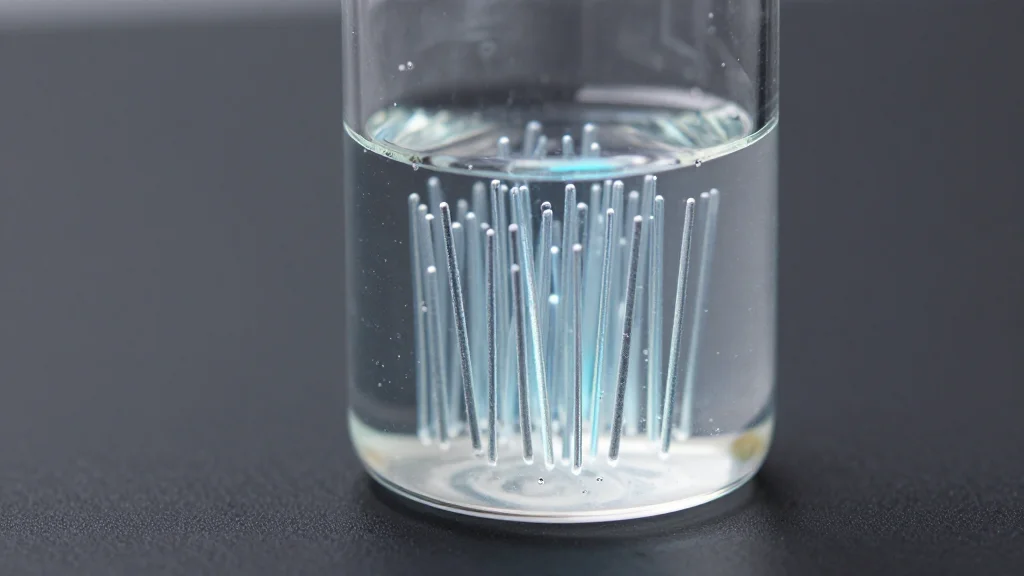
Photocatalytic Hydrogen Evolution From Self‐Assembled Stacks of Pd–TCPP and Pt–TCPP
Why It Matters
A cocatalyst‑free, low‑complexity Pd‑TCPP system lowers material costs and simplifies scale‑up for solar‑driven hydrogen, accelerating the renewable‑energy transition.
Key Takeaways
- •Surfactant‑free precipitation yields µm‑long Pd‑TCPP nanorods
- •Pd‑TCPP nanorods evolve H₂ without added Pt cocatalyst
- •Peak activity at pH 4‑5, surpassing Pt‑TCPP performance
- •Tighter J‑type stacking gives longer triplet lifetime, lower resistance
Pulse Analysis
Photocatalytic water splitting has long been hampered by the need for expensive noble‑metal cocatalysts, most notably platinum, to drive efficient hydrogen evolution. The new one‑pot, surfactant‑free synthesis of Pd‑TCPP nanorods sidesteps this bottleneck by producing a self‑assembled porphyrin architecture that is intrinsically active under visible light. By eliminating surfactants, the process also avoids residual contaminants that can impede charge transport, offering a cleaner, more scalable route for catalyst manufacturing.
The performance edge of Pd‑TCPP stems from its J‑type π‑π stacking, which creates delocalized electronic pathways and broadens light absorption into the red region. Spectroscopic and electrochemical analyses reveal a tighter stacking geometry than its Pt‑TCPP counterpart, leading to an extended triplet‑state lifetime and a measurable drop in charge‑transfer resistance. These physicochemical advantages translate into higher hydrogen evolution rates, especially in mildly acidic conditions (pH 4‑5), where the nanorods achieve turnover frequencies that rival, and often exceed, state‑of‑the‑art porphyrin‑based metal‑organic frameworks that rely on high‑loading Pt cocatalysts.
Beyond the laboratory, the implications are significant for the emerging green‑hydrogen economy. A catalyst that combines low material cost, straightforward synthesis, and robust activity under solar illumination can accelerate pilot‑scale deployments and reduce the overall levelized cost of hydrogen. Future work will likely explore alloying strategies, reactor engineering, and integration with photovoltaic systems to further boost efficiency and durability, positioning Pd‑TCPP nanorods as a compelling platform in the race toward carbon‑free fuel production.
Photocatalytic Hydrogen Evolution From Self‐Assembled Stacks of Pd–TCPP and Pt–TCPP
Comments
Want to join the conversation?
Loading comments...