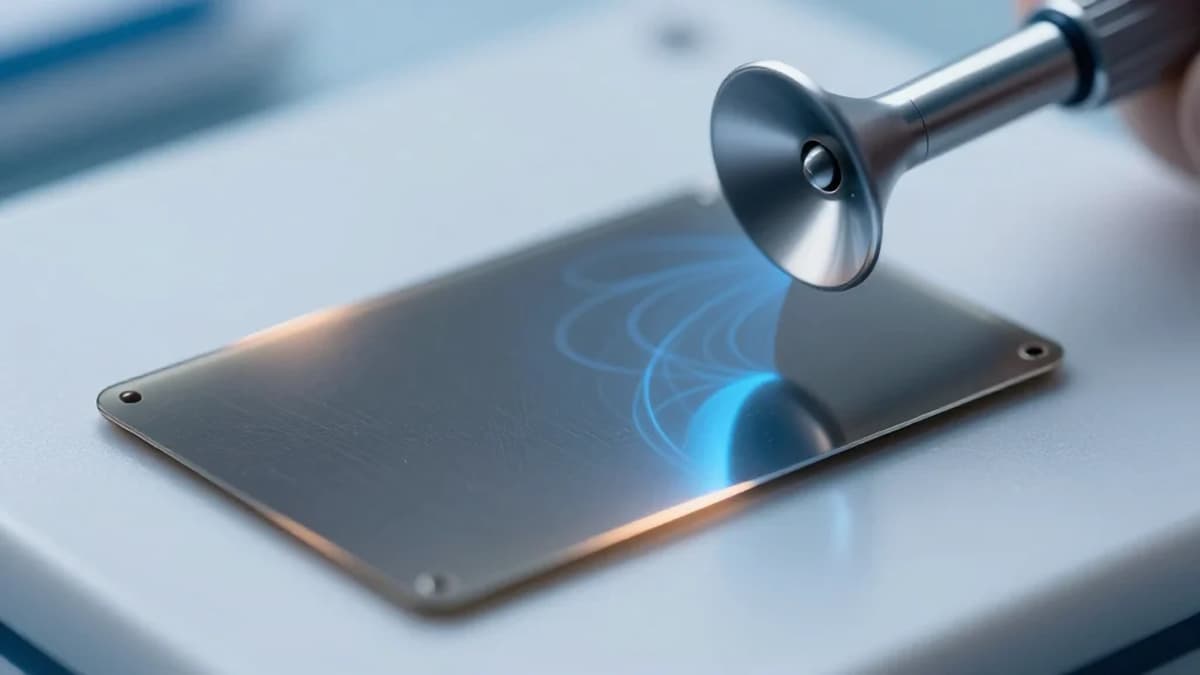
Photothermal‐Mediated Carrier Dynamics in Ti3C2Tx MXene Revealed by Time‐Resolved Terahertz Spectroscopy
•February 24, 2026
0
Why It Matters
Understanding and engineering carrier relaxation in MXenes enables performance optimization for next‑generation photonic and energy technologies, where heat management is critical.
Key Takeaways
- •Carrier relaxation linked to film thickness linearly
- •Strong carrier‑phonon coupling drives photothermal relaxation
- •Thermal boundary conductance modulates relaxation times
- •Interface engineering enables optoelectronic performance tuning
- •Findings aid MXene design for energy conversion
Pulse Analysis
The discovery of a photothermal‑mediated carrier relaxation pathway in Ti3C2Tx MXene reshapes how researchers view heat‑carrier interactions in two‑dimensional materials. Time‑resolved terahertz spectroscopy revealed that the slowest relaxation component follows a linear trend with film thickness, directly tying carrier dynamics to lattice cooling rates. This relationship underscores the dominant role of carrier‑phonon coupling, a factor often overlooked in MXene studies that focus primarily on electrical conductivity.
Crucially, the study demonstrates that thermal boundary conductance (TBC) at the MXene‑substrate interface can be engineered to modulate carrier lifetimes. By swapping substrates or inserting interfacial layers, researchers adjusted TBC, achieving measurable changes in relaxation times without altering the MXene composition. This interface‑centric strategy offers a practical lever for tailoring optoelectronic response, enabling faster or slower carrier recombination as device requirements dictate.
The broader implication for industry is significant. Controlled carrier relaxation can improve the efficiency of MXene‑based photodetectors, modulators, and thermoelectric converters, where rapid heat dissipation or sustained carrier populations are essential. Moreover, the findings provide a template for integrating MXenes into heterogeneous stacks, leveraging substrate selection to fine‑tune performance. As MXenes move toward commercial adoption, mastering photothermal dynamics will be a key differentiator for high‑performance, heat‑managed quantum material platforms.
Photothermal‐Mediated Carrier Dynamics in Ti3C2Tx MXene Revealed by Time‐Resolved Terahertz Spectroscopy
0
Comments
Want to join the conversation?
Loading comments...