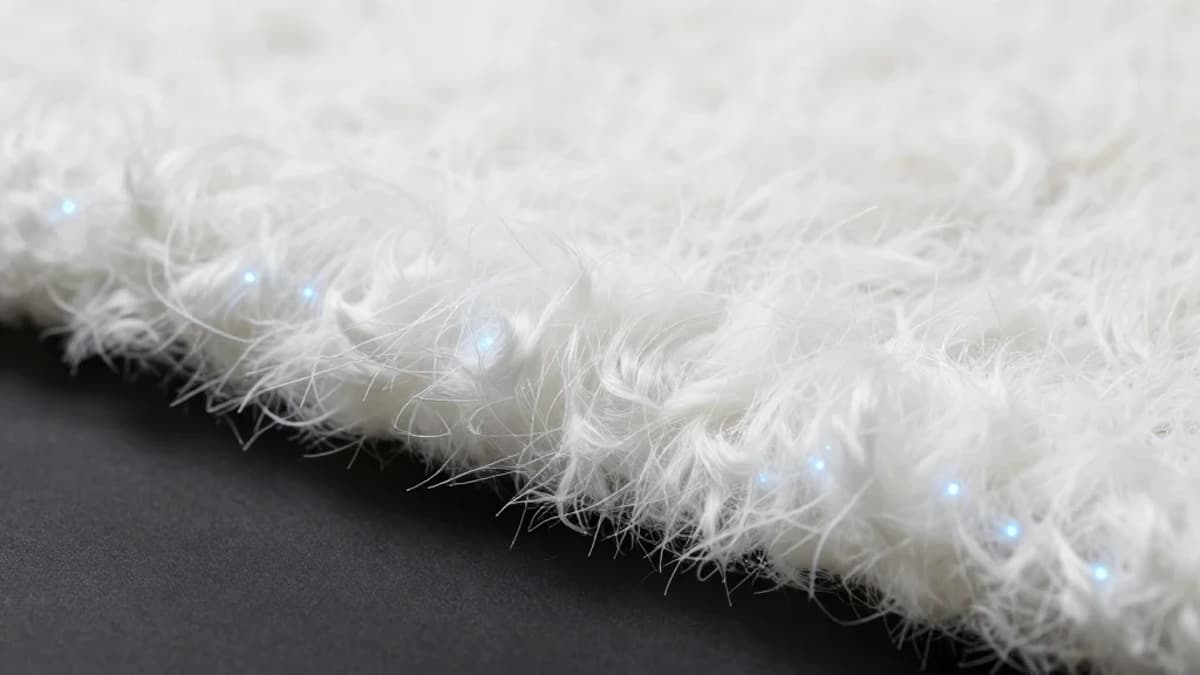
Polar Bear Hair Inspires Graphene Fibers that Sense, Insulate, and Power Smart Clothing
•February 27, 2026
0
Why It Matters
The material merges insulation, conductivity, and actuation in a single fiber, removing the need for separate components in wearable electronics. This breakthrough could accelerate the commercialization of multifunctional smart clothing for extreme environments, defense, and consumer markets.
Key Takeaways
- •Hollow graphene aerogel fibers mimic polar bear fur structure
- •Record low thermal conductivity 1.28 mW·(m·K)⁻¹ achieved
- •Electrical conductivity reaches 1457 S·m⁻¹ after annealing
- •Fibers sense motion, harvest heat, and act as heaters
- •Mechanical resilience: recovers from 90% compression strain
Pulse Analysis
Biomimicry has long guided material scientists toward solutions that combine efficiency with elegance, and the new hollow graphene aerogel fibers are a prime example. By emulating the hollow, radially‑aligned pores of polar‑bear hair, researchers have engineered a fiber that traps air like an aerogel while preserving a continuous graphene network for electron transport. This dual‑function architecture overcomes the classic trade‑off between thermal insulation and electrical conductivity, delivering a thermal conductivity of just 1.28 mW·(m·K)⁻¹ and an electrical conductivity exceeding 1,400 S·m⁻¹—values that set new records for graphene‑based aerogels.
The fabrication process relies on coaxial extrusion of a graphene‑oxide ink and a removable clay core, followed by directional freezing, hydrothermal treatment, and controlled thermal annealing. Adjusting the oxidation level of the graphene oxide and the annealing temperature independently tunes defect density and inter‑layer spacing, allowing the researchers to boost conductivity without compromising insulation. Hierarchical pores, defect‑induced phonon scattering, and a hollow core collectively suppress heat flow, while the arch‑like internal graphene arrangement acts as microscopic springs, granting the fibers the ability to recover from 90 % compressive strain and endure repeated bending cycles.
Beyond the laboratory, these fibers open a pathway to truly multifunctional smart textiles. Integrated into garments, they can detect joint movement via piezoresistivity, generate low‑level power from body heat through the Seebeck effect, and provide on‑demand heating at safe voltages. Their superior insulation outperforms traditional foams and aerogel blankets, suggesting uses in Arctic expeditions, military camouflage, and thermal management of wearable batteries. While scaling production, washing durability, and cost remain challenges, the demonstrated performance establishes a versatile platform that could reshape the wearable technology market.
Polar bear hair inspires graphene fibers that sense, insulate, and power smart clothing
0
Comments
Want to join the conversation?
Loading comments...