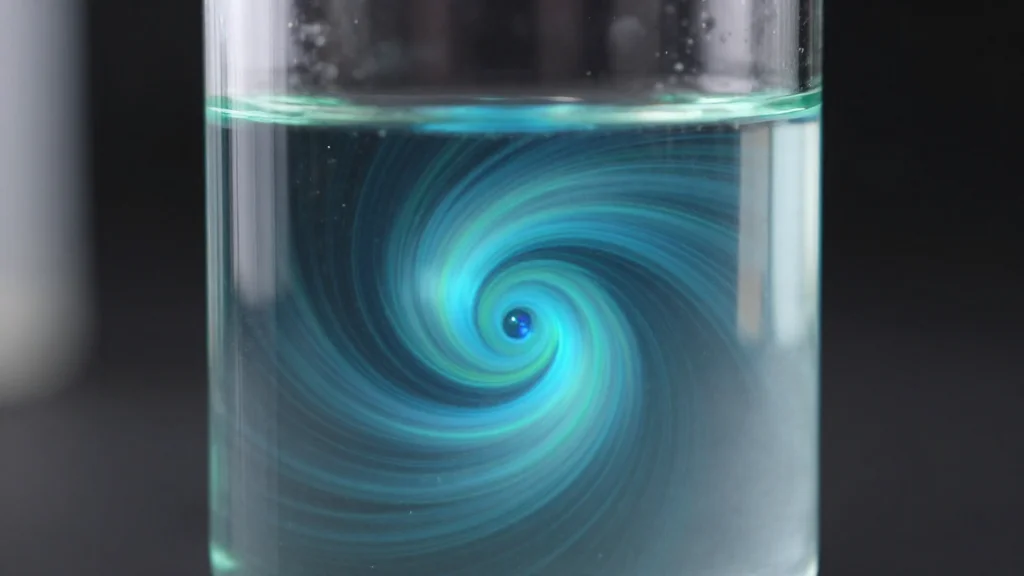
Polish Researchers Demonstrate Liquid‑Crystal Optical Tornadoes for Quantum‑Secure Links

Why It Matters
The ability to generate orbital‑angular‑momentum light in a simple liquid‑crystal environment could democratize access to quantum‑secure communication technologies, which have so far been limited by costly nanofabrication. By reducing hardware complexity, the approach may accelerate the rollout of quantum‑key‑distribution across telecom networks, enhancing data privacy at a time of rising cyber threats. Beyond communications, the technique offers a new tool for optical tweezers and micro‑manipulation, where twisted light can exert torque on nanoscale objects. This cross‑disciplinary impact could spur innovations in biomedical imaging, materials science and beyond, positioning liquid‑crystal torons as a versatile platform in the broader nanophotonics toolbox.
Key Takeaways
- •University of Warsaw, Military University of Technology and Institut Pascal CNRS created optical tornado beams using liquid‑crystal torons.
- •The beams carry orbital angular momentum in the lowest‑energy (ground) state, simplifying laser‑like generation.
- •Technique avoids complex nanofabricated metasurfaces, using self‑organising defects instead.
- •Structured light can encode high‑dimensional quantum information, strengthening QKD security.
- •Future work aims to integrate toron cells with fiber optics and test environmental robustness.
Pulse Analysis
The Polish‑French collaboration marks a strategic shift from hard‑nanostructure engineering toward soft‑matter photonics for quantum applications. Historically, orbital‑angular‑momentum beams have required lithographically patterned metasurfaces or bulky interferometric setups, both of which limit scalability and increase cost. By leveraging torons—topologically protected defects that naturally form in confined liquid crystals—the researchers have introduced a self‑assembling platform that can be mass‑produced with established liquid‑crystal display (LCD) manufacturing lines. This could compress the cost curve for quantum‑ready photonic hardware, making it viable for telecom operators that have been hesitant to invest in expensive, custom‑fabricated components.
From a market perspective, the development aligns with the accelerating demand for quantum‑secure links in finance, defense and cloud services. Analysts project the global QKD market to exceed $5 billion by 2030, but adoption has been hampered by hardware bottlenecks. A low‑cost, compact source of high‑dimensional quantum states could unlock new business models, such as subscription‑based quantum encryption services bundled with existing fiber infrastructure. Moreover, the liquid‑crystal approach may enable retrofitting of legacy equipment, reducing the need for wholesale network overhauls.
Looking ahead, the key challenge will be translating laboratory‑scale toron generation into robust, temperature‑stable devices suitable for field deployment. If the team can demonstrate long‑term stability and compatibility with standard telecom wavelengths, they could catalyze a wave of plug‑and‑play quantum transceivers. Such progress would not only reshape the nanophotonics supply chain but also set a precedent for other soft‑matter platforms to tackle traditionally hard‑nanotech problems.
Polish Researchers Demonstrate Liquid‑Crystal Optical Tornadoes for Quantum‑Secure Links
Comments
Want to join the conversation?
Loading comments...