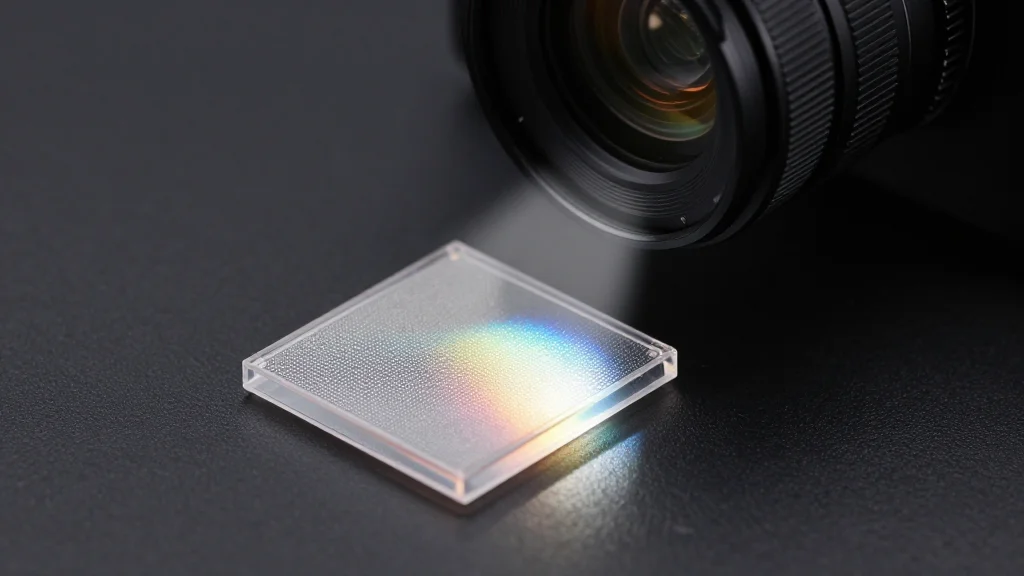
Polymer‐Based Prism‐Free Nanograting SPR Imaging Enables Multiplexed Detection and Single‐Step Aptamer Binding Kinetics (Small 20/2026)
Why It Matters
By removing bulky prisms and reducing per‑test cost, the technology accelerates adoption of SPRi for routine clinical and research workflows, expanding multiplexed kinetic profiling capabilities.
Key Takeaways
- •Prism-free design eliminates bulky optics
- •Polymer nanograting enables low-cost, disposable chips
- •Normal-incidence illumination simplifies alignment
- •Integrated microarrayer supports multiplexed assays
- •Microfluidics allow simultaneous kinetic measurements
Pulse Analysis
Surface plasmon resonance imaging has long been a gold‑standard for label‑free biomolecular interaction analysis, but traditional systems rely on expensive prisms and complex alignment, limiting scalability. The need for high‑throughput, multiplexed assays in drug discovery and clinical diagnostics has driven researchers to seek more affordable, user‑friendly platforms. Conventional SPRi setups also struggle with single‑step kinetic measurements, often requiring sequential sample injections that increase assay time and reagent consumption.
The new polymer‑based nanograting SPRi platform addresses these constraints by replacing the prism with a nanostructured polymer grating that couples light at normal incidence. This design permits a compact, camera‑based detector to capture resonance shifts across an entire microarray, dramatically simplifying optical alignment. Integration with a custom microarrayer allows dozens of spots to be printed in a single chip, while built‑in microfluidic channels deliver multiple analyte concentrations simultaneously. The result is a disposable, low‑cost sensor that delivers multiplexed detection and real‑time kinetic data in one step, a capability especially valuable for aptamer‑based assays where binding dynamics are critical.
The implications extend beyond laboratory convenience. A cost‑effective, prism‑free SPRi system can be deployed in point‑of‑care settings, enabling rapid screening of biomarkers without specialized optics expertise. Pharmaceutical pipelines stand to benefit from faster kinetic profiling of drug candidates, reducing cycle times and experimental overhead. As the platform matures, its modular architecture could support integration with AI‑driven data analysis, further enhancing decision‑making speed in precision medicine and biotech research.
Polymer‐Based Prism‐Free Nanograting SPR Imaging Enables Multiplexed Detection and Single‐Step Aptamer Binding Kinetics (Small 20/2026)
Comments
Want to join the conversation?
Loading comments...