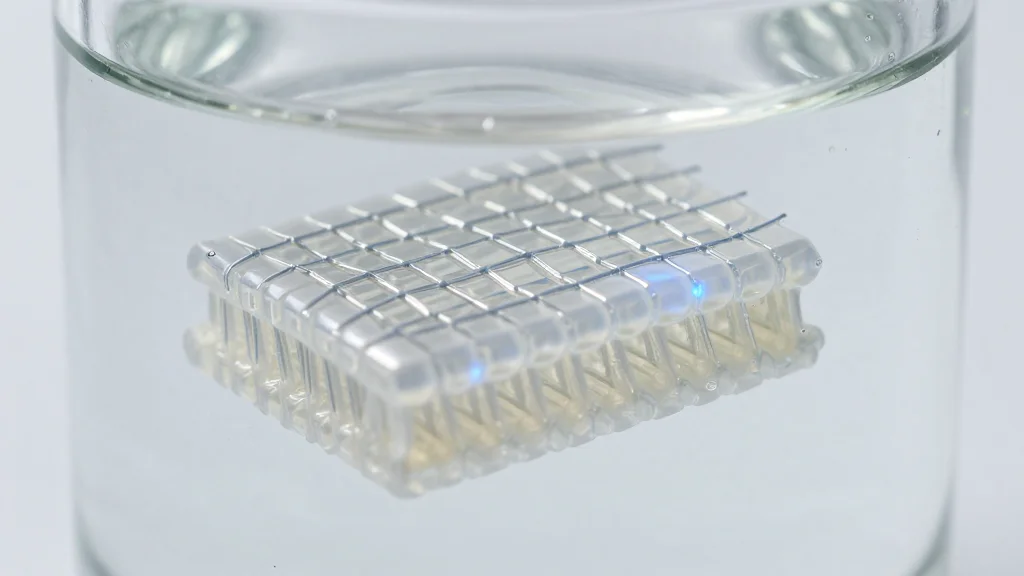
Polymer‑Coated Nanowire Sponge Offers Dual Disinfection and Pollutant Removal

Why It Matters
The ability to combine disinfection and micropollutant degradation in one device tackles two critical threats to water safety that have traditionally required separate treatment stages. By eliminating chemical disinfectants, the technology reduces the formation of harmful by‑products such as trihalomethanes, addressing growing regulatory pressure. Its low‑energy footprint aligns with global goals to decarbonize water infrastructure, making it attractive for regions with limited power supply. Moreover, the modular design supports rapid deployment in emergency or underserved settings, potentially expanding access to safe drinking water worldwide. Beyond immediate health benefits, the nanowire sponge could influence market dynamics by lowering barriers to advanced water treatment adoption. Companies that rely on multi‑step processes may face competition from integrated solutions that promise lower capital and operating expenditures. The technology also opens pathways for further nanomaterial innovations, encouraging research into other electrocatalytic applications such as air purification or chemical recycling.
Key Takeaways
- •Polymer‑coated nanowire sponge integrates filtration, adsorption and electrocatalysis in a single module
- •Mild voltage generates reactive oxygen species that inactivate bacteria, viruses and degrade organic pollutants
- •Operates at ambient temperature and pressure, eliminating the need for heating or high pressure
- •Modular design allows scaling from household units to municipal treatment plants
- •Field trials planned with municipal utilities and NGOs to validate performance in real‑world settings
Pulse Analysis
The nanowire sponge arrives at a moment when water utilities are under pressure to upgrade legacy systems while containing costs. Traditional upgrades often involve adding separate advanced oxidation processes, which increase capital outlay and operational complexity. By collapsing multiple treatment steps into a single electrocatalytic unit, the sponge could shift the economics of water treatment toward a more streamlined, plug‑and‑play model. This aligns with a broader industry trend toward modular, decentralized solutions that can be deployed quickly and maintained with minimal expertise.
Historically, nanomaterials have struggled to transition from lab curiosity to commercial product due to scalability and durability concerns. The researchers’ emphasis on a polymer coating that prevents fouling and preserves mechanical integrity directly addresses these hurdles. If the field trials confirm long‑term stability, the technology could set a new benchmark for nanotech‑enabled water treatment, prompting incumbents to explore similar hybrid designs or to acquire the underlying intellectual property.
Looking ahead, the dual‑action capability may spur regulatory bodies to revisit standards for combined disinfection‑oxidation systems. Clear guidelines on performance metrics, such as log‑reduction of pathogens and removal percentages for specific micropollutants, will be essential for market adoption. Investors are likely to monitor the outcomes of the upcoming pilots closely; successful data could unlock a new wave of funding for nanotech water solutions, positioning the nanowire sponge as a cornerstone of next‑generation water infrastructure.
Polymer‑Coated Nanowire Sponge Offers Dual Disinfection and Pollutant Removal
Comments
Want to join the conversation?
Loading comments...