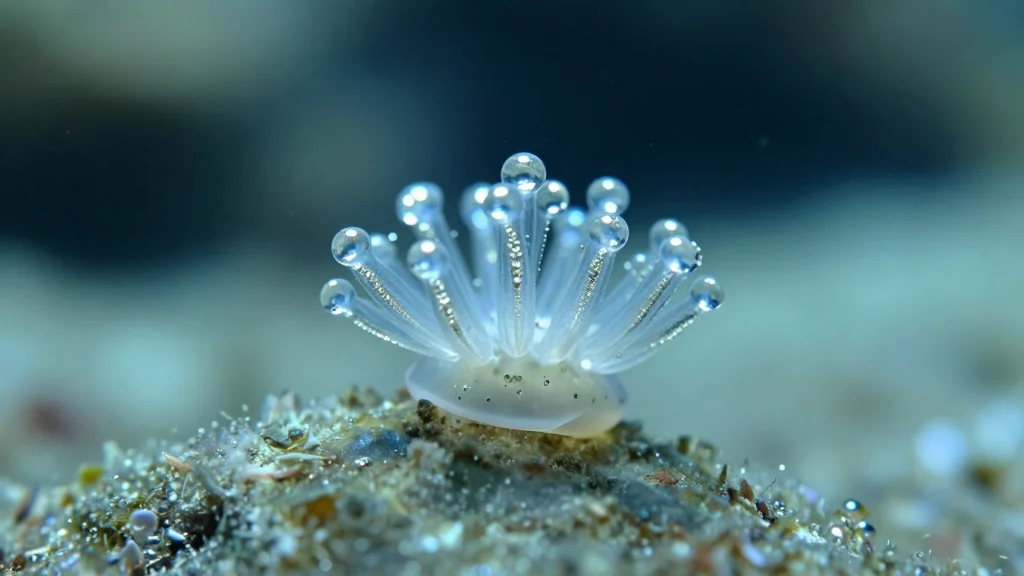
POSTECH Uncovers Sea Squirts' Nano‑Packaging, Paving Way for Sustainable Marine Adhesives

Why It Matters
Understanding how sea squirts package and deploy adhesive proteins provides a novel template for creating materials that combine durability with environmental compatibility. Traditional marine adhesives often rely on synthetic polymers that persist in the environment, whereas a biomimetic approach could yield products that degrade harmlessly after use, aligning with global efforts to curb plastic pollution. Beyond packaging, the technology could accelerate seaweed restoration, a critical component of coastal carbon sequestration. By improving attachment success rates, the approach may help rebuild seaweed forests that absorb CO₂, support biodiversity, and provide sustainable feedstock for biofuels and nutraceuticals. The research also highlights the broader potential of marine organisms as sources of nanotechnological inspiration, encouraging investment in bio‑discovery programs that could unlock further sustainable solutions across sectors.
Key Takeaways
- •POSTECH scientists, led by Prof. Dong Soo Hwang, identified metal‑ion‑stabilized nanocondensates in sea squirts.
- •Nanocondensates contain iron, chromium and vanadium, protecting adhesive proteins during intracellular transport.
- •The mechanism differs from mussel adhesion, offering a two‑stage activation that could inspire on‑demand adhesives.
- •Potential applications include biodegradable marine packaging and enhanced seaweed attachment for restoration.
- •Researchers aim to develop synthetic analogues and begin pilot testing within two years.
Pulse Analysis
The POSTECH discovery arrives at a crossroads where the demand for sustainable marine materials is intensifying. Historically, marine adhesives have been dominated by synthetic epoxies and polymer‑based systems that, while effective, contribute to long‑term marine litter. By turning to a biological model that naturally balances stability and rapid activation, the industry gains a template that could reconcile performance with environmental stewardship.
From a market perspective, the global marine adhesives market is projected to exceed $2 billion by 2030, driven by offshore wind, shipbuilding, and aquaculture. A bio‑inspired adhesive that degrades after its functional lifespan could capture a niche segment focused on eco‑certified projects, especially as regulatory pressure mounts on plastic use in marine environments. Early adopters are likely to be restoration NGOs and coastal municipalities seeking cost‑effective, low‑impact solutions for seaweed farms and artificial reef installations.
Looking ahead, the key challenge will be scaling the nanocondensate synthesis while maintaining the precise metal‑ion coordination that underpins its functionality. Advances in protein engineering and green chemistry could bridge this gap, but the timeline will depend on cross‑disciplinary funding and the ability to demonstrate comparable adhesion strength under field conditions. If successful, the technology could set a precedent for other bio‑derived nanomaterials, expanding the toolbox for sustainable engineering across marine and terrestrial applications.
POSTECH Uncovers Sea Squirts' Nano‑Packaging, Paving Way for Sustainable Marine Adhesives
Comments
Want to join the conversation?
Loading comments...