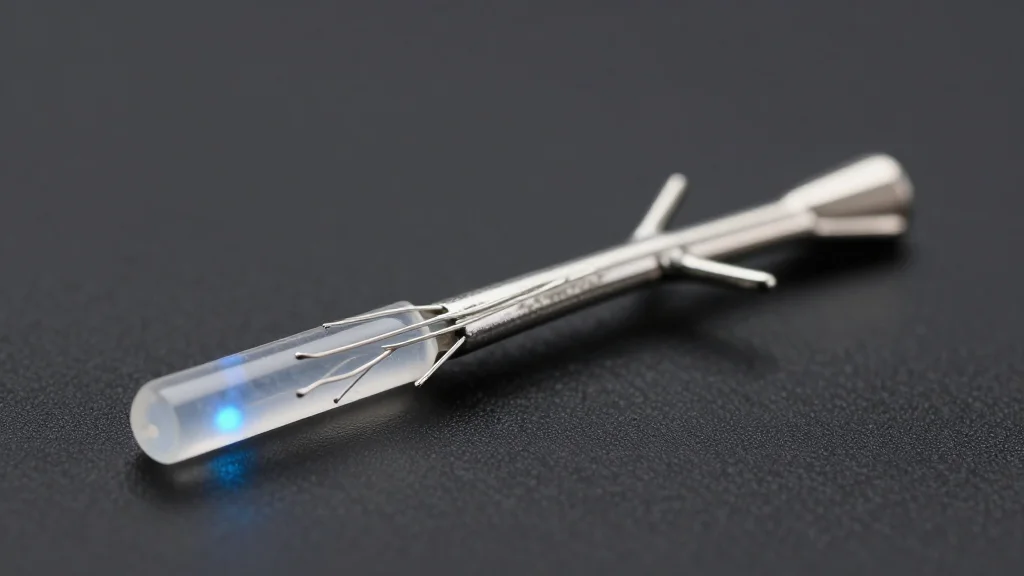
POSTECH's Tree‑Branch Nano‑Electrode Delivers 7× Capacity Boost for Solid‑State Batteries

Why It Matters
The breakthrough demonstrates how nanostructuring can solve fundamental transport limitations in solid‑state batteries, a hurdle that has kept the technology from mainstream adoption. By enabling full electrolyte penetration without new chemistries, the tree‑branch architecture could lower development costs and shorten the time to market for safer, higher‑energy storage solutions. Beyond EVs, the technology could transform grid‑scale storage, portable electronics, and aerospace power systems where fire safety and long cycle life are paramount. The success also validates a broader trend in nanotech: leveraging geometry at the nanoscale to unlock performance gains that bulk material changes alone cannot achieve.
Key Takeaways
- •POSTECH and Pukyong National University developed a tree‑branch‑shaped 3D nano‑electrode.
- •The design delivers ~7× higher capacity under fast charge‑discharge cycles.
- •Microscopic gaps in the nanowire forest allow solid electrolytes to fully infiltrate the electrode.
- •Results published in *Nano Letters* and announced on the 29th of the month.
- •Potential to accelerate commercialization of all‑solid‑state batteries for EVs and grid storage.
Pulse Analysis
The POSTECH breakthrough arrives at a pivotal moment when the battery industry is scrambling for a viable solid‑state solution. Historically, solid‑state research has focused on electrolyte chemistry—sulfides, oxides, and halides—while electrode architecture received less attention. This work flips that paradigm, showing that a purely structural tweak can unlock dramatic performance gains. If the nanowire growth process can be industrialized, it could become a low‑cost, high‑impact lever for manufacturers already investing heavily in solid electrolytes.
Competitors such as QuantumScape and Solid Power have pursued composite electrode designs that blend liquid‑like pathways into solid matrices, but those approaches often add complexity and cost. The POSTECH method leverages a single material—tin oxide nanowires—grown in situ, potentially simplifying supply chains. However, scaling nanowire forests uniformly across large electrode sheets remains a technical challenge; variations in branch density could lead to uneven electrolyte distribution and localized degradation.
Looking forward, the key question is whether the performance advantage persists in full‑cell configurations and under real‑world temperature swings. If subsequent prototypes confirm the lab‑scale results, investors may redirect capital toward nanostructure‑focused startups, and OEMs could renegotiate battery supply contracts to include solid‑state options earlier than planned. The broader implication is a shift in R&D budgets toward nanoscale engineering, reinforcing the notion that nanotech will be a decisive factor in the next generation of energy storage.
POSTECH's Tree‑Branch Nano‑Electrode Delivers 7× Capacity Boost for Solid‑State Batteries
Comments
Want to join the conversation?
Loading comments...