Preemptive Thermochromic Smart Coating for Visual Friction Damage Recognition and Corrosion Protection in Offshore Structures
•March 3, 2026
0
Why It Matters
Early visual detection of friction damage reduces unplanned downtime and prevents catastrophic failures in offshore energy infrastructure, while the enhanced corrosion barrier extends service life and cuts maintenance costs.
Key Takeaways
- •Thermochromic coating changes blue to colorless under friction heat
- •Sandwich structure combines polyurea, epoxy, and TC@SiO2 microcapsules
- •Tribological wear rate reaches 5.86×10⁻⁵ mm³·N⁻¹·m⁻¹
- •Corrosion resistance stays above 5.1×10⁹ Ω·cm² after 70 days
- •Enables early visual detection of micro‑damage in offshore cables
Pulse Analysis
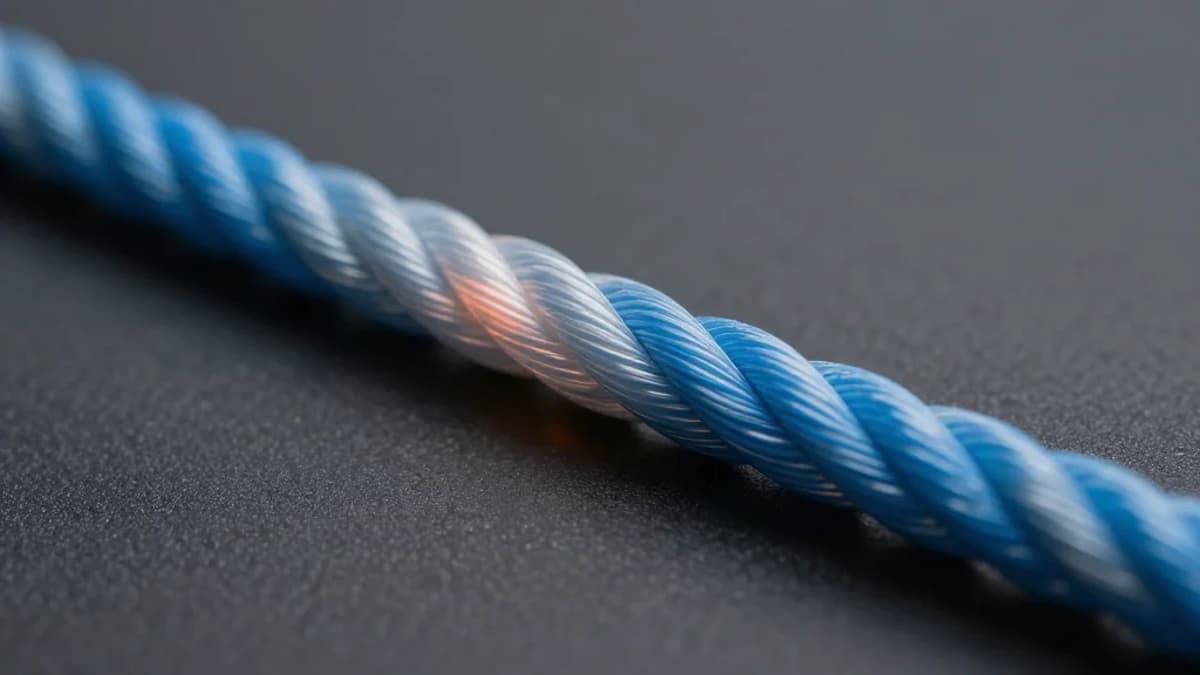
Offshore energy platforms rely on steel cables that are constantly exposed to abrasive wear and aggressive seawater, creating a perfect storm for premature failure. Traditional inspection methods struggle to spot sub‑surface micro‑defects before they propagate, leading to costly shutdowns. Thermochromic smart coatings address this gap by embedding a temperature‑responsive pigment system that turns visible at the first sign of friction‑generated heat, offering operators an immediate, intuitive cue that a cable is approaching its wear limit.
The innovative coating adopts a three‑layer sandwich architecture: a durable epoxy base, a polyurea topcoat, and a middle sensing layer packed with silica‑encapsulated TC@SiO2 microcapsules. When friction raises the local temperature, electron transfer between crystal violet lactone and bisphenol A breaks a C‑O‑C bond, triggering a solid‑to‑liquid transition that erases the blue hue. This chemical event not only signals damage but also reinforces the polymer network through hydrogen bonding, delivering a measured wear rate of 5.86 × 10⁻⁵ mm³·N⁻¹·m⁻¹ and maintaining a corrosion resistance exceeding 5 × 10⁹ Ω·cm² after more than two months of immersion.
Beyond its technical merits, the coating promises substantial economic benefits. By providing a low‑cost, real‑time visual indicator, it reduces reliance on expensive ultrasonic or radiographic inspections and enables condition‑based maintenance schedules. The approach can be adapted to other marine assets such as hulls, propellers, and wind‑turbine foundations, positioning thermochromic smart coatings as a versatile tool in the broader push toward intelligent, self‑diagnosing infrastructure. As the offshore sector scales, such proactive protection strategies will be pivotal in safeguarding assets and optimizing operational uptime.
Preemptive Thermochromic Smart Coating for Visual Friction Damage Recognition and Corrosion Protection in Offshore Structures
0
Comments
Want to join the conversation?
Loading comments...