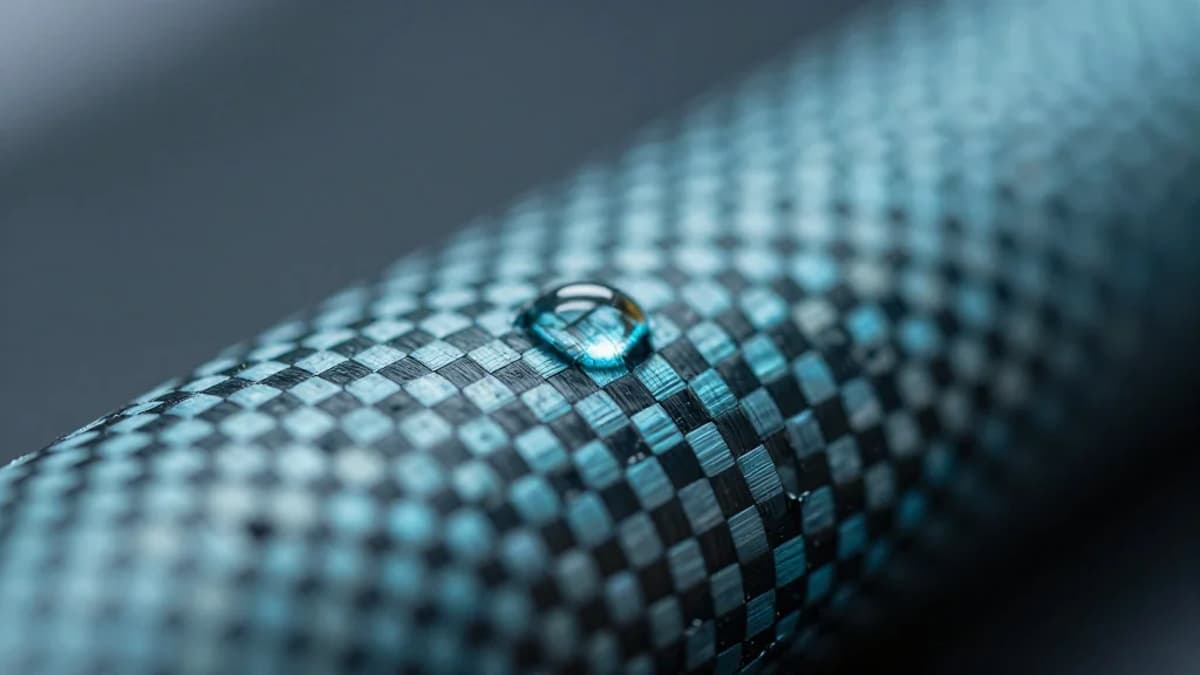
Printable Potentiometric Ion‐Selective Electrodes Based on Carbon Fiber and Ti3C2Tx MXene Nanoflakes: Eliminating Complex Modifications (Small 8/2026)
•February 6, 2026
0
Why It Matters
The breakthrough simplifies manufacturing of high‑performance ISEs, accelerating deployment of wearable and field‑deployed chemical sensors across healthcare and environmental markets.
Key Takeaways
- •MXene coating replaces complex electrode modification steps
- •Print‑ready electrodes boost manufacturing scalability
- •Sensitivity improves by up to 30% versus carbon‑fiber only
- •Detection limits reach sub‑micromolar concentrations
- •Flexible format enables wearable environmental monitoring
Pulse Analysis
Ion‑selective electrodes are a cornerstone of electrochemical sensing, yet their commercial rollout has been hampered by labor‑intensive surface treatments and rigid form factors. MXenes—two‑dimensional transition metal carbides—offer a conductive, chemically tunable platform that can be deposited directly onto substrates. By integrating Ti3C2Tx MXene nanoflakes onto carbon‑fiber scaffolds, the researchers created a printable electrode that sidesteps traditional polymeric membranes and ionophore immobilization steps, dramatically simplifying the production pipeline.
In head‑to‑head experiments, MXene‑enhanced ISEs outperformed their bare carbon‑fiber counterparts across key metrics. Sensitivity rose by roughly 30%, while detection limits dropped into the sub‑micromolar range, a critical threshold for trace pollutant and biomarker analysis. The nanoflake layer also improved mechanical robustness, allowing the electrodes to be flexed or rolled without performance loss—an essential attribute for wearable devices. Moreover, the ink‑based deposition process is compatible with roll‑to‑roll printing, promising economies of scale and reduced unit costs.
The implications extend beyond laboratory prototypes. Portable sensors equipped with these printable ISEs can deliver real‑time ion monitoring in remote locations, supporting rapid environmental assessments and point‑of‑care diagnostics. As regulatory bodies push for tighter water quality standards and personalized health tracking, the market demand for low‑cost, high‑performance electrochemical sensors is set to surge. MXene‑based ISEs, with their streamlined fabrication and superior analytical figures of merit, are poised to become a foundational technology in the next generation of smart sensing networks.
Printable Potentiometric Ion‐Selective Electrodes Based on Carbon Fiber and Ti3C2Tx MXene Nanoflakes: Eliminating Complex Modifications (Small 8/2026)
0
Comments
Want to join the conversation?
Loading comments...