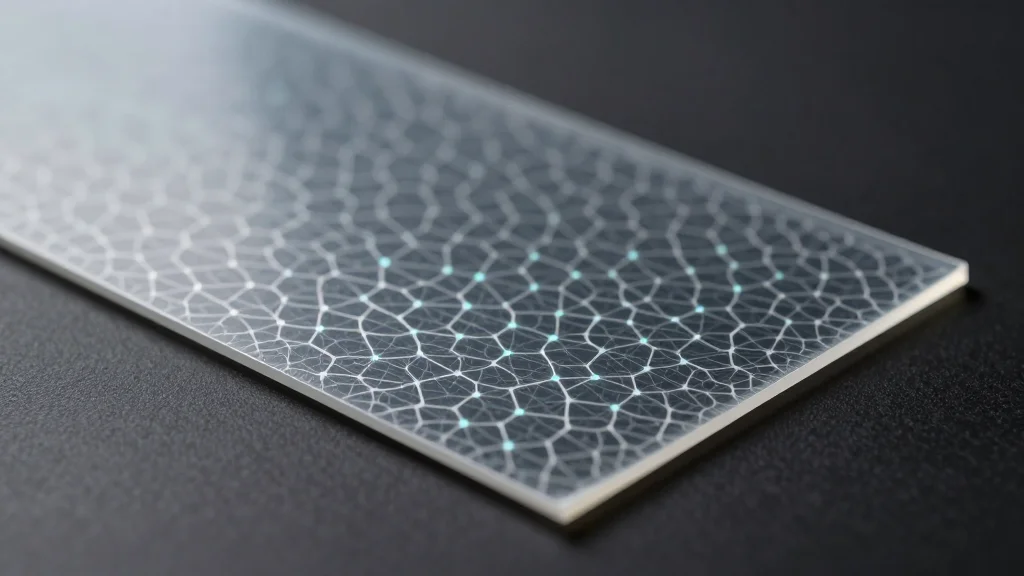
Printed MoS2 Memristive Nanosheet Networks for Spiking Neurons with Multi-Order Complexity
Why It Matters
The work provides a low‑cost, solution‑processed route to flexible neuromorphic devices that can interface directly with living tissue, accelerating the development of brain‑machine interfaces and edge AI hardware.
Key Takeaways
- •Aerosol‑jet printed graphene/MoS₂/graphene memristors show snap‑back NDR
- •Devices achieve volatile threshold switching with tunable spiking up to 20 kHz
- •Demonstrated first‑, second‑ and third‑order spiking dynamics, including integrate‑and‑fire
- •Stable operation for over 1 million switching cycles on flexible substrates
- •Printed spikes successfully evoked responses in mouse cerebellar Purkinje neurons
Pulse Analysis
The emergence of printable two‑dimensional materials is reshaping how neuromorphic components are fabricated. By leveraging aerosol‑jet printing, the Northwestern team deposited MoS₂ nanosheets alongside graphene electrodes to create memristive junctions that bypass traditional photolithography. This approach yields devices on bendable substrates with sub‑micron feature control, dramatically reducing material waste and manufacturing overhead. The resulting memristors display snap‑back negative differential resistance, a hallmark of thermally activated filamentary switching, which is essential for fast, energy‑efficient threshold behavior.
Beyond the material breakthrough, the study translates these memristors into functional spiking neuron circuits. Unlike conventional silicon‑based neuromorphic chips such as Intel’s Loihi, the printed neuristors generate spikes that mirror biological timing, ranging from tens to hundreds of microseconds. By arranging the memristors in simple resistor‑capacitor networks, the researchers engineered first‑order integrate‑and‑fire, second‑order latency, and third‑order bursting dynamics without additional complex circuitry. The ability to tune oscillation frequency up to 20 kHz and sustain over a million cycles positions these devices as viable candidates for low‑power edge computing and real‑time sensory processing.
The physiological relevance of the printed spikes was confirmed by evoking action potentials in mouse Purkinje neurons, a critical step toward seamless brain‑machine interfaces. Flexible, biocompatible hardware that can both read and write neural signals opens avenues for implantable prosthetics, closed‑loop neuromodulation, and bio‑hybrid robotics. While scaling to large‑scale arrays and ensuring long‑term stability remain challenges, the convergence of printable nanomaterials, thermally driven memristive dynamics, and demonstrated neural interfacing marks a pivotal advance in the quest for affordable, scalable neuromorphic systems.
Printed MoS2 memristive nanosheet networks for spiking neurons with multi-order complexity
Comments
Want to join the conversation?
Loading comments...