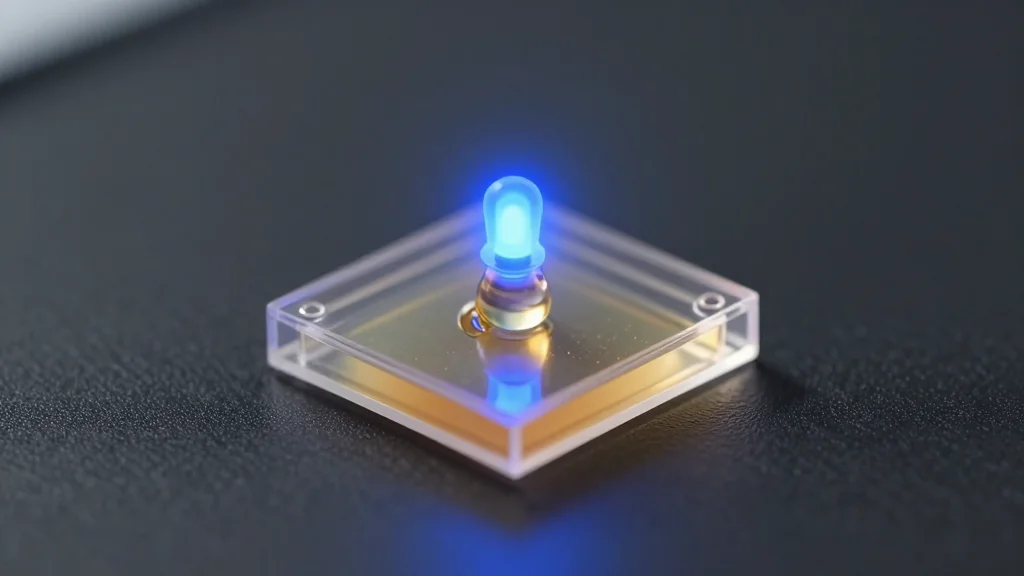
Programmable DNA/Polyacrylamide Network‐Grafted Broadband Plasmonic Liquid Metal Nanoparticles for Ultrafast Real‐Time Molecular Diagnostics
Why It Matters
By merging ultrafast photothermal cycling with nucleic‑acid amplification, the technology could shrink molecular testing from hours to minutes, accelerating disease detection in clinics and field settings. Its low‑cost, portable design lowers barriers for widespread deployment, especially in resource‑limited environments.
Key Takeaways
- •Gallium liquid metal nanoparticles provide broadband plasmonic absorption.
- •DNA/polyacrylamide networks graft directly onto nanoparticle surfaces.
- •Photothermal heating enables PCR cycles in under 7 minutes.
- •Platform detects viral and bacterial nucleic acids with high specificity.
- •Portable LED light sources can power the diagnostic assay.
Pulse Analysis
Gallium‑based liquid metals combine metallic conductivity with liquid‑state adaptability, giving rise to nanoparticles that absorb light across a broad spectrum. Unlike traditional gold nanostructures, these particles generate intense, uniform photothermal heat when illuminated, a property that researchers leveraged to replace conventional thermal cyclers. By initiating surface‑mediated polymerization, DNA‑polyacrylamide copolymers are covalently grafted onto each nanoparticle, forming a stable core‑shell architecture that resists aggregation and maintains catalytic activity during rapid temperature swings.
The grafted polymer network serves two critical roles: it anchors enzymatic reagents directly to the heated core and provides a programmable scaffold for target‑specific DNA probes. When exposed to a simple LED flashlight, the nanoparticles swiftly raise the reaction temperature, triggering denaturation, annealing, and extension steps in a continuous flow that completes within 6.5 minutes. This seamless coupling of photothermal conversion with PCR‑like amplification delivers sensitivity comparable to laboratory qPCR while eliminating bulky hardware, power‑intensive heaters, and lengthy run times.
From a market perspective, the technology aligns with the growing demand for point‑of‑care molecular diagnostics, especially in pandemic preparedness and remote healthcare. Its reliance on inexpensive LEDs and scalable liquid‑metal synthesis could drive unit costs below $5, making it attractive for large‑scale screening programs. Challenges remain in mass‑producing uniformly sized nanoparticles and meeting regulatory standards for clinical use, but the platform’s rapid turnaround, portability, and broad target range position it as a disruptive contender in the next generation of molecular testing solutions.
Programmable DNA/Polyacrylamide Network‐Grafted Broadband Plasmonic Liquid Metal Nanoparticles for Ultrafast Real‐Time Molecular Diagnostics
Comments
Want to join the conversation?
Loading comments...