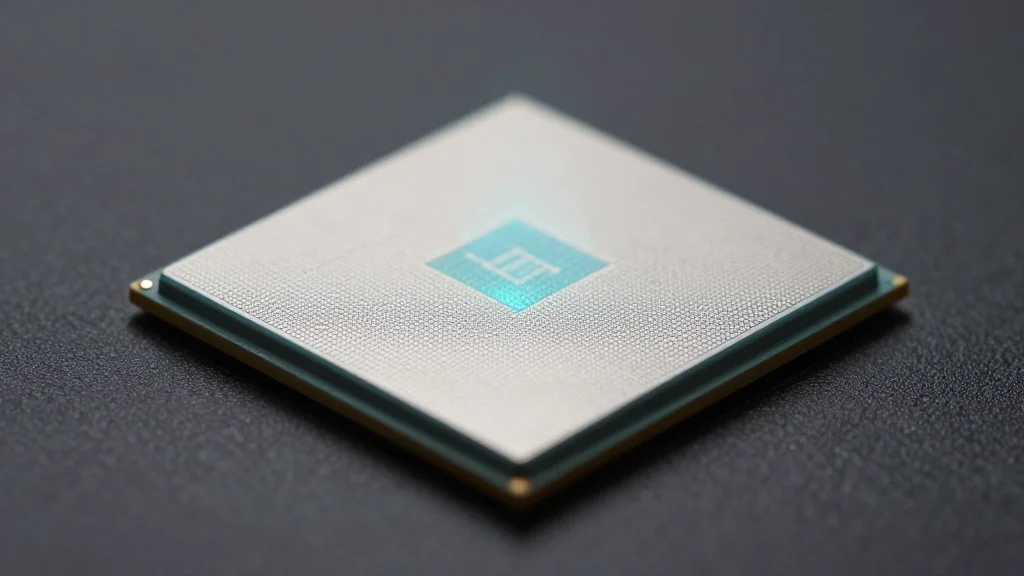
Quantum Metasurface Boosts Terahertz Detector Sensitivity via In‑Plane Photoelectric Effect

Why It Matters
The ability to detect terahertz radiation with high sensitivity at room temperature removes a major barrier to commercializing THz technologies. Security agencies could field compact scanners that reveal concealed threats without invasive procedures, while telecom operators could tap a vast, untapped bandwidth for ultra‑fast data links. Moreover, the metasurface approach demonstrates how nanostructured photonic engineering can solve longstanding efficiency limits, suggesting a broader paradigm shift for other far‑infrared and microwave sensing applications. Beyond immediate applications, the work showcases a scalable, top‑down fabrication route that aligns with existing semiconductor manufacturing. This compatibility could accelerate transfer from academic labs to foundry production, shortening the time to market for THz devices and spurring a new class of nanophotonic sensors.
Key Takeaways
- •Cambridge‑Swansea team creates a quantum metasurface THz detector using the in‑plane photoelectric effect.
- •Brickwork metasurface pattern concentrates THz fields into many sub‑wavelength gaps, each acting as a detector.
- •Researchers report a significant boost in detection sensitivity compared with conventional parallel‑device designs.
- •Device operates at room temperature, removing the need for bulky cryogenic cooling.
- •Potential impact on security imaging, non‑destructive testing, and high‑speed THz communications.
Pulse Analysis
The metasurface detector represents a convergence of quantum physics and nanofabrication that could redefine the economics of terahertz sensing. Historically, THz systems have been confined to research labs because detector performance required either superconducting bolometers or large antenna arrays, both costly and power‑hungry. By embedding detection directly into a metasurface, the Cambridge‑Swansea team sidesteps these constraints, delivering a solution that can be fabricated with standard lithography.
From a market perspective, the timing aligns with growing interest from defense and telecommunications firms seeking to exploit the THz band for secure imaging and ultra‑broadband links. Companies such as TeraSense and NuTera have been lobbying for regulatory approval of THz spectrum use; a practical, low‑cost detector could accelerate those efforts. Competitors that rely on traditional detector technologies may need to pivot or risk obsolescence.
Looking ahead, the key challenge will be translating laboratory sensitivity gains into robust, manufacturable products. Scaling the metasurface to larger apertures while preserving uniform field enhancement will test the limits of current wafer‑scale processes. If the team can demonstrate reliable performance across a range of operating conditions, the technology could become a cornerstone for the next wave of THz applications, from airport security scanners that fit on a tabletop to 6G‑era wireless backhaul links that push data rates into the terabit‑per‑second regime.
Quantum Metasurface Boosts Terahertz Detector Sensitivity via In‑Plane Photoelectric Effect
Comments
Want to join the conversation?
Loading comments...