Quantum‑dot TVs Beat RGB‑LED Sets in Display Week Demo

Why It Matters
The superiority claim for super quantum‑dot displays challenges the prevailing narrative that RGB‑LED backlights are the next big thing in premium televisions. By delivering more accurate colors and deeper contrast without the zone‑based artifacts that plague RGB‑LED panels, SQD technology could become a decisive factor for manufacturers aiming to differentiate in a crowded market. This shift would affect supply chains, from quantum‑dot manufacturers like Nanosys to panel fabricators and OEMs, potentially reshaping investment flows and R&D priorities across the display industry. Furthermore, the consumer experience of HDR and wide‑color‑gamut content hinges on the underlying back‑light technology. If SQD panels can consistently outperform RGB‑LED sets, streaming platforms and broadcasters may push for higher‑fidelity content standards, accelerating the adoption of next‑generation video codecs and color spaces. The ripple effect could extend to related nanotech applications, such as quantum‑dot lighting and photonic devices, reinforcing the strategic importance of nanoscale materials in consumer electronics.
Key Takeaways
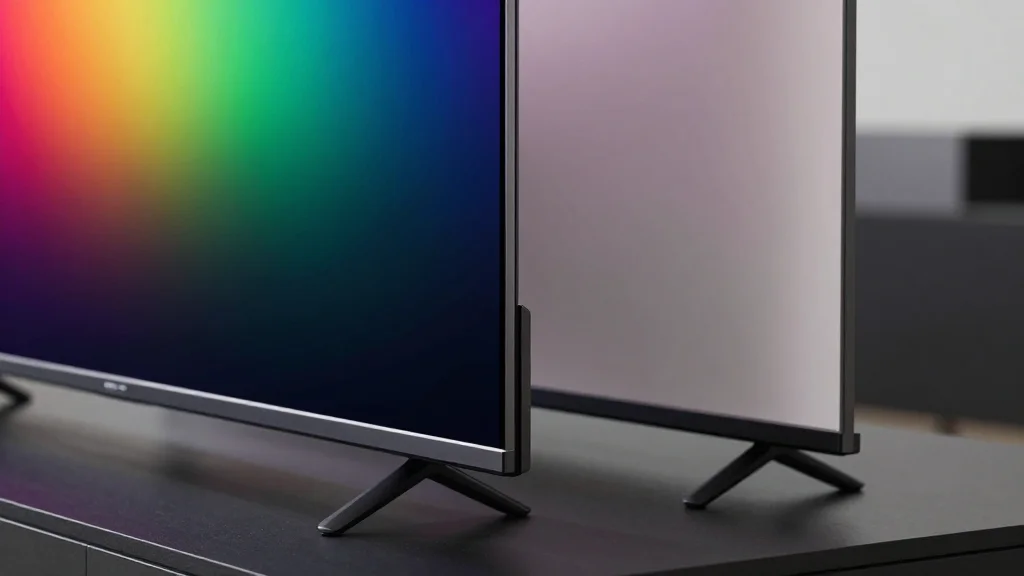
- •Nanosys demonstrated a side‑by‑side comparison of SQD vs. RGB‑LED TVs at Display Week in Los Angeles.
- •The SQD TV (TCL X11L) showed less color crosstalk and deeper contrast than the RGB‑LED model (likely TCL RM9L).
- •Both units were set to Filmmaker Mode with native color settings for a fair gamut test.
- •Industry focus on RGB‑LED for 2026 may be challenged by SQD’s visual performance advantages.
- •Nanosys plans further SQD testing and OEM collaborations later in 2026.
Pulse Analysis
The SQD versus RGB‑LED showdown underscores a classic technology inflection point: a newer nanomaterial‑based solution threatens to displace an incumbent that has enjoyed strong marketing momentum. Historically, display breakthroughs—such as the shift from CCFL to LED backlights—have hinged on demonstrable improvements in brightness, power efficiency, and cost. Quantum‑dot technology already proved its worth by expanding color gamuts, but the super quantum‑dot approach adds a layer of back‑light simplification that could lower system complexity while boosting visual fidelity.
From a market dynamics perspective, OEMs that have already re‑tooled factories for RGB‑LED zones may face a costly pivot if SQD gains traction. However, the modular nature of quantum‑dot films means that integration could be less disruptive than a full back‑light redesign. Investors will likely scrutinize Nanosys’ ability to scale production and secure long‑term supply contracts, especially as rivals like Samsung and LG explore their own quantum‑dot enhancements. The next quarter’s earnings reports from major TV manufacturers could reveal whether they are hedging bets on SQD or doubling down on RGB‑LED.
Looking forward, the real test will be independent lab verification and consumer perception. If third‑party measurements confirm the visual edge and if price premiums remain modest, SQD could become the new benchmark for premium HDR displays. This would not only validate Nanosys’ nanotech roadmap but also accelerate broader adoption of quantum‑dot technologies across lighting, signage and even automotive displays, cementing nanomaterials as a cornerstone of next‑generation visual experiences.
Quantum‑dot TVs Beat RGB‑LED Sets in Display Week Demo
Comments
Want to join the conversation?
Loading comments...