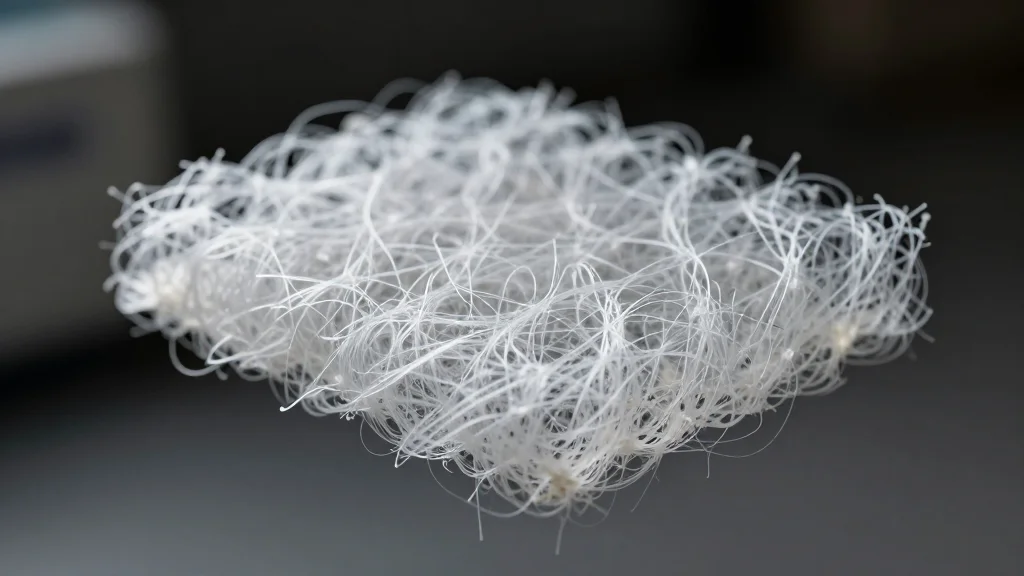
Realizing Ultrahigh Fatigue Resistance in Carbon Nanotube Aerogel by Homogeneous‐Phase Hybrid Core‐Sheath Structure
Why It Matters
The ultrahigh fatigue resistance unlocks CNT aerogels for real‑world lightweight structural and electromagnetic‑shielding applications, accelerating adoption in aerospace, defense, and high‑performance electronics.
Key Takeaways
- •Hybrid core‑sheath design suppresses crack initiation in CNT aerogels
- •Aerogel endures >1 million 50% compression cycles with <4.2% permanent strain
- •Stress loss remains under 6.6% after fatigue testing
- •Enables lightweight impact protection and terahertz shielding across extreme temperatures
Pulse Analysis
The quest for ultra‑light, high‑strength materials has long spotlighted carbon nanotubes, yet translating their exceptional nanoscale strength to bulk forms remains a persistent hurdle. Conventional CNT aerogels suffer from weak inter‑tube bonding, leading to rapid fatigue failure under repeated loading. By mimicking the hierarchical architecture of trees, the new approach envelops each nanotube bundle in a uniform organic‑inorganic sheath, creating a homogeneous‑phase core‑sheath that distributes stress evenly and blocks micro‑crack propagation. This design principle not only preserves the intrinsic elasticity of CNTs but also introduces a modulus‑loss‑dominated fatigue behavior that is rare in porous media.
Performance data underscore the material’s revolutionary durability: after more than one million compression cycles at a 50% strain amplitude, the aerogel exhibits less than 4.2% permanent deformation and a modest 6.6% reduction in stress capacity. Such resilience rivals that of metallic springs while maintaining a fraction of the weight, positioning the aerogel as a prime candidate for vibration‑damping components in aircraft, satellites, and high‑speed rail systems. Moreover, its ability to absorb and shield terahertz radiation opens avenues in stealth technology and next‑generation communication devices, where electromagnetic interference mitigation is critical.
Beyond aerospace, the hybrid CNT aerogel’s temperature‑independent performance makes it attractive for harsh‑environment applications, from deep‑sea submersibles to planetary rovers. Its dual functionality—mechanical cushioning and electromagnetic shielding—offers system‑level weight savings, a compelling value proposition for manufacturers seeking to consolidate components. As the market for lightweight, multifunctional composites expands, this technology could catalyze new product categories and stimulate further research into scalable manufacturing techniques, ultimately driving broader commercial adoption of nanomaterial‑based structural solutions.
Realizing Ultrahigh Fatigue Resistance in Carbon Nanotube Aerogel by Homogeneous‐Phase Hybrid Core‐Sheath Structure
Comments
Want to join the conversation?
Loading comments...