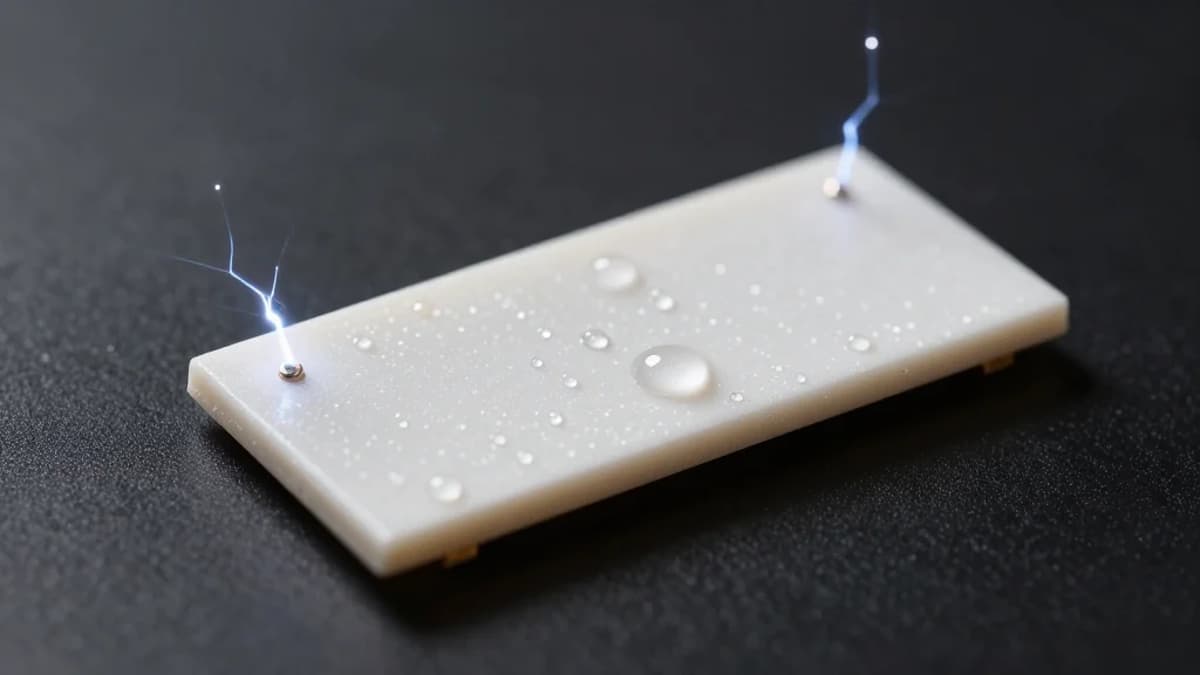
Recent Advances in Moisture‐Electric Nanogenerators: From Moisture‐Enabled Electrification to Practical Applications
•February 22, 2026
0
Why It Matters
MEGs provide a clean, ubiquitous power source that bypasses the geographic constraints of solar or wind, addressing the global energy‑supply gap. Their integration into IoT and wearable devices could reduce battery waste and enable continuous monitoring in remote environments.
Key Takeaways
- •MEGs convert atmospheric moisture into electricity via hygroscopic materials
- •Recent material innovations boost output power by up to 10×
- •Applications include self-powered humidity sensors and respiration monitors
- •MEGs offer renewable energy independent of location or weather
- •Forecasted market growth driven by IoT and wearables demand
Pulse Analysis
The escalating global energy shortage has intensified the search for renewable sources that are both abundant and location‑independent. Moisture‑electric nanogenerators (MEGs) answer this call by exploiting the omnipresent presence of atmospheric water vapor. Unlike solar or wind systems, MEGs do not rely on sunlight or wind speed, making them viable in dense urban settings, underground facilities, or arid regions where traditional renewables falter. Their core principle—ionizing moisture through engineered hygroscopic polymers—transforms latent intermolecular bonding energy into usable electric charge, offering a novel clean‑energy pathway.
Technical breakthroughs over the past two years have dramatically improved MEG performance. Researchers have introduced nanostructured metal‑organic frameworks and polymer‑based composites that increase surface area and moisture adsorption rates, resulting in power density gains of up to tenfold. Optimized electrode configurations and hybridized triboelectric‑moisture mechanisms further amplify output, pushing MEGs toward milliwatt‑scale generation suitable for low‑power electronics. These material innovations also enhance durability, allowing continuous operation under fluctuating humidity without significant degradation, a critical factor for real‑world deployment.
The commercial implications are substantial. Self‑powered humidity sensors, respiration monitors, and wearable health trackers can now operate without battery replacements, reducing electronic waste and maintenance costs. As the Internet of Things expands, the demand for autonomous, low‑energy nodes grows, positioning MEGs as a strategic enabler for edge computing in remote or hard‑to‑reach environments. Industry analysts forecast a steady market uptick, driven by partnerships between material scientists and consumer‑electronics firms seeking sustainable power solutions. Continued investment in scalable fabrication and standards will likely accelerate MEG adoption across sectors ranging from smart agriculture to aerospace.
Recent Advances in Moisture‐Electric Nanogenerators: From Moisture‐Enabled Electrification to Practical Applications
0
Comments
Want to join the conversation?
Loading comments...