Researchers Develop Graphene Oxide Hybrid Electrodes for Real-Time Dopamine Monitoring
•December 28, 2025
0
Why It Matters
SIDNEY provides a non‑destructive, rapid readout of neurotransmitter activity, accelerating neuropharmacology research and personalized disease modeling.
Key Takeaways
- •Graphene oxide electrode detects dopamine at 7.51 nM.
- •Platform works on live neurons and brain organoids.
- •Selective against serotonin, norepinephrine; antifouling.
- •Minute‑scale results from microliter‑volume samples.
- •Enables non‑destructive longitudinal drug screening.
Pulse Analysis
Accurate measurement of dopamine, a key neurotransmitter, has long been hampered by invasive techniques that destroy cells or require bulky equipment. Conventional methods such as chromatography or immunoassays demand large sample volumes and cannot track dynamic changes in living tissue. The emergence of label‑free electrochemical sensors promises real‑time insight, yet challenges in selectivity, stability, and biocompatibility have limited their adoption in neuroscience labs.
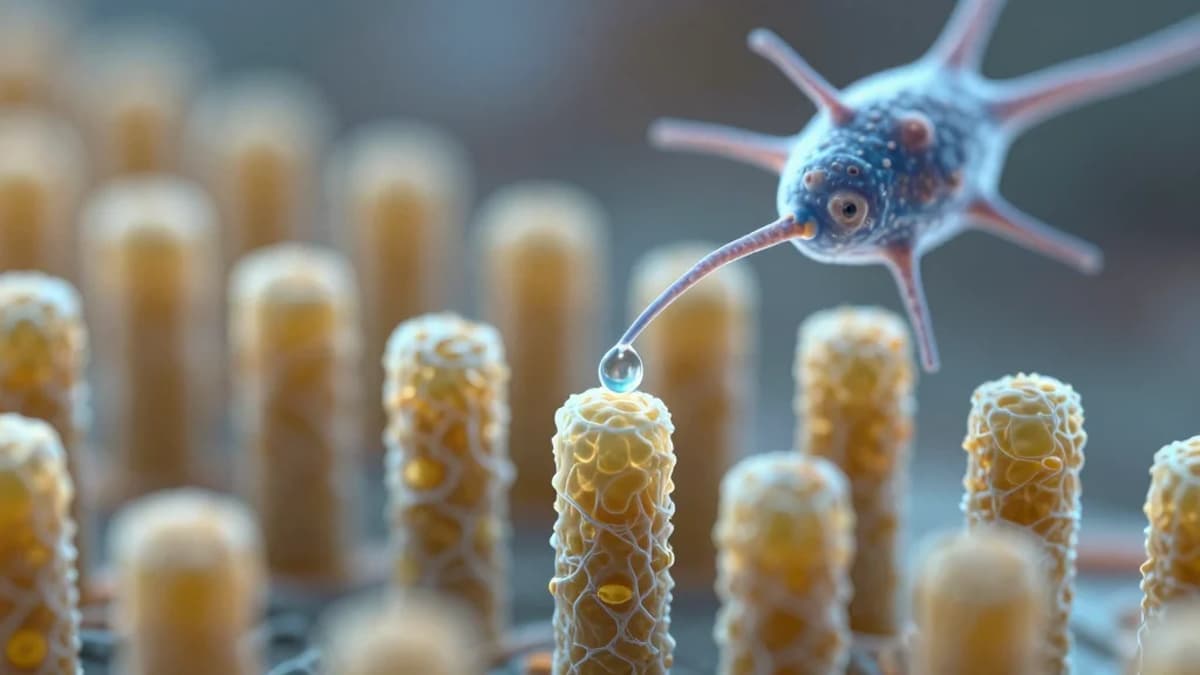
SIDNEY addresses these gaps through a hierarchical nanostructure: vertically aligned gold nanopillars topped with gold nanoparticles, all encapsulated in a graphene‑oxide film. The aromatic carbon lattice of graphene oxide engages dopamine via π‑π interactions, while its negatively charged carboxyl groups attract the neurotransmitter’s amine group, delivering both high affinity and rapid electron transfer. The result is a detection limit of 7.51 nM—well within physiological concentrations—and minimal cross‑reactivity with serotonin or norepinephrine, even after prolonged cell culture. Moreover, the platform’s antifouling surface maintains performance over repeated measurements, delivering reliable data in under a minute from microliter‑scale samples.
The implications extend beyond basic research. By preserving organoid viability, SIDNEY enables longitudinal studies of neuronal maturation, facilitating personalized drug screening and early‑stage toxicity assessment for neurodegenerative therapies. Its scalability and compatibility with existing microfluidic workflows position it as a valuable tool for biotech firms developing dopamine‑targeted drugs. As the market for organoid‑based platforms expands, technologies that combine high sensitivity with non‑destructive monitoring are poised to become standard in both academic and commercial neuroscience pipelines.
Researchers develop graphene oxide hybrid electrodes for real-time dopamine monitoring
0
Comments
Want to join the conversation?
Loading comments...