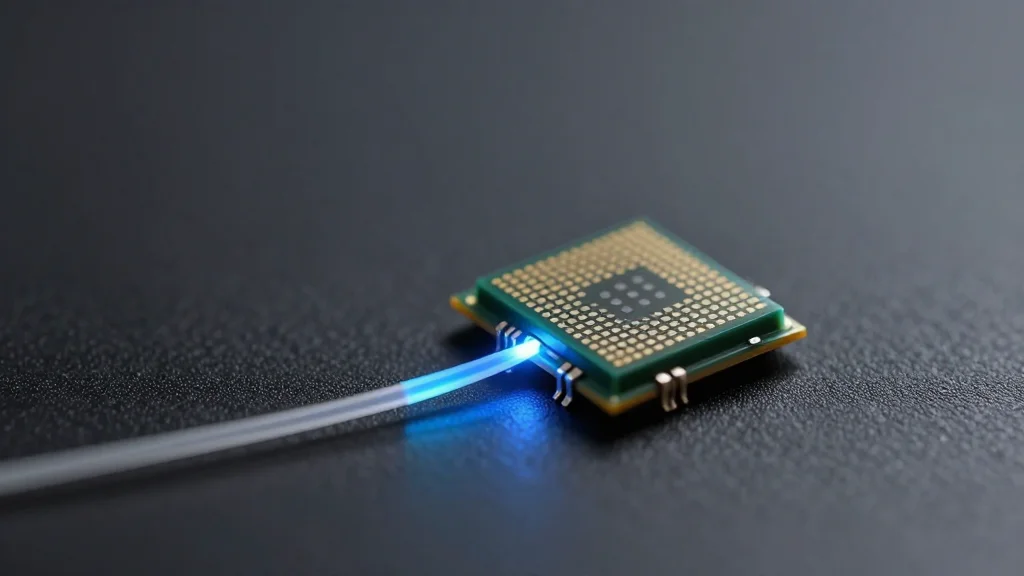
Researchers Silence Noise in Telecom Quantum Emitters with Nanophotonic Structures

Why It Matters
Coherent single‑photon sources at telecom wavelengths are a linchpin for building scalable quantum networks. Current implementations suffer from rapid decoherence, limiting the distance and fidelity of quantum key distribution. By demonstrating a nanophotonic strategy that silences this noise, the research offers a concrete solution that aligns with existing fiber infrastructure, potentially lowering the barrier to commercial quantum communication services. Beyond secure communications, the technique could benefit quantum sensing and distributed quantum computing, where long‑lived photonic qubits are essential. The ability to control decoherence at the nanoscale may also inspire new designs for quantum light sources in other wavelength regimes, broadening the impact across the quantum technology ecosystem.
Key Takeaways
- •Holewa and Syperek's team demonstrates nanophotonic cavities that suppress decoherence in telecom‑band quantum dots.
- •The approach isolates emitters from phonon interactions, extending photon coherence times.
- •Research published in Nature Nanotechnology (2026) links nanophotonics with quantum communication hardware.
- •Collaboration spans Technical University of Denmark and Wrocław University of Science and Technology.
- •Findings could accelerate deployment of fiber‑compatible quantum repeaters and secure networks.
Pulse Analysis
The noise‑silencing breakthrough arrives at a pivotal moment for the quantum communications market, which has seen venture capital inflows exceeding $2 billion in the past year alone. While companies such as QuEra and PsiQuantum have focused on trapped‑ion and photonic processors, the bottleneck of reliable telecom‑band photon sources has remained largely unsolved. This research provides a tangible engineering pathway that could shift the competitive balance toward photonic platforms that integrate directly with existing telecom infrastructure.
Historically, attempts to improve quantum dot coherence have relied on material purification or extreme cooling, both of which add cost and complexity. By leveraging nanophotonic design—a field that has matured through advances in silicon photonics and metasurfaces—the authors sidestep these constraints. If industry can translate the laboratory demonstration into manufacturable components, we may see a wave of start‑ups and incumbents racing to embed these cavities into quantum‑ready transceivers.
Looking ahead, the key challenge will be scaling the fabrication while preserving the delicate electromagnetic environment required for noise suppression. Success will likely depend on partnerships between academic labs, foundries, and telecom equipment manufacturers. The next 12‑18 months should reveal whether the technique can survive the rigors of mass production, but the publication itself signals that the scientific foundation is solid, setting the stage for a new generation of quantum‑enhanced communication hardware.
Researchers Silence Noise in Telecom Quantum Emitters with Nanophotonic Structures
Comments
Want to join the conversation?
Loading comments...