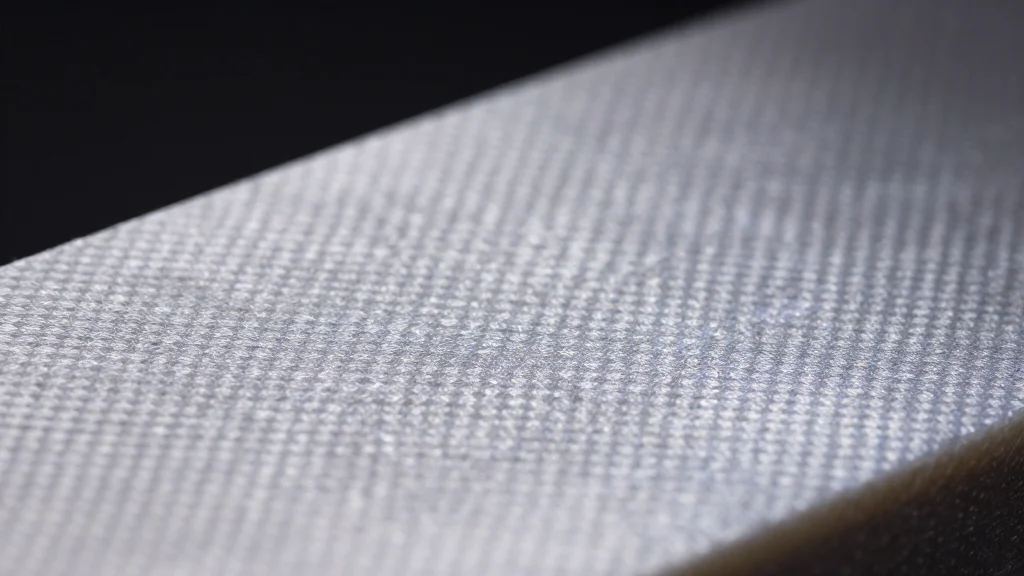
Rice Researchers Unveil Twisted Carbon Nanotube Film with Record‑Breaking Light Conversion

Why It Matters
The ability to generate giant second‑harmonic signals on a wafer‑scale platform addresses a critical bottleneck in photonic integration: efficient frequency conversion without bulky crystals or high‑power lasers. By leveraging the intrinsic chirality of carbon nanotubes, the Rice breakthrough offers a path to ultra‑compact, low‑power photonic chips that can handle the massive data streams of modern IoT deployments. Faster, more energy‑efficient optical interconnects translate directly into reduced latency for edge devices and lower operational costs for cloud infrastructure. Beyond immediate applications, the work validates decades‑old theoretical predictions about one‑dimensional quantum confinement and nonlinear optics. It could catalyze a new wave of research into chiral nanomaterials, expanding the toolbox for engineers designing next‑generation quantum‑aware communication systems, secure photonic links, and on‑chip light sources for emerging computing paradigms.
Key Takeaways
- •Rice University team creates centimetre‑scale film of single‑enantiomer (6,5) carbon nanotubes
- •Effective nonlinear susceptibility measured at 4.9 × 10² pm/V; intrinsic value inferred at 1.6 × 10³ pm/V
- •Demonstrates "giant" second‑harmonic generation, converting infrared to visible light efficiently
- •Vacuum‑filtration technique yields wafer‑like uniform films compatible with semiconductor processes
- •Potential to accelerate photonic chip performance for IoT edge and cloud applications
Pulse Analysis
The Rice discovery arrives at a moment when the photonics industry is scrambling to overcome silicon's intrinsic limitations in nonlinear optics. Silicon’s modest χ^(2) response forces designers to rely on external modulators or hybrid integration, adding cost and complexity. The reported intrinsic susceptibility of 1.6 × 10³ pm/V for an ideal chiral CNT crystal dwarfs silicon’s typical values by an order of magnitude, positioning carbon nanotubes as a disruptive alternative.
Historically, carbon‑based nanomaterials have struggled with scalability and reproducibility, keeping them on the periphery of commercial photonics. The vacuum‑filtration method demonstrated by Kono’s team, however, bridges that gap by delivering uniform, wafer‑scale films that can be patterned using existing lithography tools. If industry partners can translate this lab‑scale process to high‑throughput manufacturing, we could see a rapid shift in component sourcing, with CNT‑based frequency doublers replacing traditional lithium‑niobate or periodically poled crystals in data‑center transceivers.
Looking ahead, the true test will be integration. Photonic designers must assess how the CNT film interfaces with waveguides, resonators, and detectors under real‑world operating conditions. Reliability, thermal stability, and compatibility with CMOS back‑end processes will dictate adoption speed. Nonetheless, the breakthrough injects fresh optimism into the nanotech sector, suggesting that the long‑promised marriage of quantum confinement and chirality can finally deliver tangible performance gains for the IoT ecosystem.
Rice Researchers Unveil Twisted Carbon Nanotube Film with Record‑Breaking Light Conversion
Comments
Want to join the conversation?
Loading comments...