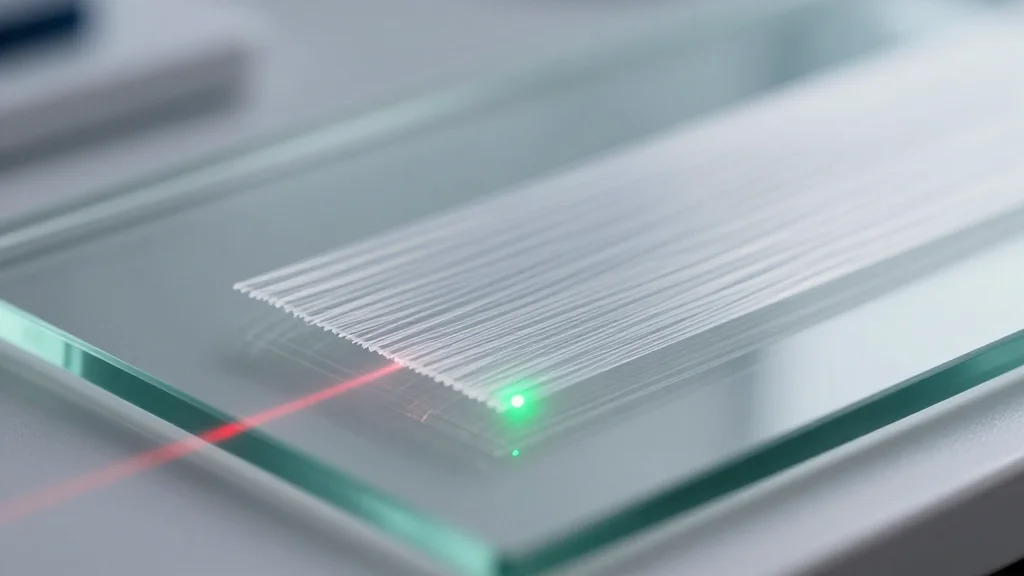
Rice University Demonstrates 1,000‑Fold Light‑Conversion Boost in Chiral Carbon Nanotube Films

Why It Matters
The ability to generate second‑harmonic light at unprecedented efficiencies using atomically thin carbon nanotube films could reshape the optics industry. Conventional nonlinear crystals are bulky, expensive, and limited in bandwidth; chiral CNT films promise a lightweight, flexible alternative that can be patterned onto existing semiconductor processes. This could accelerate the rollout of ultrafast optical interconnects in data centers and enable new classes of wearable photonic sensors. Beyond communications, the breakthrough validates a decades‑old theoretical model of one‑dimensional excitonic enhancement, opening research avenues in quantum optics and nonlinear nanophotonics. By demonstrating that chirality can be harnessed rather than canceled, the work may inspire similar strategies for other chiral nanomaterials, expanding the toolbox for engineers designing next‑generation photonic systems.
Key Takeaways
- •Rice University created centimeter‑scale films of single‑handed chiral carbon nanotubes.
- •Measured second‑harmonic generation up to 1,000‑times stronger than conventional materials.
- •Films produced by isolating nanotubes with one handedness and aligning them uniformly.
- •Potential applications include flexible photonic chips, high‑speed optical links, and light‑based computing.
- •Next steps involve integrating films with silicon photonics and testing durability for commercial use.
Pulse Analysis
The Rice discovery arrives at a pivotal moment for the nanotech industry, which has struggled to translate the extraordinary properties of carbon nanotubes into scalable products. Historically, purification and alignment bottlenecks have kept CNTs in the realm of academic curiosity. By solving the chirality‑cancellation problem, the team not only proves a theoretical prediction but also demonstrates a manufacturable pathway—large, uniform films that can be handled like conventional wafers.
From a market perspective, the technology threatens the incumbent nonlinear crystal sector, dominated by lithium niobate and potassium titanyl phosphate. Those materials are limited by size, weight, and integration challenges. Chiral CNT films, by contrast, could be deposited directly onto silicon or flexible substrates, dramatically reducing form factor and enabling new device architectures. Companies investing in integrated photonics, such as Intel and Lumentum, may find a strategic advantage in adopting this material, especially as data‑center bandwidth demands continue to outpace electronic interconnects.
Looking ahead, the key risk lies in scaling the purification and alignment processes to industrial volumes. While the current study leverages a collaboration with Tokyo Metropolitan University for chirality separation, commercial viability will require cost‑effective, high‑throughput methods. If the research community can bridge that gap, we could see the first generation of CNT‑based frequency converters in commercial optical transceivers within five years, potentially redefining standards for energy‑efficient, high‑speed data transmission.
Rice University Demonstrates 1,000‑Fold Light‑Conversion Boost in Chiral Carbon Nanotube Films
Comments
Want to join the conversation?
Loading comments...