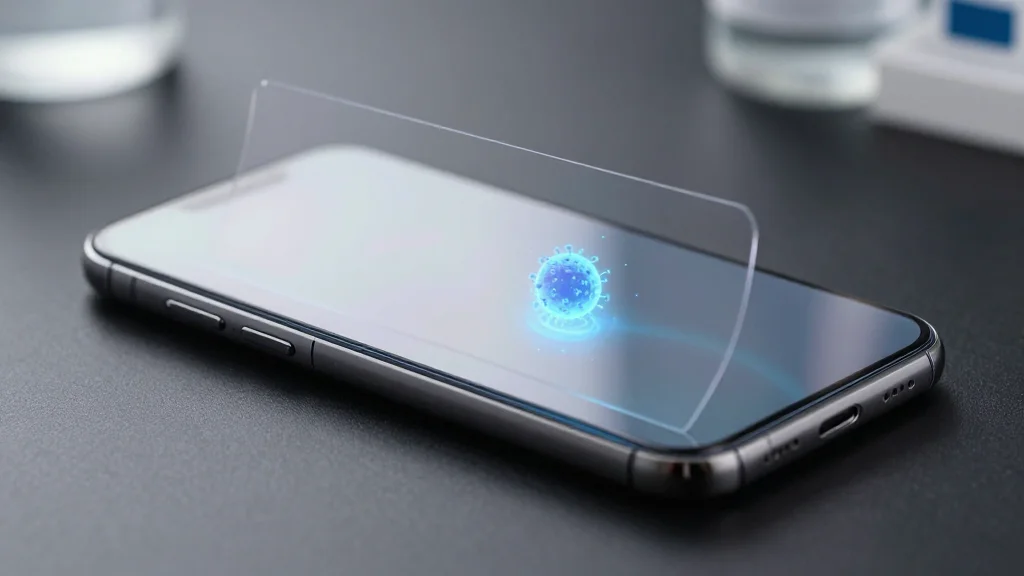
RMIT’s Nanopillar Film Can Kill 94% of Viruses on Phone Screens

Why It Matters
The nanofilm represents a paradigm shift from chemical to mechanical antimicrobial strategies, reducing the ecological footprint of disinfectants while delivering continuous protection. In sectors such as healthcare, education and transportation, where device‑mediated transmission of pathogens remains a concern, a durable, self‑sanitizing surface could markedly lower infection risk. Beyond immediate health benefits, the technology could catalyze a new class of nanostructured coatings across industries—from food packaging to aerospace—where durability and biocompatibility are paramount. Its scalability also signals that advanced nanomanufacturing can transition from laboratory prototypes to mass‑market products within a few years, accelerating the commercialization pipeline for other nanotech innovations.
Key Takeaways
- •RMIT’s nanofilm kills ~94% of hPIV‑3 virus in one hour
- •Coating uses flexible acrylic polymer with nanometer‑scale pillars
- •Manufacturing can leverage existing roll‑to‑roll plastic film lines
- •Potential market impact on the $10 billion antimicrobial coating sector
- •Next steps include smartphone field trials and regulatory clearance
Pulse Analysis
The RMIT nanopillar film arrives at a crossroads where consumer demand for hygiene and manufacturers’ cost pressures intersect. Traditional antimicrobial coatings have struggled with longevity and regulatory scrutiny; a purely physical mechanism sidesteps many of those pain points, offering a clear competitive advantage. However, adoption will depend on convincing OEMs that the added material cost—estimated at a few cents per square inch—does not erode profit margins, especially in price‑sensitive segments like mid‑range smartphones.
Historically, nanotech breakthroughs have faced a "valley of death" between academic proof‑of‑concept and commercial rollout. RMIT’s emphasis on using standard acrylic plastics and roll‑to‑roll processes directly addresses that gap, suggesting a shorter path to market than more exotic nanomaterials that require bespoke fabrication. If early field trials confirm durability and safety, the coating could become a differentiator for brands seeking to market “self‑sanitizing” devices, much as water‑repellent glass did a decade ago.
Looking ahead, the technology could spur a cascade of ancillary innovations: sensors that monitor coating integrity, integration with anti‑glare or anti‑fingerprint layers, and even hybrid films that combine mechanical and photonic disinfection. The key question for investors and industry watchers will be whether the nanofilm can achieve mass adoption before competing solutions—such as UV‑emitting phone cases or antimicrobial glass—gain market traction. The answer will hinge on real‑world performance data, supply‑chain readiness, and the regulatory climate surrounding passive antimicrobial devices.
RMIT’s Nanopillar Film Can Kill 94% of Viruses on Phone Screens
Comments
Want to join the conversation?
Loading comments...