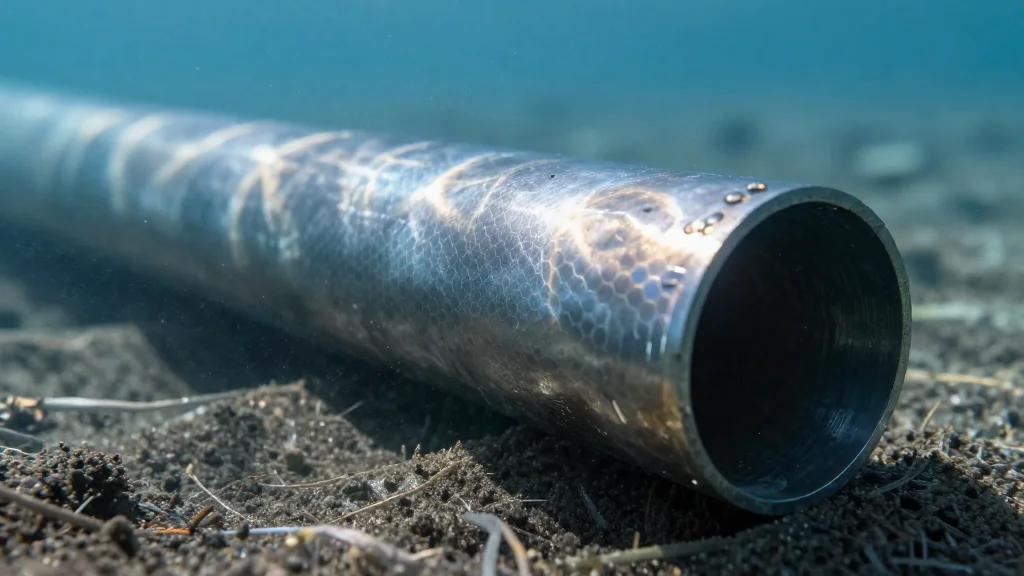
Royalton and PETRONAS Partner to Validate Graphene-Enhanced Underwater Epoxy Coating for Corrosion Protection
Companies Mentioned
Why It Matters
The technology promises substantial OPEX savings by extending asset life and enabling repairs without shutdowns, a critical advantage for the high‑cost offshore energy sector. It also underscores Malaysia’s push to commercialize advanced materials, potentially reshaping the global marine‑protective‑coating market.
Key Takeaways
- •Royalton upgrades ROYALPOXY UW 410 with PETRONAS graphene additive
- •Graphene aims to block water, oxygen, and salts in coating
- •Enhanced coating allows repairs without removing structures from service
- •Expected to cut offshore downtime and maintenance expenses
- •Partnership supports Malaysia’s industrial innovation and energy infrastructure
Pulse Analysis
Corrosion remains the single biggest cost driver for the global offshore and marine sectors, accounting for billions of dollars in repairs and lost productivity each year. Traditional epoxy systems protect submerged steel, but they often require surface preparation and cannot be applied to wet or oily substrates without risking adhesion loss. Graphene, a single‑atom‑thick lattice of carbon, offers exceptional barrier properties because its tightly packed structure blocks the diffusion of water, oxygen and ions. Embedding this nanomaterial into an epoxy matrix promises a leap in durability that conventional additives cannot match.
Royalton Coating Systems has teamed with PETRONAS Technology Ventures to test ProShield+, PETRONAS’s graphene‑based additive, within its ROYALPOXY UW 410 underwater epoxy. The joint program subjects the formulation to simulated offshore conditions—continuous immersion, high salinity, and mechanical stress—to verify claims of reduced water and ion ingress, improved adhesion on wet steel, and resistance to micro‑cracking. If successful, operators could apply the coating directly to active pipelines, platforms or vessels, eliminating the costly shutdowns traditionally required for surface preparation. Early projections suggest downtime could shrink by up to 30 percent, translating into significant OPEX savings.
The collaboration also signals Malaysia’s ambition to become a hub for high‑performance material innovation, leveraging PETRONAS’s R&D budget and Royalton’s market reach. As oil‑and‑gas operators worldwide seek greener, longer‑lasting protection solutions, graphene‑enhanced coatings could capture a sizable share of the projected $12 billion marine‑protective‑coating market by 2028. Beyond offshore assets, the technology may extend to bridges, water treatment plants, and renewable‑energy structures, where corrosion resistance directly impacts safety and lifecycle costs. Stakeholders should watch for commercial rollout timelines later this year.
Royalton and PETRONAS partner to validate graphene-enhanced underwater epoxy coating for corrosion protection
Comments
Want to join the conversation?
Loading comments...