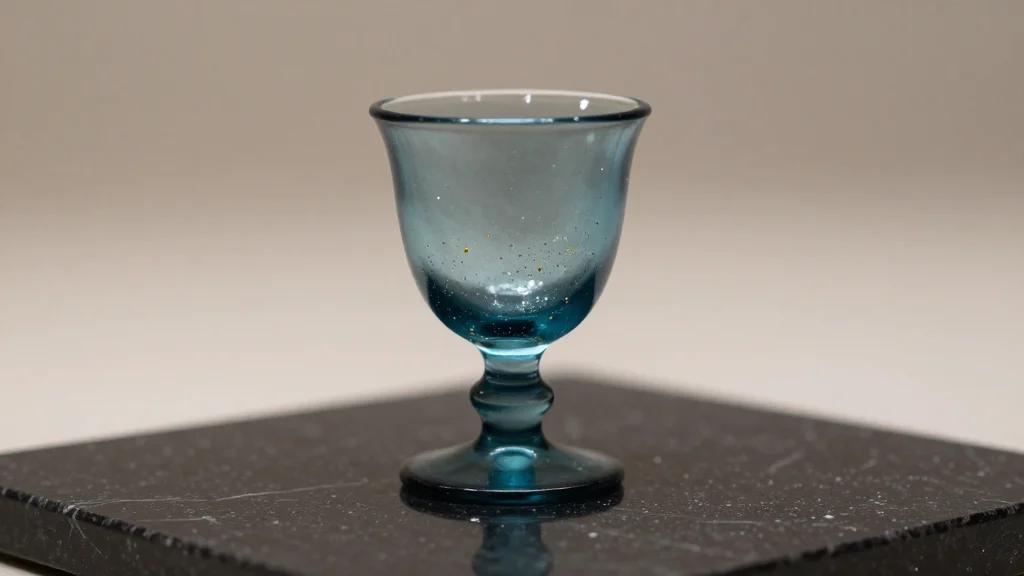
Scientists Find Gold and Silver Nanoparticles in 4th‑Century Lycurgus Cup, Claiming Ancient Nanotech

Why It Matters
The identification of gold and silver nanoparticles in a Roman artifact bridges archaeology and nanoscience, highlighting that sophisticated material properties can arise outside of modern laboratories. This revelation may prompt historians to reassess other ancient objects for hidden nanostructures, potentially uncovering a lost repertoire of low‑tech nanomanufacturing. For the nanotech industry, the study offers a proof‑of‑concept that nanoscale optical effects can be achieved through simple, high‑temperature glassworking, suggesting alternative, greener pathways for producing dichroic materials used in photonics, security inks, and biomedical imaging. Moreover, the discovery fuels public fascination with nanotechnology by linking it to a tangible piece of cultural heritage. It underscores the interdisciplinary nature of nanoscience, where insights from chemistry, physics, and archaeology converge, and may inspire new collaborations aimed at reverse‑engineering ancient techniques for modern applications.
Key Takeaways
- •Lars Kool, Floris Dekker and team confirmed presence of colloidal gold and silver nanoparticles in the Lycurgus Cup.
- •The cup’s dichroic color shift is caused by surface plasmon resonance, a nanophotonic effect first described in the 20th century.
- •The artifact dates to the 4th century, pushing the earliest known engineered nanomaterial back ~1,600 years.
- •Researchers stress the effect was likely accidental, not a deliberate nanotech design by Roman artisans.
- •Future studies will examine other Roman glass pieces to assess whether the Lycurgus Cup is unique or part of a broader tradition.
Pulse Analysis
The Lycurgus Cup discovery arrives at a moment when the nanotech sector is seeking sustainable manufacturing routes. Traditional nanoparticle synthesis often relies on toxic chemicals and high‑energy processes; the Roman example suggests that high‑temperature glass melting, combined with controlled addition of metal oxides, can spontaneously generate plasmonic nanoparticles. While the ancient craftsmen lacked the theoretical framework, their empirical methods could inspire modern low‑impact production techniques, especially for large‑scale optical coatings.
Historically, claims of ancient high‑technology have sparked both excitement and skepticism. In this case, the study’s rigorous electron microscopy and spectroscopy provide a solid evidentiary base, reducing the risk of sensationalism. However, the broader narrative—that the Romans possessed a form of nanotechnology—must be tempered. The researchers themselves acknowledge the accidental nature of the phenomenon, which aligns with the pattern that many breakthroughs arise from serendipity rather than intent. The real value lies in recognizing that complex nanostructures can emerge from relatively simple processes, a lesson that could reshape research priorities toward bio‑inspired and heritage‑informed nanomanufacturing.
Looking ahead, the interdisciplinary dialogue sparked by this finding could accelerate collaborations between materials scientists and archaeologists. By systematically scanning museum collections with modern analytical tools, the field may uncover a hidden archive of ancient nanomaterials, offering fresh design motifs for next‑generation photonic devices. The Lycurgus Cup thus serves as both a scientific curiosity and a catalyst for rethinking the origins and future pathways of nanotechnology.
Scientists Find Gold and Silver Nanoparticles in 4th‑Century Lycurgus Cup, Claiming Ancient Nanotech
Comments
Want to join the conversation?
Loading comments...